
What’s An Author to Do?

So, self-publishers, you have written your book and have had all of the creative “fun” in doing so. Then, the real work begins—the cover design, the formatting, the back cover matter, the e-pubs and so on.

And, it’s not just the hours of work involved, it is also EXPENSIVE.

What’s an author to do?

Well, I want to give a shout out to Dave Chesson of Kindleprenaur who has developed two TOOLS that will put you back in the driver’s seat:

Publisher Rocket and Atticus Formatting.

I won’t attempt to explain these two helps, here. I will just say that for the money, they are excellent. Dave has MANY, MANY tutorials on these two and on a number of other topics that benefit authors.

You’ll want to check these out!!!

24/7

I sure am glad we live in the age of computers, because the information garnered from them has been invaluable in so many areas of my life.

Yesterday, as I was writing, I wanted to use the popular expression which means 24 hours a day, 7 days a week. I wasn’t sure which way to write it correctly. So I “Googled It.”

In case you have ever had the same dilemma, here is what I learned: if spelling it out in words, it should be “twenty-four seven.” It can also be abbreviated  as “24/7” or “24-7.”

As with so many things in the written word, the important thing is to be consistent throughout your document.

That’s it for me, today. Short and sweet. Just a little snippet, in case your inquiring mind wanted to know.

Take One, Leave One

In our neighborhood—and in many others around the city—there are wooden “bird-like” houses standing approximately five-feet high. They have doors, but no windows. Inside are books to “trade” with other readers. 

On the “honor system”, readers may peruse the books inside, take one that appeals to them, and leave a replacement book for some other reader’s pleasure.

I’m ordering a few of my own books from Amazon this month. I intend to strategically place them in several of these book exchange locations. I think it might be a good way to snag some new followers.

I’ve heard of authors leaving copies of their books in doctor’s offices, on busses, and park benches. These may be non-conventional ways of “marketing” but may also be less expensive in the long run.

If you come across one of my books sometime, be sure to let me know! Do you have any other unconventional ways for authors to get their names “out there”?

Plan Ahead for Christmas Giving

The last three months of the year are especially good months to purchase books as Christmas gifts.

Many authors write Christmas/holiday-themed books especially for that purpose. Whether as gifts to others—or for yourself—you can get good deals during the last quarter of the year.

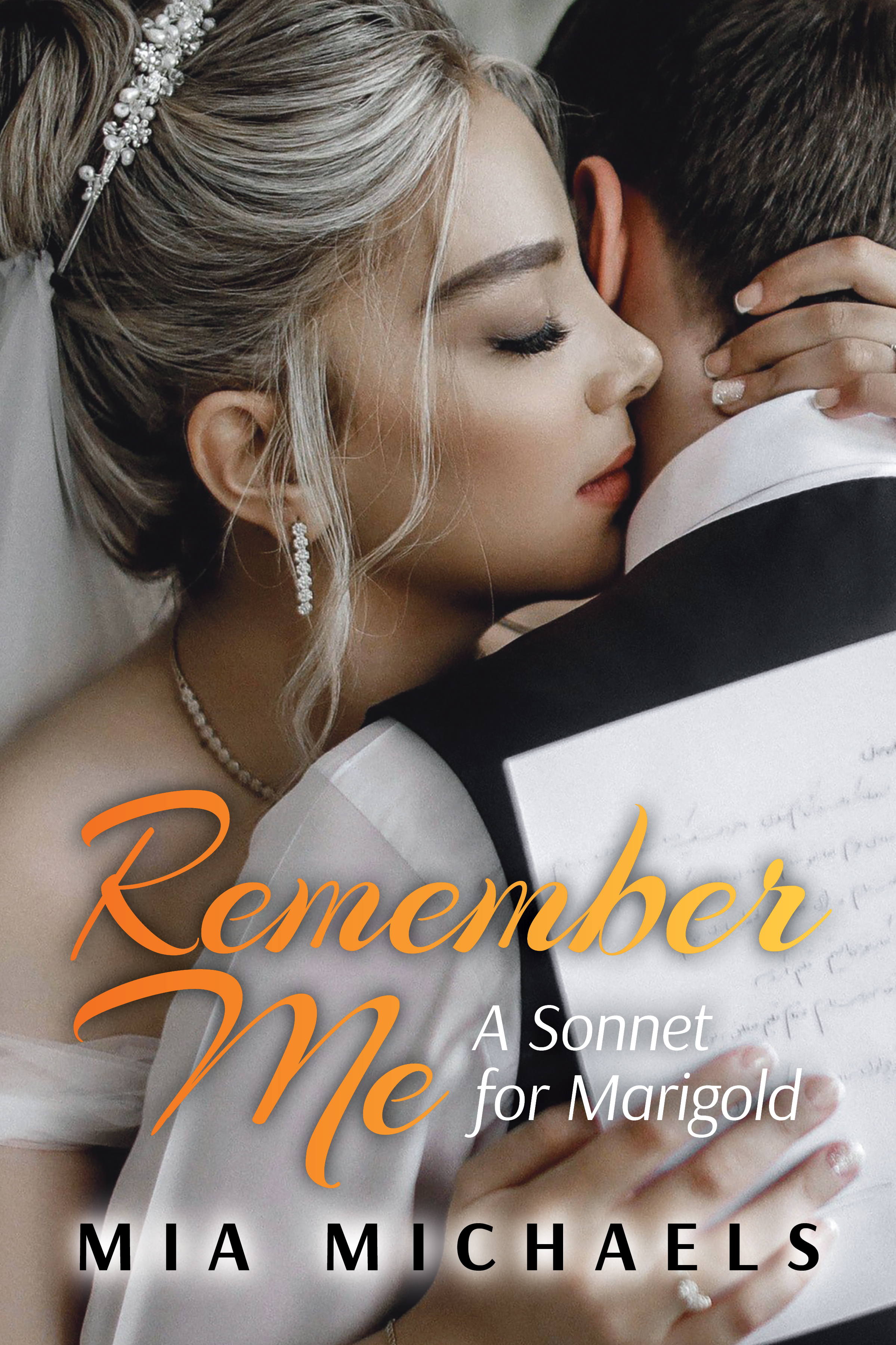
On Amazon, search for your favorite authors in the next couple of weeks and see what they are offering. (Remember: Sonnets for Marigold will be among them sometime in November).

Note: Amazon functions as Print-on-Demand. This means that each book is printed only when it is ordered. Copies of books are not stockpiled anywhere. 

So, don’t wait until December to make your purchases because the large demand around the holidays can slow down delivery times. 

A Sonnet for Marigold

The party was for couples, but as I looked across the hall, I saw the men huddled together talking about football. The women were divided in two groups-pre and post babies.

Whether it be baking, quilting, painting, exercising or all things in between, I guess birds of a feather really do flock together.

We all tend to gravitate toward others who share similar interests.

It should be no surprise that there are many interest groups that have formed online. One of the most popular online interest groups is readers, but even in a group of “reader” friends, sometimes fiction fanciers split off from those who like reading non-fiction.

 A simple trip up to the search bar can help you find dozens of new books to read—after all, there are literally hundreds of books published each week across the globe.

 A Sonnet for Marigold will soon join my recent book, Mending Fences, on my Amazon page as my two newest offerings for this fall. 

Since it was the first time I have written a Romantic Suspense novel, it was a challenge. But it was also lots of fun. I’m glad I pushed myself to make this change. I hope you’ll let me know if you enjoyed reading it.

Please look for A Sonnet for Marigold this November!

You’ll Still Love to Write If You Do This

Over the years, I have heard authors (myself included) lament over the fact that while writing a book is hard work, there is nothing so difficult as having to spend an exorbitant amount of time on editing, publishing, and marketing.

We DREAD it. And it often saps the joy right out of our labor of love.

I’m writing this as I watch the daily struggle of a friend and first-time author as she attempts the task of formatting for paperback and e-book. As she becomes more and more disheartened and discouraged, I tell her 

It doesn’t have to be so!

I will be the first to admit that it does cost money for cover design and all of the rest. Money that I scrimp and save for each week so I can pay for help each time I need it.

So, if you’re about to publish your very first book, here’s my suggestion: Do it all.

That’s right. Try to do everything for yourself. Even keep a log of your hours. In the end, I think (unless you’ve been technologically blessed) you will agree you never want to have to go through that again!

Professionals can get the job done in a mere fraction of the time it took you—and using them for your next book will assure you of coming away from the whole experience still loving to write!

How About A Little Backstory?

As I wind down my next book, I am dealing with when to share the backstory with my readers. Perhaps discussing its importance with you will help solidify it for me.

Backstory—the part of the story that comes before the main story—it grounds the story for the “opening” chapter. It helps the author clarify what will be motivating the characters going forward… why they act/react in certain ways to story events.

The only things that should be included are those that actually drive the plot. One of these is often called The Wound—something that haunts the character—a lie the main character believes. A lie that needs to be laid to rest. 

Why?

Because the lie they believe is limiting them in some way—creating an inner conflict.  

Three ways to share the backstory:

1. Sharing the Backstory As A “Drip”– the most effective, of all backstory techniques. Essentially, it is slowly giving small pieces of information, as necessary, throughout the story so readers can understand what is happening. Backstory provides clues which change the trajectory  of the character’s arc.

2. Sharing Backstory in a Prologue-this is an extra   “chapter” at the beginning of the story, as explained above. It is set apart as a “tease” to get readers to want to know more. 

3. Sharing Backstory in Flashbacks-These are actual scenes from the past that show what has happened in the backstory. They can chop up the flow of your story, but shouldn’t be too problematic if you sprinkle them throughout the book. 

Don’t share backstory until you’ve reached a point in the story where it’s imperative that readers know it. 

If they don’t feel the need to understand what happened in the past, they may not be willing to spend the time reading all of the details.

I’m close to making a decision. Are you???

Don’t Stress Out

A group of us writers were discussing capitalization last week. Some were unclear about when to capitalize family names and endearments. I went to the internet and here’s what I found.


Capitalize nouns like mom, dad, and grandmother when they are used as PROPER nouns.  Example, “Dad, can I use the car?” (So, basically Dad is being used in place of his name).


However, when preceded by an article or a possessive noun, don’t capitalize. That means if the words a, an, the, my, your, our precede the noun, no capital is needed. Example, “My dad let me borrow the car.


But what about other words used in place of a person’t name? Words such as honey, sweetheart, darling, dear, son, and so on? 


Well, that is the confusing one. I read several opinions—each of which had different answers and reasons behind them. But, if you go by what The Chicago Manual of Style says, then here is the answer: Capitalize nicknames, but not terms of endearment (unless they begin a sentence.)  
Example: If you consistently call someone, Pookie, then that is their nickname, so capitalize it.
Example: “Where’s the toothpaste, dear?” Dear is not capitalized because it is a term of endearment and not a nickname.

Since this “rule” lies in a gray area, the most important thing is this: Use your best judgement, but be sure to be consistent throughout your entire article, book, etc.


Hope this helps if, like me, you were stressing out about this “rule” of grammar.


Advice From Olympians

As gold medalists were interviewed at the Olympics, many of them delivered the same message for young wannabes:

1- Practice each day with the attitude of becoming better every time you perform. 

2- Consistently beat your own record. 

3- Take pride in your achievements.

This should be the “take-away” for authors, too. We are not so different than anyone else who is perfecting a skill.

Take pride in our work and achievements. Make each book better than the last.

Pen Names, Continued…

Suggestions for those considering using a pen name: 

  • Set up an email list and web page. (If you don’t want another webpage, other than the one you should already have, you can get by with a business Facebook page, only.) Use yourauthorname.com. This is your pen name, not your real name.
  • Set up a Facebook page (so you can run ads). Make sure this is NOT a personal profile page.

So, where do you buy an author or pen name. Good old Go Daddy, of course. It shouldn’t be very expensive, but you will have to renew annually. You may be surprised to find that someone else already owns the .com you want. So, be ready with a backup choice. Remember, this is how people will find you on the internet. Just as they search for the “real you” for your other books, they will likewise search for your pen name.

In case this is confusing, here’s my “real” one: www.brendapoulosauthor.com If this had already been taken, I could have chosen: http://www.authorbrendapoulos.com. If you have an additional website (like I do) you can also purchase the .org.