Chapters: How Long? How Many?

How many pages should comprise a chapter? How does an author know when to finish one chapter and begin another?

Good new: There is no hard and fast rule. Some books don’t even have chapters at all!

I like writing chapters, myself, because they are good break points in the story. Some readers even gauge their reading by chapters. They may always read  a certain number of chapters at a time—more or less depending on how ‘engaged’ they become.

Some authors write a specific numbers of pages in a chapter. I seem to write at a certain rhythm and 10-12 pages is the average length of my chapters.

If chapters are too long, interest may wain and if too short, they may not contain enough “depth.” 

Varying chapter lengths throughout the book will give the book more interest and variety.

Ideally, longer chapters more often are transitional, and shorter chapters are used for fast-paced excitement.

Books written for a younger audience, YA for instance, should have shorter chapters than books gauged for adults.

One thing is essential, however, each chapter should end with a cliffhanger—or at least something that makes the reader want to continue reading. 

Make your readers CRAVE the next chapter. End where the action is the most dramatic.

So how many chapters should a book have?

Different genres lend themselves to certain numbers of chapters. Fast-paced thrillers tend to have shorter chapters.

The more characters and the more intricate the plot, the longer the chapters and the more total chapters in the book.

Complex, non-fiction books should be shorter, unless textbooks or those written for more academic “types”.

More questions or anything to share?
Preparing for a Book Fair

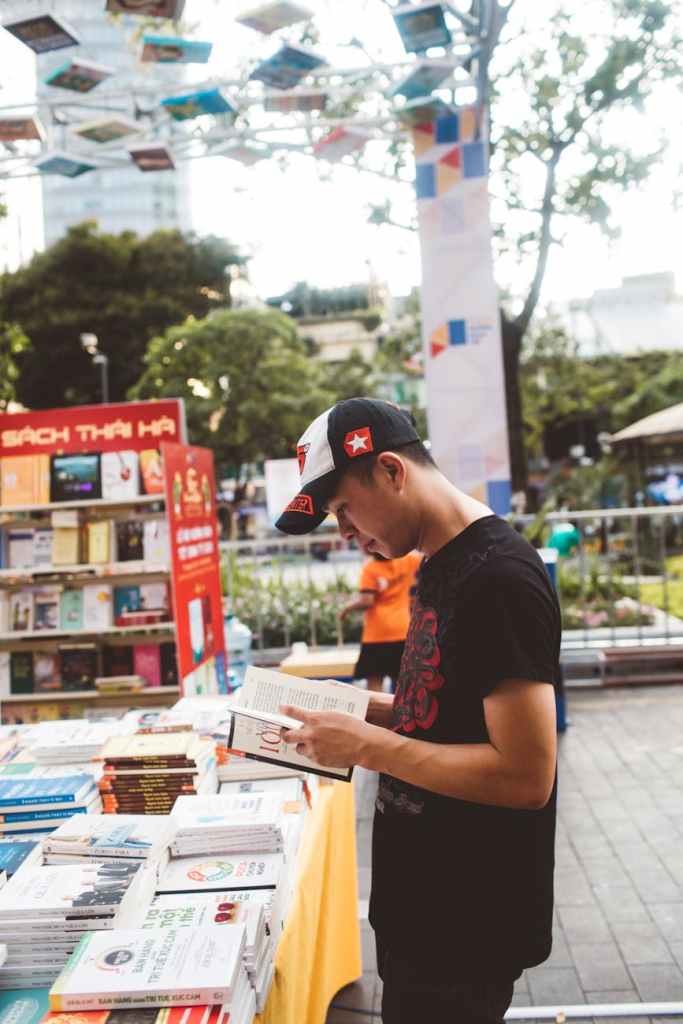
I was asked what an author should take to a book fair. Although the answer may seem simple, there are a few decisions to be made so your experience will go smoothly.

1) A bright and wrinkle-free cloth to cover your table.

2) A bowl of wrapped candy, business cards, bookmarks, pens, or other freebies.

3) Change for cash purchases. I wear a fanny-pack instead of using a  cash box. There are those who use the crowded circumstances for their own devious purposes. Take a “square,” if you are accepting credit cards. Don’t accept checks, since that can lead to a disappointing outcome… for YOU.

4) A small poster or banner. I make an 8 x 10 that I put in a plastic frame. Print in color, so it will be eye-catching. Put your name, book covers, and/or pricing information. Which leads to #5.

5) I always price my books at a special “fair savings” and in rounded denominations so that I won’t have to use coins to make change.

6) At the last fair I attended, I noticed several authors had packed their books into small rolling suitcases. The bags I had mine in were heavy and unwieldy. Perhaps the Goodwill Store will have one at a nominal cost…

7) Show interest in your “customers” by standing. Also, to make sure they stop at your table (and not pass you by) say something they cannot resist, such as “Oh, what a cute baby!” Or “Would you like a Tootsie Roll?”

8) There are lots of little things to remember to do ahead of time, like using mouthwash/breath mints. I suggest eating breakfast ahead of time. Maybe it’s just me, but I’m turned-off when I (as a shopper) walk up to talk to an author and they are in the midst of downing a donut!

You ask if book fairs are with the trouble? See my previous post in “Archives.”

Has Amish Fiction Met Its Demise?

I don’t write “AMISH”, but I sure enjoy reading Amish books. About three years ago, these were very popular and it seems like I devoured every one of them. It didn’t matter who the author was (although I did come to have my favorites). I simply liked the good, clean reads, with the conflicts of religious beliefs which sets them apart from mainstream christian practices.

At any rate, last year I noticed that there might not be as many Amish books coming to the market. This year, I’ve only seen a few.

I asked myself if this was just a “sign of the times,” had I really read everything out there, or were there just not as many authors who were writing in this genre? 

Perhaps it was something else entirely. 

Back in 2002, there were only a couple of authors writing Amish fiction, while currently there are over 60 authors and hundreds of titles.

Among them are: Amish Romance, Soon-to-be Amish, Leaving the Amish, Amish cozy mysteries, Amish Wild West Adventures, Amish quilting, Amish cooking, and so on.

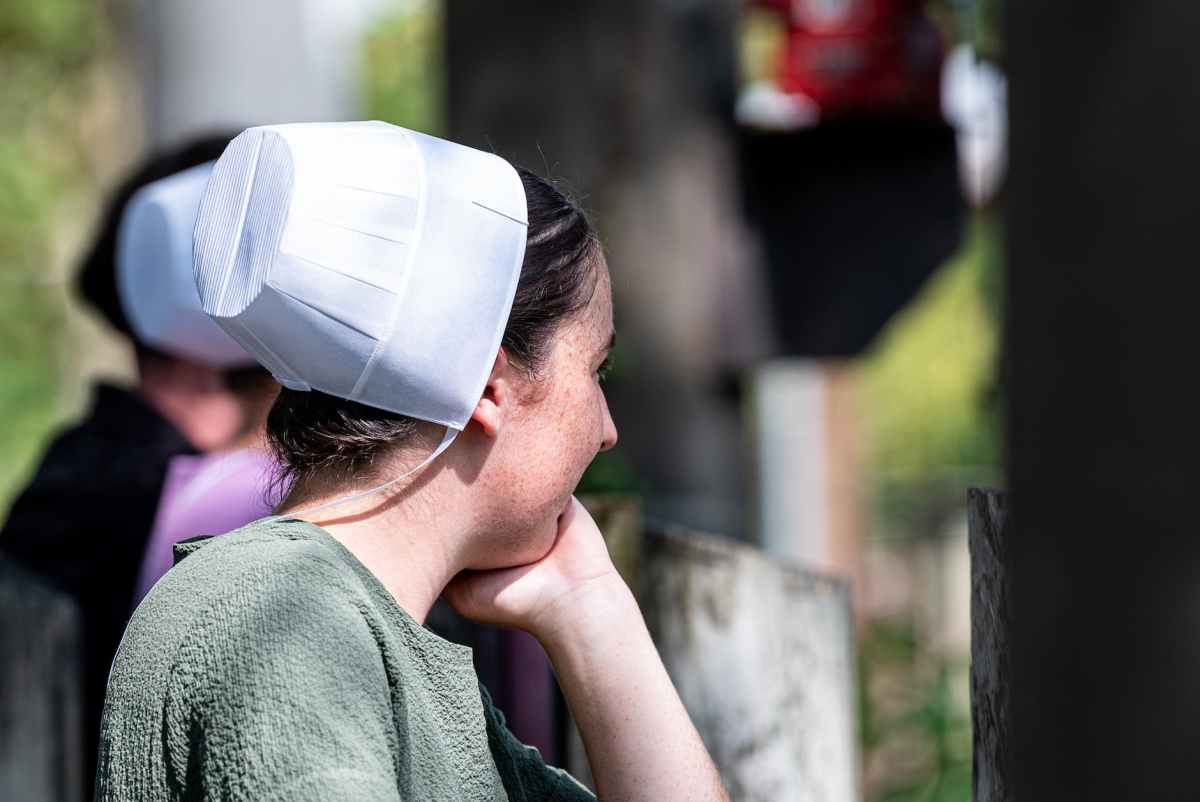
I have found that Amish fiction hasn’t slacked off. In fact, at some point it even spawned a sub-genre called “bonnet fiction,” a flourishing genre of Amish Romance. 

So, to answer my question. I have fewer choices now because I have read so many of these books! 

These authors aren’t going anywhere. They are still writing uplifting and inspiring stories.

A Valentine for YOU !

Since this is Valentine’s week, I want to take this opportunity to say “I Love YOU” to all of my readers and fellow authors.

It has become my passion to write with you in mind, creating memorable stories with deep underlying messages.

This week, I received two heartfelt communications from readers that told of life changes they experienced as they read my newest book, Justice for Jessie. I was overwhelmed by their expressions of gratitude. Just those few encouraging words were enough to reignite my enthusiasm for writing and give me the boost I needed while tackling a particularly difficult chapter in my current work.

I am humbled.

Both in our personal and professional lives, we all need to be told that we matter. That we’ve made a difference in our little part of the world. That what we’ve said—or done—is appreciated.

So, I thank you for the kind words, a short notes, and encouraging reviews. I truly appreciate each one.

And I appreciate YOU.

My Most Unfavorite Time of Year

It’s tax season, again.

I’ve got to tell you that it is my most unfavorite time of year. Even though I keep receipts all year long, they still must be categorized, totaled up, and so on.

While the process of doing my own personal taxes is more involved than my business taxes, the jolt I experience when I see in black and white how much more I spent than I earned always causes me to stop and reflect on whether I should keep up this writing “gig.”

I ask myself the same questions each spring, “What is my goal with my writing? Do I still enjoy it? Do I continue to see value in writing? Does it benefit others?”

If I can answer “yes” to those questions, I pledge to “give it a go” until tax season rolls around again the following year. I’ll give it my best effort, always keeping pleasing my reading audience in the forefront. 

I guess I’ll end here and head for the post office (to mail in my official documents) and then to Dairy Queen for a Blizzard (my reward to myself for seeing the process of tax filing through for yet another year.)

 NINE REASONS TO READ

Here we are in the second half of the school year and all of a sudden news stories are filled with concern over the reading abilities of children. Being a good reader benefits children not only in Reading Class, but also benefits school success in in all subjects.

As a parent, be a good role model and let your children see you reading for pleasure at home. Reading is FUN and the more someone reads, the better reader he/she becomes.

  1. Reading is the discipline required to concentrate and helps children be successful in life and in understanding other subjects, such as science, mathematics, and history.
  2. Reading opens a child’s mind to the world and greatly increases his/her life prospects, as well making a good income. 
  3. Readers develop an appetite for knowledge in a variety of areas. 
  4. Good literature leads to appreciation of individual differences.
  5. A reader learns spelling, vocabulary and grammar, which also improves his/her writing and communication skills.
  6. Good readers are rarely dropouts. American college graduates earn 76 percent more on average than those with just a high school diploma.  
  7. Good readers have improved problem-solving and critical thinking skills, in addition to developing a sense of imagination and creativity. 
  8. A reader has an improved attention span and can comprehend news articles and other reading materials. 
  9. Poor literacy leads to unemployment, poverty, and crime, according to the U.S. Department of Education.

Live a Thousand Lives

“A reader lives a thousand lives before he dies, said Jojen. The man who never reads lives only one.”― George R.R. Martin, A Dance with Dragons.

I came across this quote, yesterday, and was so moved!

If you are an avid reader, I think you would agree. Each time you read a new book, you are thrust into a plot and setting with unique characters.

To me, that is the lure of reading.

I could have never traveled to so many countries, met so many people, or experienced so much—except for the power of the written word.

Now, with so much unrest in our world, I am even more grateful to authors for their stories. Places I have planned to travel may no longer be safe—or affordable. The ability to hear, see, and move about easily may cause some of us to rethink vacation plans.

However, a short trip to the library, a book store, or one’s computer should yield a plethora of reading material on almost any subject/genre. I am grateful for stories that teach and entertain; books that encourage and stretch my imagination.

Feel like taking a trip? There’s a whole world out there to explore—and it’s as close as your own bookshelf.

What Motivates You?

To piggy-back onto last week’s blog, let’s discuss our motivation for writing and how it affects our bank accounts.

Most writers will say that writing itself is intrinsically rewarding. They write what “speaks to them”… inspires them… It is those authors who write first for their own experience and enjoyment. They hope readers will like it, too, and become followers. While making money would be nice, it is not their main motivation.

But there are also those writers who pay attention to trends in reading. Their goal is to write what is popular and are motivated by the money they can make by doing so.

One reason for writing is not better or more “worthy” than another. Both have valid points. 

It is each author’s choice to write what they enjoy, what draws the reading audience, or whatever is lucrative.

And, readers, it is up to you to choose what you read. It is even okay to stop reading after a chapter or two, if the book is not what you envisioned it to be or if you feel it isn’t delivering a satisfying experience.

As in all of life’s decisions, the choice is yours.

Most Important: Authenticity

I just finished reading a book of short stories—the first book by a new author. With no formal training in writing, this man broke most of the writing rules us more “seasoned” authors take so seriously.

It was almost 90% “telling”, which we all view as the biggest “no-no” on the planet. It contained “head hopping” (going back and forth from different points of view on the same scene), changes in tense, and so on.

The only rules he did not “break” were spelling, punctuation, and (mostly) grammar. No matter what the genre, breaking these make books intolerable to read. Readers deserve to read effortlessly without tripping over these blunders.

So, I asked myself, “why did I like this pleasant little book? I really don’t have an answer for you, except to say that this author wrote with “heart”, conviction, and confidence. He showed unique “voice.”

In my opinion, he has learned the most important “rule” of all—being authentic. Composing with a voice that is uniquely one’s own, growing organically from the writer’s sense of purpose and intellectual honesty.

Book Gifting for Christmas

My weekly post usually focuses on some aspect of writing. I share ideas, opinions, and information for authors.

However, readers are the reason we write, so this blog’s for you!

I just perused the books on The Kindle Book Review and on Book Bub. 

For the most part, the books I saw have Christmas and/or Holiday themes. Writers purposely focus on these, hoping to publish at least by October and thus, being ready to capture the “gifting” crowd.

While this may make sense to authors, is this really what readers want to read? Or would readers in colder regions of the country rather read stories with beach/tropical settings? 

Or, does it even matter? 

Perhaps you choose your books for gifting differently than those for reading. Maybe you select gifts based on ones you’ve read (and liked yourself) or ones that have been recommended to you by friends or those having lots of five-star reviews.

There are many reasons readers choose the books they do. If you are a reader (or a writer who is also a voracious reader), please write back and share your reasons for gifting books for Christmas.