24/7

I sure am glad we live in the age of computers, because the information garnered from them has been invaluable in so many areas of my life.

Yesterday, as I was writing, I wanted to use the popular expression which means 24 hours a day, 7 days a week. I wasn’t sure which way to write it correctly. So I “Googled It.”

In case you have ever had the same dilemma, here is what I learned: if spelling it out in words, it should be “twenty-four seven.” It can also be abbreviated  as “24/7” or “24-7.”

As with so many things in the written word, the important thing is to be consistent throughout your document.

That’s it for me, today. Short and sweet. Just a little snippet, in case your inquiring mind wanted to know.

Take One, Leave One

In our neighborhood—and in many others around the city—there are wooden “bird-like” houses standing approximately five-feet high. They have doors, but no windows. Inside are books to “trade” with other readers. 

On the “honor system”, readers may peruse the books inside, take one that appeals to them, and leave a replacement book for some other reader’s pleasure.

I’m ordering a few of my own books from Amazon this month. I intend to strategically place them in several of these book exchange locations. I think it might be a good way to snag some new followers.

I’ve heard of authors leaving copies of their books in doctor’s offices, on busses, and park benches. These may be non-conventional ways of “marketing” but may also be less expensive in the long run.

If you come across one of my books sometime, be sure to let me know! Do you have any other unconventional ways for authors to get their names “out there”?

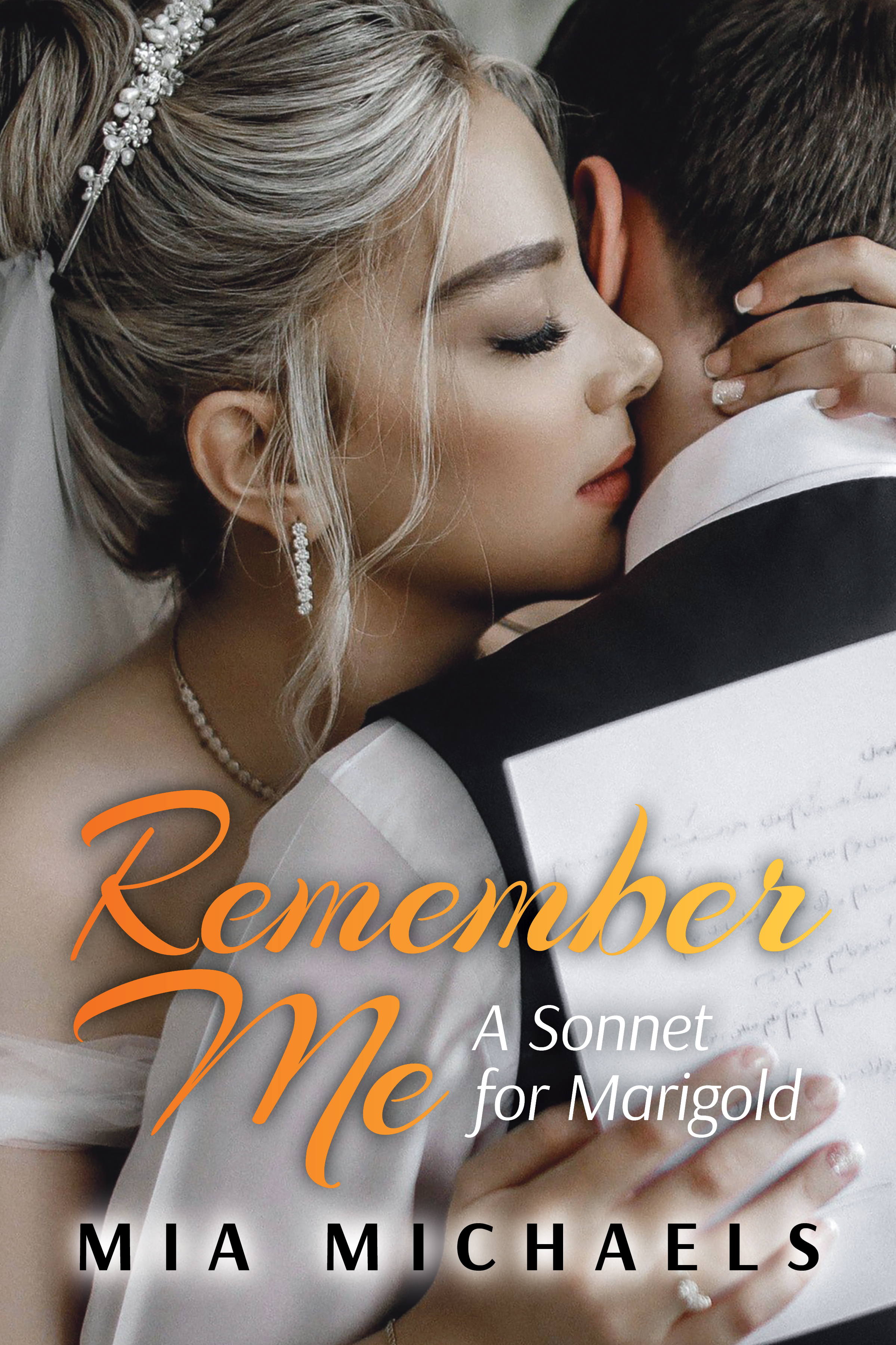
A Sonnet for Marigold

The party was for couples, but as I looked across the hall, I saw the men huddled together talking about football. The women were divided in two groups-pre and post babies.

Whether it be baking, quilting, painting, exercising or all things in between, I guess birds of a feather really do flock together.

We all tend to gravitate toward others who share similar interests.

It should be no surprise that there are many interest groups that have formed online. One of the most popular online interest groups is readers, but even in a group of “reader” friends, sometimes fiction fanciers split off from those who like reading non-fiction.

 A simple trip up to the search bar can help you find dozens of new books to read—after all, there are literally hundreds of books published each week across the globe.

 A Sonnet for Marigold will soon join my recent book, Mending Fences, on my Amazon page as my two newest offerings for this fall. 

Since it was the first time I have written a Romantic Suspense novel, it was a challenge. But it was also lots of fun. I’m glad I pushed myself to make this change. I hope you’ll let me know if you enjoyed reading it.

Please look for A Sonnet for Marigold this November!

You’ll Still Love to Write If You Do This

Over the years, I have heard authors (myself included) lament over the fact that while writing a book is hard work, there is nothing so difficult as having to spend an exorbitant amount of time on editing, publishing, and marketing.

We DREAD it. And it often saps the joy right out of our labor of love.

I’m writing this as I watch the daily struggle of a friend and first-time author as she attempts the task of formatting for paperback and e-book. As she becomes more and more disheartened and discouraged, I tell her 

It doesn’t have to be so!

I will be the first to admit that it does cost money for cover design and all of the rest. Money that I scrimp and save for each week so I can pay for help each time I need it.

So, if you’re about to publish your very first book, here’s my suggestion: Do it all.

That’s right. Try to do everything for yourself. Even keep a log of your hours. In the end, I think (unless you’ve been technologically blessed) you will agree you never want to have to go through that again!

Professionals can get the job done in a mere fraction of the time it took you—and using them for your next book will assure you of coming away from the whole experience still loving to write!

Don’t Stress Out

A group of us writers were discussing capitalization last week. Some were unclear about when to capitalize family names and endearments. I went to the internet and here’s what I found.


Capitalize nouns like mom, dad, and grandmother when they are used as PROPER nouns.  Example, “Dad, can I use the car?” (So, basically Dad is being used in place of his name).


However, when preceded by an article or a possessive noun, don’t capitalize. That means if the words a, an, the, my, your, our precede the noun, no capital is needed. Example, “My dad let me borrow the car.


But what about other words used in place of a person’t name? Words such as honey, sweetheart, darling, dear, son, and so on? 


Well, that is the confusing one. I read several opinions—each of which had different answers and reasons behind them. But, if you go by what The Chicago Manual of Style says, then here is the answer: Capitalize nicknames, but not terms of endearment (unless they begin a sentence.)  
Example: If you consistently call someone, Pookie, then that is their nickname, so capitalize it.
Example: “Where’s the toothpaste, dear?” Dear is not capitalized because it is a term of endearment and not a nickname.

Since this “rule” lies in a gray area, the most important thing is this: Use your best judgement, but be sure to be consistent throughout your entire article, book, etc.


Hope this helps if, like me, you were stressing out about this “rule” of grammar.


Advice From Olympians

As gold medalists were interviewed at the Olympics, many of them delivered the same message for young wannabes:

1- Practice each day with the attitude of becoming better every time you perform. 

2- Consistently beat your own record. 

3- Take pride in your achievements.

This should be the “take-away” for authors, too. We are not so different than anyone else who is perfecting a skill.

Take pride in our work and achievements. Make each book better than the last.

Why Pen Names??

You may find this information interesting and thought-provoking. Even if you question whether this will ever be relevant for you, it is information worth saving for the future.

For the next several weeks, I will be addressing the controversial topic of pen names. The internet has A LOT to say about pen names, but because it is from so many sources, I have condensed it HERE.

Anne Rice, Dr. Seuss, Mark Twain, C. S. Lewis, George Elliot, Lewis Carroll, George Orwell. These are just a fraction of the Pen Names used by authors over the years.

A pen name may be used to make the author’ name more distinctive, to separate the author from their other writings, to disguise the author’s gender, to protect the author from retribution for their writings (if their political or religious viewpoints may be seen as radical or unpopular), to allow an author to try writing in multiple unrelated genres, to conceal/protect family relationships, assure the author’s privacy, or for any of a number of reasons related to the marketing of their work.

There is nothing illegal about using a pen name. If you are self-publishing through Amazon, follow the directions I will be sharing. They assure that your privacy will be protected on Amazon; however, there are ways you can be “found.” (After all, the internet shared the names above, along with hundreds of others). Amazon just makes it more difficult for you to be “found.” 

The essential requirement is that your pen name be memorable ( more memorable than your real name). Try to come up with a name that suits your genre and writing style—a name that sounds like the age range you are targeting with your writing and represents your genre. (A fun exercise is to use one of several Pen Name Generators you can find online.)

At the time you setup your Author Central Account, KDP asks for an author name. Give your pen name under the ‘Primary Author’ section.

Once your book is published, your pen name will be shown on your Author Central account-Bookshelf page. Your real name will not be visible on your Amazon book page once your book is published. 

When using a pen name your real name stays anonymous. Your actual account is set up under your real name, so you will get payments in your real name. 

Note: Once your book is published, you CANNOT change your book’s primary author field. (You can create a new edition with the updated author name, but this may be a hassle.) Just be careful when filling out the information boxes.

I look forward to sharing more next week!

Mending Fences

My novella, Mending Fences, is now on Amazon in both Kindle and paperback formats. 

 I previously published this novella in a collection alongside three other authors. It is now available as a stand alone novella with special pricing.

After the death of his beloved grandfather, Mason finds himself torn between the needs of Rose, the aging grandmother who raised him, and the demands of Lee Ann, the mother who abandoned him as a baby.

Mason’s relationship with Lee Ann is turbulent and complicated. After marrying the wealthy Rex LeMasters, Lee Ann charged back into Mason’s life, reclaiming him and his older sister, Glory, and moving them from the family ranch in Boise, Idaho to Green River, Washington when Mason was fifteen. His mother has not spoken to Mason’s grandparents since that time.

 When Gram takes a fall, Lee Ann at last returns to see her mother—a visit which dredges up memories of a secret buried since Lee Ann’s childhood. 

Will learning the truth about what caused the rift between them so many years ago help them move forward toward reconciliation? Will Lee Ann’s new perspective on the past serve as a catalyst to restore her relationship with her own children?

This novella will inspire you to face your own difficult circumstances, let go of bitterness resulting from past hurts and disappointments and offer forgiveness to the significant people in your life. 

Attributions

You’ve used them many times, but perhaps you didn’t know it had a name—or names. Whether you call them attributions, dialogue tags, or speech tags, you need to know how and when to use them. 

Dialogue attribution means writing “XXX said” after the dialogue, at the end of dialogue, or in-between dialogue by the same speaker. They clarify who is speaking, thus guarding against the reader’s confusion. If a conversation goes on too long without a tag, the reader will lose track of who is saying what.

But what if we don’t want to use the monotonous “said” tag over and over again?

We can use “beats” (short descriptions of thought or action) OR structure our dialogue so the reader gets a clue as to is speaking from the text or from the order of speech.

Use tags only when they are needed to clarify who is talking, or as a clever way to add action, facial expression, or reveal something new about your character. They are good ways to break up long sections of dialogue, but using them too often can be distracting for readers. 

A writer can put tags at the beginning, middle, or end of dialogue. My best advice is to use a varied approach.

Using tags such as “Mary said,” or “Mary remarked,” at the beginning of dialogue often takes the reader’s attention away from the dialogue. For variety, use it at the beginning if it is descriptive: Mary looked upward, shielding her eyes from the sun. “It’s only seven o’clock in the morning and I’m already sweating.”

Putting a tag at the end, puts the reader’s focus on the dialogue itself: “It’s only seven o’clock in the morning and I’m already sweating,” Mary said, looking upward and shielding her eyes from the sun.

Finally, using tags in the middle of a character’s dialogue is a good way to break up long lines of dialogue or introduce a natural pause in speech: “It’s only seven o’clock in the morning,” said Mary, shielding her eyes from the sun. “I’m already sweating.”

This last method of tagging is quickly becoming a favorite of mine, but let’s not forget another easily used method of having the “other” person in the conversation using the other’s name: “Mary, you look lovely.” Or, descriptively, you could write: He touched Mary’s arm. “You look lovely.” In both cases speaker one has tagged Mary as the other person in the conversation.

Finally, be sure to put your dialogue inside quotation marks. I recently read a story which failed to use both quotation marks and attributions. As you might expect, I had to put the book down after reading only a couple of pages. The experience left me questioning why we are allowing self-publishing carte blanche…

But that’s another subject for another time…

Read and Write Outside the Box

I am sooooo tired of stories about people who have had a relative pass away and being left to renovate a bed and breakfast on a remote island.

Coming up with more original themes for books shouldn’t be that difficult. Let’s start with looking at our own experiences.

A couple of my friends write blogs about the “good old days” and they always get accolades from readers.

Why?

Because these are shared experiences with readers who grew up in the 60’s, like we did. When we talk about lava lamps and hula hoops, they smile and recall what it was like for them.

Readers are drawn to authors who mention events, games, music, food—things they recognize from their own lives.

My grandson’s favorite cake is topped with coconut icing. Watching him eat it reminded me that it was my father’s favorite, too, and that gave me a great idea for a future short story.

Ideas are all around us, if we are willing to think—and write—outside the box.