Those Critical First Three Chapters

Shopping around for an agent and/or publisher? 

If you are fortunate enough to get a positive response, you’ll most likely be asked for a sample of your writing.

Whether you’re asked for one chapter or three, “put your best foot forward”—as parents often say.

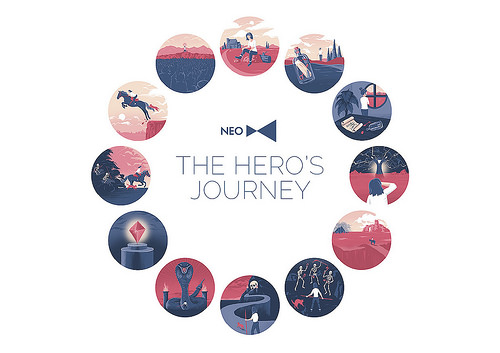
Self-publishers bear the same burden for excellence. Those first chapters are critical in order to hook readers, give them a sense of what the book is about, and introduce the hero’s struggle.

It is from that sampling that you will be offered a contract or earn a sale. But keep up the pace and make sure you continue writing with that same level of quality right to THE END.

Every Instinct is Telling Me To Do This

I am struggling with the last chapter of my book. Fighting every instinct to kill off my hero at the end!

Who would do such a thing?

Wouldn’t it be akin to giving your book the “ax”?

Is there ever a time it’s appropriate to take such drastic action?

I think there are some considerations we must take before we can answer that question for you and me.

1) Has the character successfully ended their character arc? Is the plan to develop another journey for them to take in the next book of a series?

2)    Is there another character from this story that we’d like to bring forward as the hero in the next book in the series?

3) Is the goal to pack a powerful punch that readers will not see coming?

There are other questions to be answered, too. Let’s think about the means by which their life will be taken. An act of nature? A murder? Suicide?

There must be a good, plausible reason for the character to die at the end. Do they allow their own death in order to save the world? Or it could be something much simpler will send the book to the top of the charts?

Look for my newest book, Blinded, at the end of summer to read which ending I chose.

Writing Mysteries and Thrillers

45294491124_2720f0b892

Mysteries and Thrillers are cousins to Suspense, but they differ in focus.

In a suspense, something is about to happen.

In a mystery, something has already happened.

In suspense, the protagonist strives to get out of a puzzle.


In a mystery, the protagonist often strives to get into a puzzle.

A mystery, focuses on the crime, which usually happens early in the book. The rest of the story centers around the hero’s pursuit of the villain.

Now, about thrillers: The are extremely fast-paced, whereas a suspense story can have just about any pace.

A thriller is large in scale, perhaps involving the fate of the world as we know it—and the hero often knows who the villain is.

The focus of a thriller? Stopping the villain.

And, it’s as simple as that.

“How-To” books you may be interested in:  Writing the Mystery by G. Miki Hayden; Writing and Selling Your Mystery Novel by Hallie Ephron; How to Write a Damn Good Thriller by James N. Frey; and Writing a Killer Thriller by Jodie Renner.

Famous Mystery and Thriller writers: Lee Child, Stephen King, John Grisham,       James Patterson, Michael Connelly.

(Next week, we’ll talk about the difference between classic fiction and fan fiction).

————

Protagonist vs. Antagonist

30091018165_2d04676559

In a writing workshop I recently attended, the presenter took us “back to the basics.”

If you’ve been writing for awhile, periodically it’s a good thing to revisit the essential elements of story.

The terms “protagonist” and “antagonist” are about as basic as it gets.

Let’s look at their definitions and what those two elements have to do with a well-written story.

The protagonist is the hero of the story—the central character whose journey we follow throughout the book. He’s the “good guy”. The one we cheer on. The one who experiences set-back after set-back, but emerges victorious at the end.

The antagonist, is the villain. His role is to block the hero’s progress toward his goal at every turn.

The cruel step-mother.

The demanding boss.

The rival for the hand of the princess.

Whoever they are, it’s essential that they do their part by providing those set-backs or road blocks to the hero on his journey.

It is this struggle to overcome that moves your story along to a satisfying ending.


Note: The inciting incident, another basic, was discussed in a previous post, entitled “Creatures of Habit.” You can read it under ARCHIVED POSTS.

The Black Moment

Your story has taken your hero out of his comfortable, ordinary life and sent him on a quest.

It stretches his limits.

Pushes him to accomplish whatever he must in order to reach his goal.

The end is in sight. He’s almost there.

And then, at approximately the 75% mark, the unthinkable happens

and beats him back and down.

It looks bad for our boy. You think, “He’s just not going to be able to pull it off!”

He was almost there…he’d almost won…they’d almost gotten together…he’d almost achieved his dream…

but then—out of nowhere— came

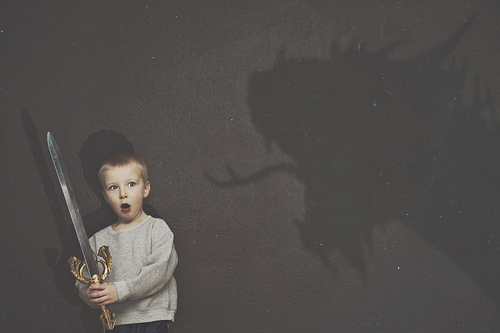
THE BLACK MOMENT…                           8422302030_3f048bb4ea

the old boyfriend

the chilling diagnosis

the colossal misunderstanding.

But, the story is not over.

After a few minutes/days of contemplation…feeling sorry for himself…wanting to just give up and go home

he rallies.

With new resolve—and oftentimes a new plan—he plunges ahead

against all odds.

He rejoins the battle

and although he may be the weakest and least capable,

he conquers the giant

defeats the bully

climbs the mountain

and

we stand and cheer!!!!

“Wow,” we say, “that was a close one…a nail biter…EXCITING.”

The intensity of the climax, whether a book or a movie, is directly proportional to the intensity of the BLACK MOMENT.

So, if you want your reader to be hooked—to ride the big waves with you to a thrilling and satisfying end— then be sure to include an intense and seemingly iron clad BLACK MOMENT.