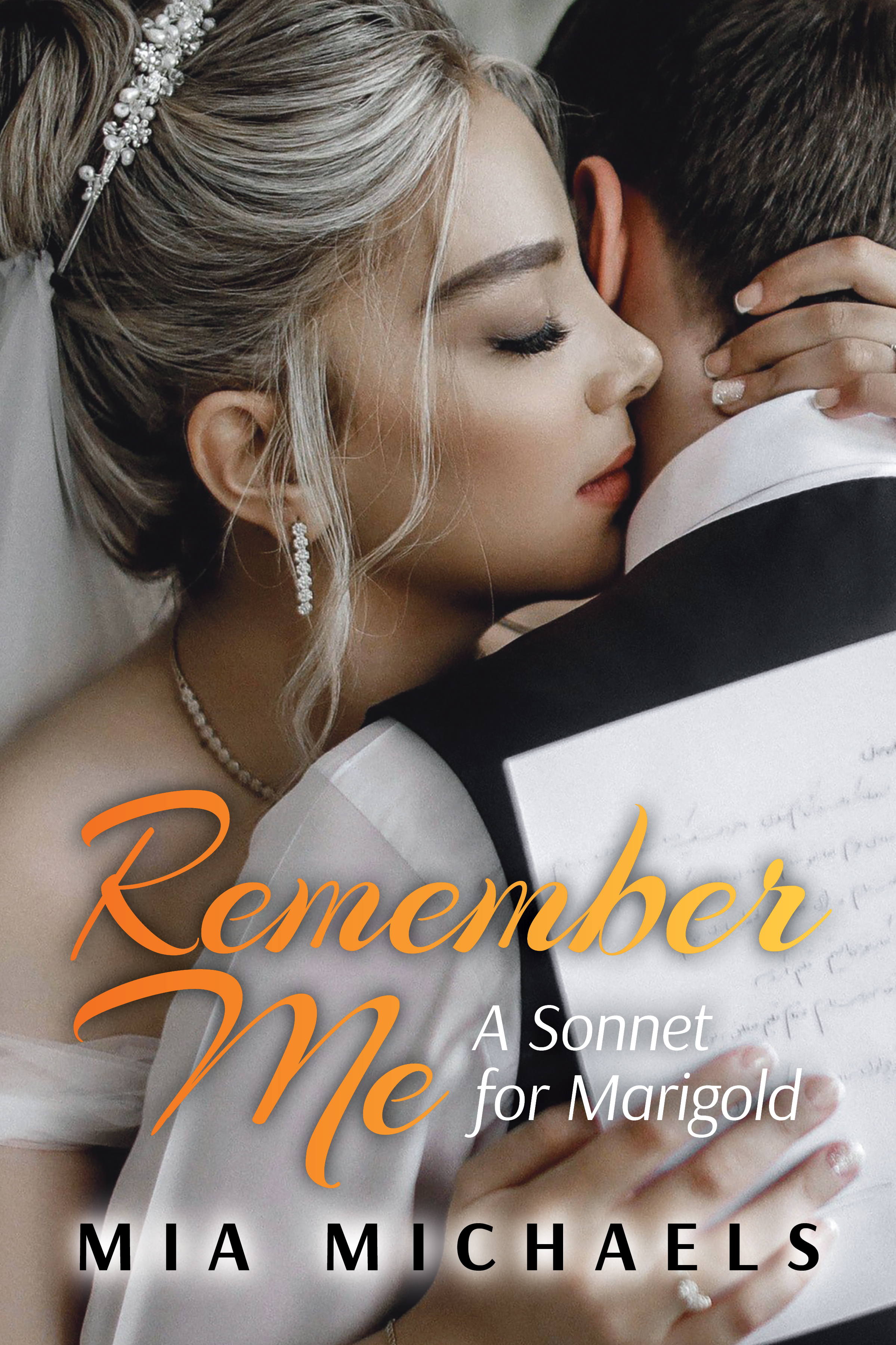
Remember Me: A Sonnet for Marigold

I’ve blogged to readers and writers about book covers, “Hooks,” keywords, suspense, punctuation, back cover blurbs, choosing one’s audience, marketing, pen names, and so on. 

Can any one single book can possibly deliver on all fronts?

This one comes close. From cover-to-cover, Remember Me: A Sonnet for Marigold, was written with each aspect of the writing process in mind.

Here are excerpts from the back cover copy and blurb, along with the stunning cover. Who wouldn’t be drawn into this story?

Does true love really last forever? Author Mia Michaels creates a world where all reason is lost to the magic of love.

From the moment Mike’s plane crashes, Natalie’s world is turned upside down. As she struggles to remember the details of her life after suffering a brain injury in the same crash that killed Mike, a shocking revelation about an affair with the handsome pilot surfaces, leaving her questioning everything. 

Almost losing Natalie in the horrific incident gives Paul a wake-up call. He is determined to be the husband she needs, but at every turn, someone tries to sabotage their new commitment to one another. Who is sending her gifts, trying to turn her heart away from Paul? And what is the role of Mari and Pierre, two mysterious figures who seem to be connected to this love triangle?

 If only Natalie’s memory would return, perhaps she and Paul could rebuild their relationship before it’s too late.

Just when you think you’ve figured out the truth behind this love triangle, author Mia Michaels throws in an unexpected twist in this gripping Romantic Suspense novel. Remember Me will leave readers on the edge of their seats. Sprinkled with humor and a dash of fantasy, you’ll find everything you like—and more—in this modern breakout novel.

Don’t miss this unpredictable journey of true love. BUY NOW on Amazon.com

Which Voice Should I Listen To?

Will people like it? Is it a “page turner”? Are the characters believable?

My mother would answer “People will love it. I could hardly put it down!”  I could ask any number of family members and they’d answer the same.  Families.

If I’d pose the same question to my friends, maybe for a few who read A LOT would make comments about point-of-view, unique voice, and so on.

However, when my critique group is asked for their honest opinions, I will get suggestions for improvement. They may point out issues with spelling, grammar, syntax, and verb tense. 

If I enter a writing contest, based on reading my synopsis and 10-15 pages, judges will use a rubric to assess such things as a good “hook”, marketability, professional impact, and pacing. They may even respond by asking to see the entire manuscript.

From those comments—some from very prejudiced persons—I base my decision as to whether or not my book is ready to send to an editor, a publisher, or whether it is in need of extensive revision. 

Three groups of people, each with a unique connection to this writer, each with a different focus, each possessing varying degrees of expertise.

So, which group, if any, should my professional-writing self listen to? The one with the most expertise? The group of avid readers? Professional judges?

And should I act on their advice? Base my future actions on what they have to say?

How much weight do I give their comments over my inner voice—the one that desires to move forward and get my novel published?

Lots of opinions. Lots of questions. I’m not sure I have the answers—yet.

So, I make a decision to read yet another “how to” book, attend just one more professional conference, sign up for an additional writing course.  

Then, with added confidence, I  decide to trust

the voice inside my head, 

my gut, 

my common sense, 

what I know to be true.

Use a Checklist

10519774073_296682697a

You may want to consider utilizing a checklist to guide your comments to others in your critique group. Below is one we developed. I am sharing the first five this time and will post the rest next week. 


1) HOOKS:  

* Does the opening line or paragraph immediately hook the reader?

* Did you want to keep reading?

2)  STYLE:

* Is the writer’s voice distinct and unique?

* Does the author utilize showing and telling skillfully?

* Indicate passages needing more “show”.

3)  PROFESSIONAL IMPACT:

* Does the author have a grasp of the elements of grammar, spelling, and punctuation?

* Is the writing fresh and original, avoiding cliches?

* Is the writer overusing/overdoing actions? Themes? Words? Character traits?

* Is the manuscript appropriate for the general market?

4)  SETTING:

* Was the place, time of day, season, time period set?

* Does the setting support the story?

* Do sensory details (sight, sound, touch, smell) enhance each scene?

5)  CHARACTERS:

* Is the main character identifiable? Unique?

* Do you get a sense of the character’s journey and what the story is about?

* Do secondary characters contribute to the story? Are they defined and likable?

* Do characters’ emotions seem believable and/or provide understandable motives?