There Are Words, And There Are Keywords

I admit that I am only beginning to learn why keywords are so important in selling our books.

Keywords are aptly named. They are the words a person types into the search bar when looking for a book to read. 

So write the blurb to be placed beside your book cover on Amazon using the words you think readers will type in their search bars. 

So many of us, including myself, wrote our blurbs to be interesting and clever in order to garner sales. However, the readers have to get to that page first. 

And the way they do that is by using the search bar.

If they are interested in fiction, they will probably type the word fiction in. However they will type additional words in order to refine their search.

For example: Fiction>Westerns>Native Americans>New Mexico and so on until they pinpoint exactly what they want.

So if you are writing about Native Americans in New Mexico, and you want readers to find your book, you must work those words in your blurb. (Challenging, to say the least).

Previously, I put my allotted keywords on the page where I uploaded my manuscripts onto Amazon. But I failed to write these words into the book description (blurb), failing to take advantage of that marketing tool.

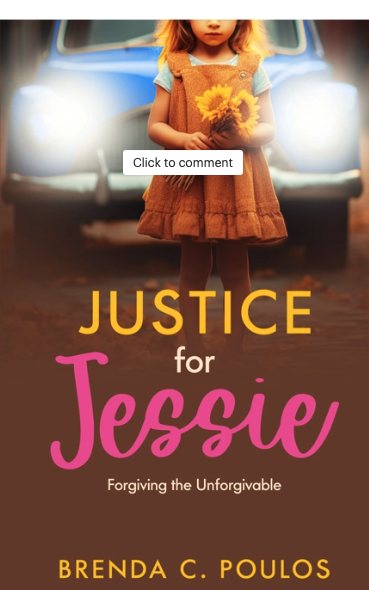
I just finished writing my blurb for my new book, Justice for Jessie, using my keywords. And, as time permits, I will be rewriting book descriptions for my previous books.

It is never to late to learn something—and put it into practice.

Better Than the Original

You’ve been writing your book for the better part of a year. You’ve tied up loose ends in the editing phase and are ready to publish.

Then, you find out—like I did—that the title of your book was used by a dozen or so authors in years past.

Do you stick with it because you like it and because it is already recognizable by lots of readers?

Or do you choose something else and get the job done?

Well, that’s what happened to me just a few weeks ago. I discovered that the book I had entitled, “Blinded,” had already been used by quite a few other authors (nice to know others thought it was a good title, too) and I had a choice to make.

I spent a couple of sleepless nights trying to think of another title that I liked just as well.

I was ready to throw in the towel when I woke up one morning and a title just came to me out of the blue. The new title, “Justice for Lucie” was just so-so for me, so I changed the main character’s name to Jessie with the Find/Replace option in Word.

It took a few days for me to get used to it, but now I absolutely love my new title, “Justice for Jessie.”

I have learned that there is almost nothing you cannot fix if you put your mind and effort to it. And, like myself, you may end up liking the change better than the original.

Look for Justice for Jessie in September 2023.

Choosing Your Subtitle

A subtitle should tell the consumer additional information that cannot be conveyed by the title alone.

You’ll want to choose one, if possible, because it gives you an additional chance to add more keywords on Amazon.

Keywords are simply the words a person would type in the search bar to identify the kind of book they are looking for.

Authors are allowed to choose ten keywords. These will come from the title, subtitle, back cover blurb, and book description you write for your Amazon sales page.

I wrote down dozens of ideas for the subtitle for my soon-to-be-released book, Justice for Jessie. I decided on Forgiving the Unforgivable because it further described my book, along with being “catchy”—at least to me. It was also short and sweet, making it more memorable. 

Remember: Your subtitle should represent the genre in which you write, mine being Christian Suspense.

What Now?

So you think you’re done with your book when you’ve written the last line?

Not so fast, my friend.

There’s still the title page, dedication page, biography, Dear Reader page, copyright page, “Other Books by this Author” page, and anything else you’d like to include to personalize your book.

If you don’t have one by that point, you’ll need to purchase an ISBN. Then, being the search for an editor, publisher, publicist, and so on.

When should you do these things? 

Look way back to the top of this blog. Do them before you ever get to that point. At least four months ahead.

It’s hard to do all these things while you’re writing that final chapter, but if you don’t, you’re giving up prelaunch publicity, hype, and presale revenue.

One big thing you can do to help the success of your book is choosing the right subtitle. I’m doing that for my own book right now, so please read my blog next week to find out why and how I’m choosing to include one.

Until then, Happy Fourth of July!

Those Critical First Three Chapters

Shopping around for an agent and/or publisher? 

If you are fortunate enough to get a positive response, you’ll most likely be asked for a sample of your writing.

Whether you’re asked for one chapter or three, “put your best foot forward”—as parents often say.

Self-publishers bear the same burden for excellence. Those first chapters are critical in order to hook readers, give them a sense of what the book is about, and introduce the hero’s struggle.

It is from that sampling that you will be offered a contract or earn a sale. But keep up the pace and make sure you continue writing with that same level of quality right to THE END.

Every Instinct is Telling Me To Do This

I am struggling with the last chapter of my book. Fighting every instinct to kill off my hero at the end!

Who would do such a thing?

Wouldn’t it be akin to giving your book the “ax”?

Is there ever a time it’s appropriate to take such drastic action?

I think there are some considerations we must take before we can answer that question for you and me.

1) Has the character successfully ended their character arc? Is the plan to develop another journey for them to take in the next book of a series?

2)    Is there another character from this story that we’d like to bring forward as the hero in the next book in the series?

3) Is the goal to pack a powerful punch that readers will not see coming?

There are other questions to be answered, too. Let’s think about the means by which their life will be taken. An act of nature? A murder? Suicide?

There must be a good, plausible reason for the character to die at the end. Do they allow their own death in order to save the world? Or it could be something much simpler will send the book to the top of the charts?

Look for my newest book, Blinded, at the end of summer to read which ending I chose.

Writing Your Blurb

You’ve finished writing your book. But you’re not done. Writing your blurb is next on your agenda.

A blurb is a short book description usually found on its back cover or beside a book’s photo on its Amazon page. Its purpose is to make readers want to buy the book by giving intriguing details about its plot, characters, setting, and so on.

The parts of a blurb are: 1) an interesting hook; 2) information about the main character (for example: This book is about a surgeon who loses his eyesight in a car accident.) 3) The primary conflict in the story. 4) Some authors list their credentials for writing the book; others prefer to show theirs elsewhere. 5) Some people include comparable titles, but again, I reserve these for things like a query letter or in marketing.

I put my photo and two-sentence bio on the back cover, but not as part of the blurb. You may feel differently. Just make sure you put it somewhere that readers will see it. 

How long should a blurb be? Short enough to contain the main components, but long enough to be interesting. Keep editing it until it’s perfect because it will follow you wherever you go!!

Remember: A blurb acts as an advertisement for your book. You wrote it; now use your blurb to assure that readers want to buy it!

“Continuing Education”

U-Tube is a great resource for many things. My husband uses it quite often. He’s a do-it-yourselfer who finds help, directions, videos, and multiple viewpoints any time he needs it.

As an author, I find answers—and even inspiration—by regularly listening to podcasts and tutorials.

I know. You want to write, write, write without interruption. So do I.

I’ve found the only way I want to give up time for this endeavor is to simply plan it into my weekly schedule. One afternoon a week, I take off my author hat and put on my student hat.

Nothing in life is learned through osmosis (the unconscious assimilation of ideas and knowledge) as much as we’d like to think it possible.

Most authors start out writing by going to conferences and reading books on the subject of writing. But writing rules and trends change, so don’t stop learning. 

Carve out some time for continuing education each week to keep yourself “up-to-date” and in “the know.”

Before You Write a Single Word

There is such an appeal for people—especially retired people—to write a book.

You’ve had an idea in your head for years and now you finally have time to put pen to paper.

However, after you publish, your sales aren’t what you’d like—or expect—them to be.

What went wrong?

Dozens of things could have been the reason for poor sales, but usually the reason can be traced back to the beginning.

Before you wrote a single word.

Here’s the problem in a nutshell. You have written the story you wanted to write, with little or no regard to your audience.

In other words, you didn’t consider what readers like to read… what is popular in today’s market.

I was guilty of the same thing. That doesn’t mean we cannot write what has been on our heart for decades, but we do have to understand that it may not translate into sales.

We have talked about romance being popular. And there are so many variations of romance:  teens, tweens, cowboy (That’s right. It’s still popular) and so on; and cozy mysteries (which also often include a romantic aspect). These include a lot of inheritance themes. Young ladies inheriting bed and breakfasts, hotels, bakeries, seaside cottages, just to name a few.

So, I guess the bottomline is this. If you want to sell books, write about what people like. If your goal is to fulfill a lifelong dream, then sales take second place.

But whatever it is you write, do it well. Given time, readers may find you and come to appreciate your passion. 

To me, that’s the best of both worlds.

What’s Up with ‘That’?

Just as some realtors are known more for listing and others for their mastery at selling, in writing some authors are known as experts at character development, while others are more proficient at plot.

However, my opinion writers must strive to master characterization and plot. We must also improve in other areas as well. Description, dialog, backstory, and the ever elusive cliff hanger are also important in crafting a well-rounded novel.

And as we grow as writers it is important to stay up on changes within the industry. For example, did you know that within the last year or so the word that, got the ax?

If you want to refer to something specific, you can simply name what you are referring to: “I’d like some more of that” can be changed to, “I’d like some more mashed potatoes.”

Sometimes you can just rewrite the sentence as: I found that the price of a haircut and color in Las Vegas is almost twice what I’d paid in Phoenix, so I may decide to “go gray.” (True, by the way). This can be rewritten as: I may decide not to color my hair anymore because the price in Las Vegas is twice what I paid in Phoenix.

Here’s more information on that usage:  use that for things, but use who/whom when referring to people.“Pass the cookies to everyone who wants one.” Or, “I’d like to test drive that car.”    

Finally, avoid beginning sentences with the word that and avoid phrases such as “the fact that…”

But, if you’re like me and can’t remember all of the rules concerning the word that, simply try to reword your sentences to avoid using it so often that it becomes a glaring repetition. 

So, you caught my misuse above? How about a rewrite:  “…to avoid using it so often it becomes a glaring mistake.”