
Just A Few Words

The current image has no alternative text. The file name is: pexels-photo-2002719.jpeg

I’ve been writing my blogs for more than ten years. When I first started them, I spent hours cranking out several pages.

But I soon learned that what people really wanted was just of few words of: encouragement 

suggestions

information

clever sayings

 jokes

A little blip on the screen… just a few words so readers can get onto the next blog, article, text, and so on.

So, if you’re an author considering starting a blog, it’s not as daunting as you might think.

Start with just a few words.

Who Said That?

The current image has no alternative text. The file name is: pexels-photo-5935755.jpeg

New authors often receive advice on attributions, commonly known as dialog tags. They are advised to almost exclusively use the word “said” rather than such words as “muttered, exclaimed, yelled,” and so on. This is because “said” is nearly invisible to readers, allowing them to concentrate on what is most important—the dialogue itself. 

Don’t overuse “he said” or “she said” at the end of every line of dialogue. If there are two speakers, only use them every few lines. However, don’t underuse them, either, because readers will be confused as to who is talking.

Misunderstood and Misused

The current image has no alternative text. The file name is: pexels-photo-8430295.jpeg

One of the misunderstood and misused words by authors is myriad. You’ll see it used differently—and interchangeably—in many books.

It can be confusing because myriad can be used both as a noun and an adjective. 

As a noun, myriad usually means “great in number.” (Use the word, “of” in the sentence).

As an adjective, it means “many.” (Do not use the word “of” in the sentence).

Correct: She listed a myriad of reasons to divorce Melvin. (Meaning a great number).

Correct: There were myriad reasons to divorce Melvin. (Meaning many).

Confusing, huh? Since it is such a tricky word, why don’t writers simply avoid using it?

I think its because even though so many words/phrases can be substituted for myriad, none are quite as beautiful on paper and none sound quite as poetic when read aloud.

Myriad is simply one of the coolest words in a writer’s toolbox.

Updated Trends in Reading Audiences

The current image has no alternative text. The file name is: remember-me-final_front-2.jpg

It turns out that some of the “least-selling” books in 2024 were in the Romantasy category.

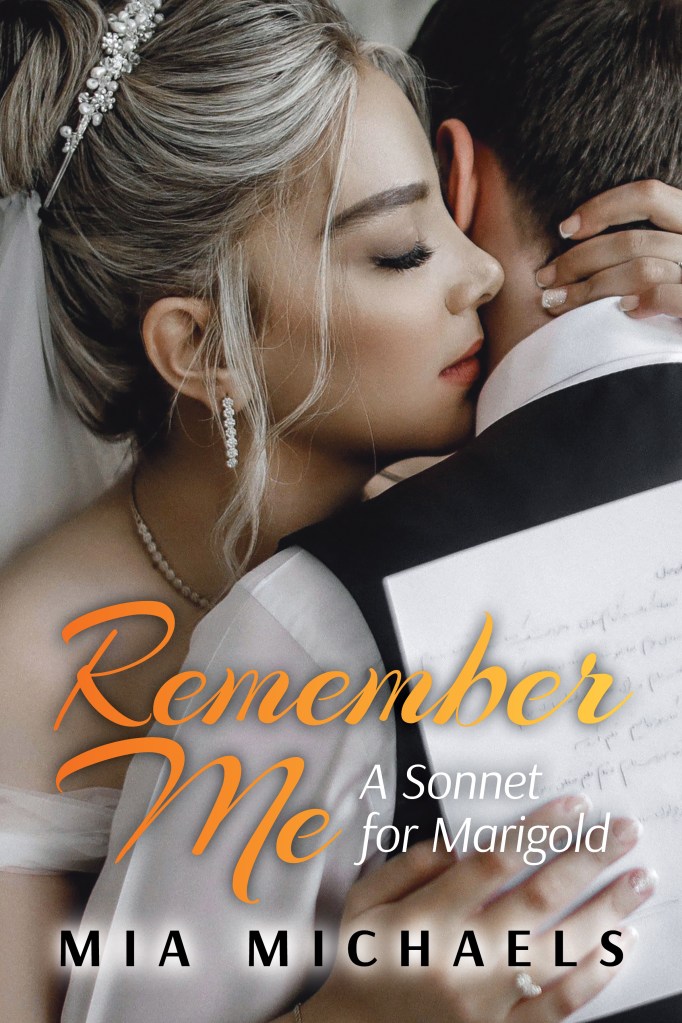
My husband often says I am always “a day late and a dollar short.” He was right in this case, I guess, because I had decided to follow the trend from 2023 and wrote my book, Remember Me: a Sonnet for Marigold, in 2024. It has performed below my expectations. This was partly because I published under the pen name, Mia Michaels, which was unknown to many of my readers. 

Surveyors say Limited Editions of premium books, such as J.D. Vance’s Hillbilly Elegy and Melania Trump’s, Melania are the biggest trends for 2025.

Following that, is a surge in Religious Books and in books about AI and its possible effects on the world.

So what am I doing? I’m going back to what I do best, Christian Fiction.

New Trends in Writing/Publishing

The current image has no alternative text. The file name is: pexels-photo-4855324.jpeg

Many popular authors are stepping away from traditional publishing houses. 

Recent surveys tell us that successful authors say they do not need a publisher’s help with covers, editing, or advertising because they already have learned how to master these things on their own.

They report that they what they are concerned about is the creative control and ownership of their work, how to grow their sales, and how to get their books distributed into physical bookstores. 

Online classes are offering help in these areas. I have found Reedsy Discovery and DaveChesson’s Kindlepreneur to be the most helpful. 

It takes patience and time to learn from these, however. And once you’ve spent hours taking notes, authors find out that these companies offer their paid services in these areas (if you end up being as overwhelmed me you might look into this aspect…)

Since help is expensive, an alternative may be to form a writing “co-operative” in which authors with various areas of expertise help each other.

God Bless America

The current image has no alternative text. The file name is: pexels-photo-290386.jpeg

As I watched the fireworks on television July 4th, I enjoyed hearing three of my favorite songs of all time, God Bless America, Amazing Grace, and America the Beautiful.

Authors need inspiration and it is easy to see that these were showing their appreciation to God for the blessing of living in this great country of ours.

Whether in the form of songs, poetry, books, sculpture, or paintings, thank you to everyone who uses their talents to inspire the rest of us… to give us hope in the future… to express thanks in creative and unique ways.

Have You Thought About Writing a Book?

The current image has no alternative text. The file name is: screenshot-2023-07-07-at-7.11.48-am.png

81% of Americans, according to a 2017 Writer’s Digest survey, tell us that they have a book inside of them waiting to be written.   

The two reasons they give most often are:

  1. It sounds glamorous and exciting to say, “I’m an author!”
  2. They feel like they have been given a “calling” or “message” from God (or someone else) to share with the world.

Have you felt the urge to write? 

Please share your reasons why—and what might have kept you from attaining that goal.

Are You a Perfectionist?

The current image has no alternative text. The file name is: pexels-photo-6193928.jpeg

Being a perfectionist can get you in trouble. 

People may think you’re just “too picky.” 

Spouses in particular may be stressed, thinking you’re too unreasonable in your requests.

But, being a perfectionist can be a good quality in certain situations and especially in specific professions.

As an author, it seems like it takes me forever to write a book because I write and rewrite so many times.

What about you? Are you a perfectionist? Does it help or hinder your work… your relationships?

Where Do You Get Your Ideas?

The current image has no alternative text. The file name is: remember-me-final_front-2.jpg

“Where do you get your book ideas?” people always ask me.

They don’t seem to believe me when I say, “They just pop into my head.”

But that is the truth.

Authors get their ideas many different places. There may be a news story that sparks a plot. It might be a place they vacation. Perhaps it’s a dinner companion that announces, “Hey, I’ve got a great story for you.”

Several years ago, as a Hospice Volunteer, I was sitting with a patient who had her walls literally covered with photos of herself and her husband. They had been in a troupe of dancers in the early days of their marriage. Story idea?

Once I was reading a children’s picture book to my granddaughter and it became a catalyst for an intense drama—nothing like the children’s story, but there must have been a thread there…

One of my books was sparked by a recurring dream.

Book ideas can come from anywhere. But if you’re in the middle of writing something else, do what I do. Jot the idea in depth in your idea notebook for later on down the road.

Authors, where have you gotten your book ideas?

Readers, do you have ideas you think would give rise to the next bestseller?

Care to share?

Use “Said” Instead

The current image has no alternative text. The file name is: pexels-photo-8562070.jpeg

I feel like I am the bearer of bad news, but here is what I have found, my fellow authors:

Although it is tempting to substitute descriptive words in place of the word “said”, seasoned writers are now telling us not to use them in our attributions. 

They say it pulls the reader’s attention away from the dialogue. Also, using them tells the reader how the character feels, rather than by showing them with actions. 

Also, help your reader out by using the same attributions for each character throughout. For example,  avoid using “policeman”, “captain”, “officer”, “Tony” all as attributions for the same character within the same scene because these changes only serve to confuse readers.

Many authors advise that “smiled, frowned, laughed, grinned, and smirked”  should not be used as attributions—EVER—because they describe expressions, not speech. 

Finally, in two-person conversations, where lines alternate, only tag a line occasionally—IF the conversation is very long. Readers realize that people speak back and forth.

RULE: Clarify without overshadowing your dialogue.