Let’s Make Lemonade!

3744868632_3ba1b128f1


For the first time since I began writing, my daily planner has NOTHING scheduled for the coming week.

I have often tried to come up with four or five days for writing only, but have never put more than two days together back-to-back.

I’m NOT saying I would choose to have the world experience a pandemic just so I can achieve a few days with no medical appointments, lunch dates, errands, and so on. 

Far from it!

But, my purpose here is to say that if you are also experiencing some down time from other obligations, why not take the opportunity to write?

It may be human nature to want to watch television, play video games, or text friends. Nothing wrong with any of those.

However, what about following the familiar advice we’ve all heard before: 

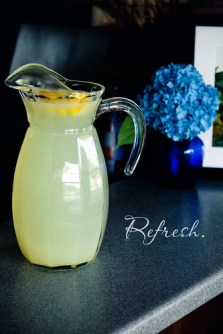
“When life gives you lemons, make lemonade.”


Can You Define Anthropomorphism?

25078605678_0df8c8edd0


Here are three more literary devices you should know about:

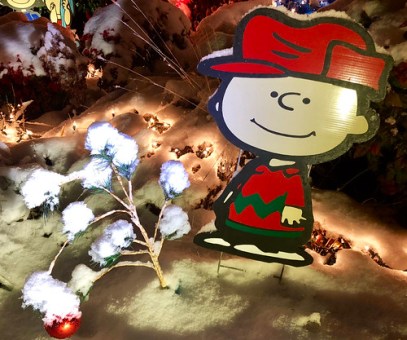
1)  Anthropomorphism- something nonhuman, such as an animal or object behaves like a human. Cartoon characters are good examples of this. They are made to talk, sing, dance, engage in battles, and so on. Authors of children’s books are especially adept at using this literary device.

2)  Colloquialism- This term refers to the use of informal language or slang in order to lend a sense of realism to dialogue. “Gonna” for example, is not considered real word. This device removes the formality from conversation, making it more relaxed and believable.

3)  Euphemism- This refers to words or expressions that are used instead of a more blunt word. For example, a doctor might that say a patient “didn’t make it” instead of “he died” when talking to family/friends.

Sway Your Audience


29393117077_2f15db1b49


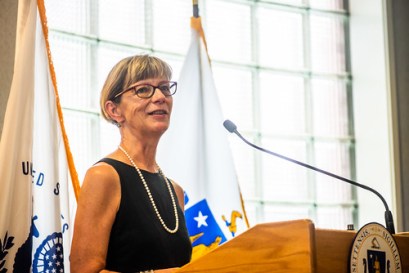
Continuing our discussion of literary devices (last week, we looked at foreshadowing), I’d like to talk about two techniques used mostly by speech writers and not often by those of us who write fiction.

In fact, our self-editing programs may consistently red flag these as repetitive words/phrases.

I like to use them—sparingly–because they can be very impactful.

If used too often, they will never pack the punch intended.

The first literary device is called Anaphora. A word or phrase is repeated at the beginning of multiple sentences to emphasize the repeated phrase and evoke strong feelings in the audience.

An example would be: “He wanted to be a good boy. He wanted to please his teacher. He wanted to make his parents proud.”

Like I said, this technique is often used in speeches where the writer/speaker, such as a presidential candidate, hopes to rally a group behind their cause and/or belief, as well as gain votes.

A very similar technique is the Epistrophe. Here, the repeated word or phrase appears at the end of successive statements. It is used to evoke an emotional response from an audience, just as the Anaphora.

An example might be: He followed the rules so his parents would trust him. He kept his promises, so his children would trust him. He was faithful to his wife so she would trust him.

In writing, these devices can sway audiences to adopt one’s point of view.


Foreshadowing


47572746831_4dd6b67740


There are many literary devices.

Writers use a good deal of them—often without knowing it. 

Foreshadowing is one that really packs a punch.

It is a literary device used to give the reader a hint of what is to come later in the story. It often appears at the beginning of a story, or start of a chapter.

To create foreshadowing, a writer may use dialogue, action, even chapter titles. These create an atmosphere of suspense, building reader anticipation as to what might happen next. For this reason, this device is most often used in mystery novels.

Here is just one example in literature, (From Act 2 in Romeo and Juliet by Robert Francis): “Life were better ended by their hate, than death prorogued, wanting of thy love.” 

Here, Juliet is concerned about Romeo’s safety. Romeo says he’d rather have her love (and die sooner) than not have it (and die later).

We all know what happened shortly after…

A Child’s Point of View


48814385143_3535491b11


I am one chapter into writing my next book. 

I’ve decided to tell it from six-year-old Mary’s point of view.

Before going any further, I thought it prudent to find out if there was anything unique about writing in a child’s POV.

Specifically, I wanted to know about vocabulary. 

I know about using a child’s vocabulary in dialogue. But do I need to use it throughout the story (in non-dialogue sentences) or can use “grown-up” words for description, etc?

I looked LONG and HARD for the answer: 

Claire King, author of The Night Rainbow says:

“When finding the right voice, you’re not obliged stick to the limits of a child’s vocabulary. Rather, get to know her, try to find your way into her thoughts, even if she doesn’t have words to express them, and write that. A child narrator isn’t writing the book, or dictating it; she’s telling it and you’re allowed to be in her head.”

Now, Ms. King just one person. I realize that. And, there may be books on the subject that I am not aware of. But, since that is the way I am comfortable writing my book, I am going to take her advice.

Sometimes you just have to go with your gut and the advice of a best-selling author.

Ahhh, Romance!


39310366862_cc1f8df7fb


Since we celebrated Valentine’s Day this weekend, I thought I would stick with that theme for this post, supplying the latest statistics for writing genres.

It turns out that Adult Romance comes in a close second to general fiction in popularity with readers.

Romance is eighth on the list of which genres agents request, but the American Romance Writers survey places it at number one.

However, there is no disputing that Romance novels make the most money.

Not to leave you non-fiction folks out, it looks like Memoirs are tops in all categories.

So, if you’re new to writing and just now deciding which genre you will write in, the advice is to simply write in the genre you like the best and are most comfortable writing in. 

If you try to follow trends, it is likely you will be disappointed. By the time you get your book written and published, a new trend will have been established.

Critiques, Endorsements, and Reviews

4348708850_f9551b4a5a


A beginning writer asked me what the difference is between critiques, reviews, and endorsements. 

Let’s review what each means in relation to the craft of writing:

Critiques: These are critical evaluations of a person’s literary work. If you are writing, you are likely to be in a critique group where you share your work in progress with other writers. You point out errors in spelling, grammar, punctuation. You also talk about sentence structure, characters, conversation, and many other aspects of the writing craft. The idea behind sharing critiques is to help your fellow writer. Think of these as peers helping each other.

Reviews:  a critical consideration of something. We are familiar with writing reviews of restaurants, businesses, and products. Movies, plays, and events are often reviewed. In regard to books, one writes a short analysis, stating positive and negative aspects of a person’s work. Sometimes the reviewer is also asked to rate the book in terms of “stars” or “happy faces.”

Endorsements: an act of giving one’s public approval or support to someone or something. Endorsements are often written on one of the first pages of a book or on the cover. These are often read by consumers prior to purchase to help them decided whether to buy a particular book—or not.

ECHOES

14876355044_b3bb43883e


Echoes are repetitious words and/or phrases an author may (usually unknowingly) use in their writing.

As an author, and a reader, this is one of the things that irritates me most.

Of all the words there are to choose from, there is no excuse to use the same few words/phrases over and over again.

In a recent book I read, the plot and characters were very enjoyable. However, the repetitious use of several phrases left me shaking my head.

Here are a few examples from that book:

…paused a beat.

…cast a gaze at…

…eyes sparkled.

I have an editing tool that I bought on the internet (see a previous post by me about ProWriting Aid) to help me avoid these pitfalls.

After my critique group gives their input, I do any necessary rewrites. It is at this point that I load my chapter into the tool.

The pages glow with highlighted repetitious words/phrases. Hovering my cursor over each one, I am given suggestions for substitutions. Often, I use these; but just as often, I click on the Thesaurus and choose one I like better.

Doing this, chapter by chapter, works better for me than waiting until the end of the book. Trying to do it that way one time made a believer of me. I will NEVER wait that long again. What a tedious endeavor!!!)

So, that’s the scoop on echoes.

As I finish off, I seem to recall writing about echoes previously. If you didn’t see that post, then this is new material for you.

If you did see it, then please pardon MY ECHO!


Mile Posts Along the Way


48853312957_9eb4e81701


Even the best books can seem unending unless they are broken up somehow so that there are little mile posts along the way…

We have talked before about separating our stories into chapters of varying lengths, with 20 pages being about average. Giving them titles is not necessary, but if done cleverly, they can add an element of interest.

We’ve reviewed Prologues (pre-stories telling about past events that are necessarily revealed in order to understand the present book); Epilogues (more rarely used than Prologues) that add something to the story or are used to segue into the next book in a series.

Let’s touch on the question of dividing a story into “PARTS.” 

In my reading, I have found that these designations can be used to divide radically different sections of a book and/or sudden changes in time, place, or narrators. For instance, The Early Years, Middle Years, Later Years; London, New York, The Bahamas; Spring, Summer, Fall, Winter; and so on. 

If you are writing an extremely long story, you may want to consider dividing your book into parts. You may also consider shortening it by making it a book in a series.

I got my idea for the Simon Says series from readers who wanted more about their favorite characters. So, each of the main characters is the focus of a book and each book is named after a children’s game: Simon Says (the original book) is the story of Marcus; Truth or Dare is actually Simon’s story; Tug of War has Ed as its main character; and Cat’s Cradle will be Mary’s (sometime in 2021).

If you are aware of other ways to divide stories, please share!

Triggering Human Emotions

48204408232_975567abce


Alan’s mother died.

Lara walks her daughter, Lucy, to class on the first day of kindergarten.

Sharon and Scott celebrate their 50th wedding anniversary.

Events of our lives trigger human emotions.

They are the stuff stories are made of, and it is up to authors to use the right words, phrases, descriptions so that our readers will experience these events with all of the emotion as if they were right there, encountering them firsthand. 

Authors do this in many different ways:

  1. By providing appropriate settings- Perhaps using darker lighting, wind/rain, eerie sounds in instances of sadness such as death, defeat/loss of some sort, suspense, and so on. Light, sunshine, puffy clouds, a gentle breeze for scenes of romance, birth, success, etc.
  1. By providing appropriate sounds- Such as laughter, wind chimes, birds singing for happier scenes; screams, heavy breathing, howling for more suspenseful ones.
  1. By providing describing appropriate ‘touch’- Gripping, pounding, scraping are more emotionally charged for suspense; soft touch, patting, tender reassurances for more restful scenes.
  1. By using certain colors- Light pastels are more restful; red, orange, black are often used for scenes with more action… tenseness.

5.  Other things that can be varied, depending upon the purpose of a scene are:    smell, facial expression, voice, vocabulary, description of the characters’ bodies (tense shoulders…) Even teeth—and especially eye descriptions—add  add to the overall emotional feelings of each scene.

Emotions are all about the senses, so everything you would feel, see, hear—and the resulting tastes/sounds/smells (and I’m not talking about popcorn) on a movie screen is fair game for authors.

A quickened pulse or heartbeat… a churning stomach…

A good book to get you started toward creating an emotional journey for your reader is:  The Emotion Thesaurus by Angela Ackerman and Becca Puglisi.