Protagonist vs. Antagonist

30091018165_2d04676559

In a writing workshop I recently attended, the presenter took us “back to the basics.”

If you’ve been writing for awhile, periodically it’s a good thing to revisit the essential elements of story.

The terms “protagonist” and “antagonist” are about as basic as it gets.

Let’s look at their definitions and what those two elements have to do with a well-written story.

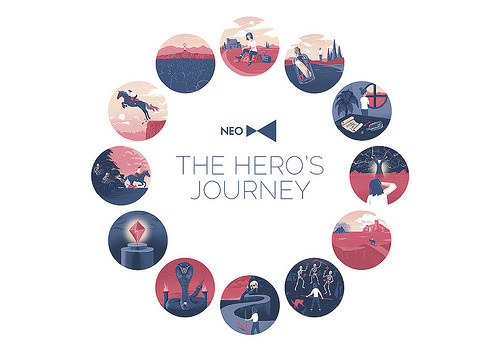
The protagonist is the hero of the story—the central character whose journey we follow throughout the book. He’s the “good guy”. The one we cheer on. The one who experiences set-back after set-back, but emerges victorious at the end.

The antagonist, is the villain. His role is to block the hero’s progress toward his goal at every turn.

The cruel step-mother.

The demanding boss.

The rival for the hand of the princess.

Whoever they are, it’s essential that they do their part by providing those set-backs or road blocks to the hero on his journey.

It is this struggle to overcome that moves your story along to a satisfying ending.


Note: The inciting incident, another basic, was discussed in a previous post, entitled “Creatures of Habit.” You can read it under ARCHIVED POSTS.

Excuses vs. Reasons

I don’t know what to write about.26889457414_4dcd7726b9

I don’t know the correct way to write. 

My friends might not like it.

It could be a flop.

I don’t have the time.

Last year, I read a book called, Excuses, excuses: Living the Excuse Free Life. It is a religious book, but I think there are some things the author, Peter Lopez, Jr.,, said that might be applied to the discipline of writing.

“He that is good at making excuses is seldom good at anything else.”   Benjamin Franklin

Excuses somehow make us feel good about not being as great as we can be—about living up to our full potential!

But, guess what? Excuses are lies, by definition: An excuse is a lie that you give to explain why you have done something or have not done something that you should have done. 

Excuses: Why We Can’t  

The Excuse of Family: “I would, but my son has a…, my wife wants me to…, my parents…”

The Excuse of Yourself: “I’m just not motivated…knowledgeable…creative…rested…”

The Excuse of other People: Fellow writers or potential readers cast doubt or fear. Fear and doubt are the reasons most people don’t achieve their dreams.

The Excuse of the Past: Failures and insecurities keep your past in front of you, not behind you, where they should be.

The Excuse of ‘I Can’t’: “I’m too young… I’m too old… I just don’t have what it takes.”

While excuses are lies, reasons are truth: a fact, situation, or intention that explains why something happened, why someone did or did not do something, or why something is true.

Reasons: Why We Can:

1)  It is ok to say “no,” if it is the truth. 

“I don’t have the time.”

“I’m too busy.”

“I don’t have the money to do that right now.”

“It’s too far away.”

“I don’t feel like it.”

“No, thank you.”

2) If you set goals that are specific, make sense, are attainable, are relevant, and are time-bound, you will be able to achieve your writing goals.

3) Consider getting a mentor.

4) Use a weekly planner.

5) Make both long term and daily goals. Set priorities.

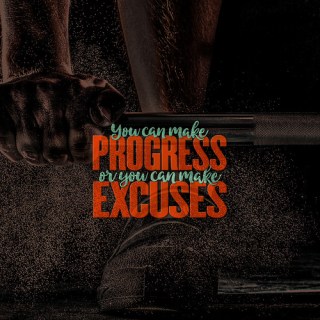
Remember: Don’t use excuses. They are lies. They are damaging and they poison your future.

Make yourself a NO EXCUSE card. Put it in your wallet or purse. Pull it out and read it every time you feel you are starting to use excuses!!!

Care for a Goldfish?

13938793988_0e69d62831


“I loved your book. I was up all night reading. I just couldn’t put it down!”

Comments like those are music to this author’s ears.

From the bottom of my heart, I am grateful that The Choice: Will’s Last Testament is getting such wonderful comments and reviews.

Such a warm reception gives me the energy to forge ahead and begin writing book #3!

It’s curious, isn’t it, what things give a human being the confidence to press on toward accomplishment?

A friend of mine is running a half-marathon in a few weeks. It’s something that she has never done before. It’s the challenge from another friend that pushes her to train each day.

I know someone who is trying to break an internet record for the most podcast interviews done in a certain length of time. It’s a lofty goal involving weeks of podcasts!

When teaching my daughter to drive a stick-shift, I remember finally resorting to popping a Goldfish cracker into her mouth each time she didn’t grind the gears!

So, the goal must be set.

But, there must be something that keeps the person moving toward that goal—a reward of some kind—that pot of gold at the end of the rainbow:

A record broken,

A pat-on-the-back,

A person’s name in lights,

Winning a contest,

Great five-star reviews.

So, dear writer, don’t bail on your dreams. Maybe, like me, all you really need is a little encouragement because

YOU CAN DO IT!!!  I KNOW YOU CAN!!!


What Is Speculative Fiction?


29544681983_f530265e0aChristian Writers of the West recently held our Rattler Writing Contest. One of the categories was Speculative Fiction. In that it is a less-understood genre, I explored a little. Here is what I found:

Pure fiction, tells stories in hypothetical situations, whereas speculative fiction tells stories that take place in hypothetical story-worlds different from our own.

Speculative fiction is a fiction genre speculating about worlds that are unlike the real world. It generally overlaps one or more of these: science fiction, fantasy, horror, supernatural fiction, superhero fiction, utopian and dystopian fiction, apocalyptic and post-apocalyptic fiction, and alternate history.

Speculative fiction encompasses works that don’t fit neatly into the separate genres of horror, science fiction, and fantasy.

Stories such as Stranger in a Strange Land. The Twilight Zone. 

When you come across a story that both is and isn’t science fiction, fantasy, and/or horror, that’s speculative fiction.

David Bowlin of ShadowKeep Magazine states, “Speculative fiction is a world that writers create, where anything can happen. It is a place beyond reality, a place that could have been, or might have been, if only the rules of the universe were altered just a bit. Speculative fiction goes beyond the horror of everyday life and takes the reader (and writer) into a world of magic, fantasy, science.”

The Black Moment

Your story has taken your hero out of his comfortable, ordinary life and sent him on a quest.

It stretches his limits.

Pushes him to accomplish whatever he must in order to reach his goal.

The end is in sight. He’s almost there.

And then, at approximately the 75% mark, the unthinkable happens

and beats him back and down.

It looks bad for our boy. You think, “He’s just not going to be able to pull it off!”

He was almost there…he’d almost won…they’d almost gotten together…he’d almost achieved his dream…

but then—out of nowhere— came

THE BLACK MOMENT…                           8422302030_3f048bb4ea

the old boyfriend

the chilling diagnosis

the colossal misunderstanding.

But, the story is not over.

After a few minutes/days of contemplation…feeling sorry for himself…wanting to just give up and go home

he rallies.

With new resolve—and oftentimes a new plan—he plunges ahead

against all odds.

He rejoins the battle

and although he may be the weakest and least capable,

he conquers the giant

defeats the bully

climbs the mountain

and

we stand and cheer!!!!

“Wow,” we say, “that was a close one…a nail biter…EXCITING.”

The intensity of the climax, whether a book or a movie, is directly proportional to the intensity of the BLACK MOMENT.

So, if you want your reader to be hooked—to ride the big waves with you to a thrilling and satisfying end— then be sure to include an intense and seemingly iron clad BLACK MOMENT.

A Hero in Pursuit of the Dragon

13963965215_57aa71c491

My dog wakes up at 5 A.M. each morning and whines to be let out.

The cat meows at precisely 5:15 A.M., wanting ice cubes in his recirculating water dish, and again at 9:00 P.M. to remind me to brush him.

My dog sits by the door at 3:45 P.M., waiting for my husband to come home from work.

If you have pets, I’m sure you’ll agree that they are creatures of habit.

So, what about people?

Do they like things the same, day after day?

Sometimes…but unpredictability spices things up.

Think about books you’ve read and movies you’ve watched.

You wait patiently while the story is getting set up, but then if something doesn’t happen pretty soon to knock your socks off, you lose interest.

In a book, it is an event that changes the course of the story from “same-o- same-o” into something worth investing our time in.

Something exciting…mysterious…dangerous…unusual…

And, we have to know—we just simply HAVE to know—what will happen next.

So, we read on.

If our books just meander around without purpose and without thrusting our hero onward in pursuit of

the dragon,

the beautiful girl,

the new job,

Or out of the clutches of

the killer,

the monster,

or the wicked stepmother,

readers won’t keep reading.

So, after you establish what is normal life for your character, then disrupt the normal (he suffers a loss…he’s betrayed…) and get him on his way to

the rest of the story

and the Black Moment,

which I’ll talk about next time…


Is There Still Such A Thing as Reading for Pleasure?

I still read for an hour or so before I go to bed. It’s been a life long habit.

Reading for pleasure…reading to relax…reading to satisfy a craving for adventure, romance, intrigue…

But, sometimes in the middle of a chapter, I find that I’ve absentmindedly switched into edit mode, dissecting plot, sentence structure—well, you get the idea.

Why,” I ask myself, “can’t you just enjoy a book and try not to play editor and critic?”

I’m a relative newbie myself, and I certainly have a lot to learn. I promise I don’t do it because I want to be critical of another writer.

Why do I do it, then?     7167049958_be9ac9e47d

I’m not 100% sure, but a lady I was talking to in the salon where I get my hair cut said something worth repeating.

I was telling her that I was editing my book —yet, again—and she divulged that she is an avid reader, who often reads right over typos and other mistakes because she is sooooo engrossed in the story.

That caught my attention. 

Perhaps the reason I sometimes shift into edit mode is that the story is not engaging me. So, instead of reading on, my mind tries to fix it….

The more I’ve thought about it, the more I think there is a golden nugget of truth there:

The most important aspect of writing just may be story. 

If we give our readers a well-written story, they may be able to forgive us an incomplete sentence or the use of an adverb here and there.

I suggest we do strive for excellence in all of our writing

BUT

our readers can be a very forgiving bunch

 IF 

we will give them what they want most:

a great story!


“What? Are You Crazy?”

You spend months or years in learning the craft of writing.

You spend another 1-3 years actually getting words down on paper.

You type that last period               mockup2

on that last page.

Then, you run into a brick wall: publishing/marketing.

And find yourself overwhelmed.

So, do what I always do when life seems to be getting the best of me.

Break it all down into little pieces.

Little fragments that seem like I might be able to accomplish.

And, I avoid those that are too perplexing, too difficult—seemingly insurmountable.

What I am going to say next may seem surprising…actually I know if will because even as I type these words, I’m envisioning your reaction.

I followed a bit of advice I picked up somewhere (I honestly don’t remember where) that said the best way to promote your work is not social media or big ad campaigns.

IT IS TO WRITE ANOTHER BOOK!

Now, I know you are thinking just what I thought when I heard it for the first time:

“That doesn’t sound easy. I thought I could sit back and take a rest once my book was completed! And, now you’re telling me to lock myself away and start writing yet ANOTHER ONE??? Are you crazy?”

Yes and No.

Yes, write another one.

No, I don’t think I’m crazy.

Because I put it to the test and here is what I am finding:

The Choice has been out a couple of weeks, now, and since its arrival, Runaways’ sales have picked up, again.

No kidding.

Don’t misunderstand. It’s not earthshaking.

But, IT IS FASCINATING.

So much so that—yes, I’ve already started writing book #3.

I’m on a roll. A slow roll, perhaps, but still it’s a roll.

Like a snowball rolling down a hill, I am picking up new readership and sales.

Mostly it’s what’s happening on the inside of me that’s amazing, however.

The “I think I can do it” is turning into “I am doing it!”

I’ve Changed My Mind


2626749848_017cc65a8a


After a meeting, yesterday, the topic of how often one should write (every day? how many hours per day?) came up.

I listened as inexperienced writers eagerly listened to more seasoned authors on the topic that is as dear—and as often-debated—as toilet training is to young parents.

In one of my previous posts, I said that if you are researching for your book or article, or attending a conference, or viewing a webinar, that “counts” as your writing for the day.

Well, like I told the others after the meeting, I now know a bit more about the craft of writing and have changed my mind about what I advised a year ago.

There is no substitute for WRITING.

Here’s why:

You cannot learn to dance by reading a book or studying diagrams of nimble feet doing the Cha Cha.

You cannot learn to fish without baiting your hook and casting the line into the water.

There is no substitute for actually DOING.

We need to practice writing. All the reading and conference going—although worthwhile—cannot take the place of good, old-fashioned application.

Some people find themselves in such an endless cycle of “learning how to write” that they never actually sit down in front of the computer and try their hand at it.

They think that if they will just read one more book or watch one more webinar, then they will be ready…qualified…fully prepared.

All of that is well and good, but as my neighbor’s son studies his driving manual, I am reminded that he must also get behind the wheel and gain the experience of actually driving.

As a child, I heard my mother say, “Wishing doesn’t make it so,” many times. (Mostly this was in reference to having a clean room.) But, apply it to writing an article or book and you can make the connection, can’t you?

So, my conclusion is this: you must learn the skill of writing by writing, writing, and writing some more.

Every day?

Yes.

An hour a day?

At least.

Grab a partner and dance.

Bait your hook and cast your line.

Back out of the garage and get out on the highway.

Turn on the computer and let your fingers fly across the keyboard!

Inspirational Words With a Twist

15437460076_a0fe6ae86a

Watch your thoughts,

for they become Words.

Watch your words,

for they become actions.

The are the beginning lines of a well-known inspirational poem.

However, as I look at them, I see a hidden message for us writers.

When I first began writing, I had to break myself of the habit of telling.

I remember having so many critiques returned to me with the following in the comment section:

“Give more thoughts…show more action.”

How?

Word choice.

In a lesson for my young students, I now give an example of how choosing the correct words can make a huge difference in the meaning that is portrayed:

Max walked down the street.

Max ran down the street.

Max skipped down the street.

Max hobbled down the street.

Max fled down the street.

And on and on…

Each new verb changes the picture for our minds’ eye.

And that picture, changes the mood…the intent…the meaning.

A dictionary, a thesaurus.

These are a writer’s best friends—especially the thesaurus.

They make our work more accurate

more vivid

more exciting.

They change telling stories into “word movies” and ho-hum books into sheer excitement for the reader.