Think About It

4109815733_80f7415dfb


One of the things that makes our writing strong is sharing our character’s thoughts with the reader. This is done in two main ways: by indirect and direct thoughts.

Thoughts are simply a character talking to themselves. We show this inner speech by using italics instead of quotation marks.

For example,

Indirect: He thought his friend’s remark was funny.

Direct: Now, that’s funny!

Most narrative writing is in the past tense.

But, characters’ inner thoughts are written in the present tense.

Here is an example:

Indirect:  He refused to give up.  (This comes from the narrator. Past tense- third person.)

Direct: I refuse to give up.  (This thought comes directly from the character. Present tense- first person.)

So, when should you use indirect thoughts and when should you choose to include direct thoughts?

Ask yourself two questions:

1) Does it feel like it’s in third or first person?

2) Does it feel like the character is saying this?

It’s just that simple. 

Or, at least I think so…

Love Me, Love Me Not


15674961512_0bb6066f94


I remember as a child, plucking petals from daisies and saying, “He loves me. He loves me not” until the stem was bare.

Today, I plucked petals from a sunflower. I repeated,  “Shopping. Writing. Shopping. Writing.” 

Do you sometimes need motivation to get down to work?

Even if writing is your passion, like it is mine, do you still find there are times we need to give ourselves a little nudge?

For instance, “If I write for two hours, I can watch my favorite television show, or if I write today, I will let myself go out for coffee with a friend this evening.” And so on.

Are we losing our interest in—or desire to—write? Are we abandoning our dream…our goal?

The holidays are busy with decorating, shopping and celebrating. It’s only natural that there is less time for writing, laundry, and cleaning. 

This season, I’m giving myself permission to spend time with family and friends. I may even go to a holiday movie.

 I’m not going to make myself feel guilty if I don’t get much writing accomplished. 

The computer will still be there when the holidays are over. And, who knows? When I reread what I last wrote, I may see it with a fresh set of eyes. My edits may come faster and easier.

I may end up with a better finished product.

I remember that when I was a teacher, I did my best teaching after Christmas break. I was refreshed and ready to tackle the second semester.

What will you do? Motivate yourself by plucking petals off a rose? Or call a friend and suggest you meet at the mall?

I’m Thankful For YOU

25007297257_92ebd4e5a5


How can I turn a writing blog into an occasion for Thanksgiving?

The most obvious way is to write something about giving Thanks—related to writing.

I have several things/people to be thankful for this year:

  1. I am thankful for authors/writers who share what they know. I learn either from individuals, speakers, books, podcasts, blogs–any way I can.
  1. I am thankful for my readers, and my critique group whose kind comments encourage me to keep writing.
  1. I am thankful for those who pray for my writing.
  1. Foremost, I thank God for increasing my desire to write, my talent, and His leading as I write. Every day, I am aware of His awesomeness in allowing me to pour out His love and provision to others through the written word.

Thank YOU for reading week after week, sending in your comments, and following this blog. I want to write about what you’d like to know, so please send me requests at any time. I can almost guarantee you that I will need to do a little research to provide what you need—but I love it–because I enjoy learning “write” along with you!

The Plot Beneath

35294772960_969c158110


I was experiencing plot problems.

I went back to the Prologue and reread my manuscript. Yep, all the way to Chapter 14.

I had to think of something. Rearranging scenes was a possibility to consider. Still…

I went to the internet for help. I read several articles. Could the answer to my difficulties really be as simple as adding a subplot? 

A subplot is a story strand that runs alongside the main plot and supports it. It mirrors the main plot, but is shorter than the main story.

To accomplish the creation of a subplot, the writer must create and separate story and connect it, at two or three points, to the main plot.

The purpose of a subplot isn’t to cause the author additional work. It’s to strengthen, or enhance, the main story. It can make it more exciting, add tension, as well as increase the overall length of the book.

With good planning, creating a subplot is so much easier to do when you are just beginning to write your book. If you wait (like I did) you will find it can be a tedious task of weaving characters in, adding conversation and action, and finding just the right places to interject these things.

Adding a subplot can be done—and it may be worth the time and effort to do so.

You Know You’re Famous When…

8187375018_34a64c569b


I knew there was the possibility of it happening some day. I just never thought it would be last Tuesday.

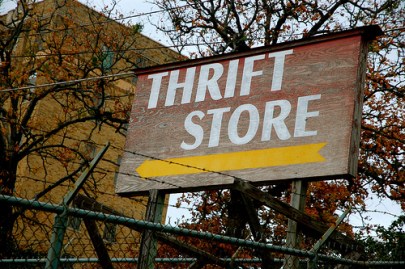
Following a doctor’s appointment, Mom requested that my sister and I take her to a thrift store. After looking at furniture, housewares, purses, and games, we headed to the book section—Mom’s favorite.

She asked me to pull out a book for her. When I reached for the one she had pointed to, I felt the familiar softness of the cover…the exact shade of blue I’d chosen…Runaways   was written on the spine.

As I handed it to Mom, my sister exclaimed, “You’re famous!”

Heat crept up my neck and warmed my cheeks. My heart double-thumped as I stared at my first published book.

My sister took my picture with Runaways and then she bought it for $1.25 (it was discounted for senior day) even though she already has a copy. “Now I can loan it to friends and won’t have to worry if I don’t get it back.”

I’m not so sure success is measured by being on the bookshelf at Goodwill.

But, then again, who’s to say?

Your Thoughts Matter

10183755413_e4c0cc1c2c


What is the most helpful information you have ever received related to writing?


It is a hard question, I thought, as I looked at the email I received.

Several people have recommended books on writing that they viewed as helpful to them in their own journey as authors.

Some colleagues listed the essentials for an author, as being: a quiet home office, a Thesaurus, MS WORD, a good editor, and so on.

Some said I should join a critique group and a professional organization.

Others told me that I must write every day. No excuses.

Still others reminded me to SHOW—not tell.

And, on and on.

But, that doesn’t answer the question as to what has been most helpful to me.

I could say that it has been a combination of things—because, in fact, it has been.

But, I suppose what has been most helpful is the same advice I would give to anyone facing any career change: “Don’t ever compromise your values in in order to get ahead.”

There are some genres that are “popular” in our culture today. I know writing in them would be more lucrative. But, I also know that I don’t want to fill my head with the kind of thoughts necessary to write in those genres. 

If I were a nutritionist, I might say, “You are what you eat.”

I believe that whatever we dwell on…whatever thoughts we entertain…we will become. That goes for the books we read, the movies/television we watch, and the music we listen to.

If you think on good things, you will never be embarrassed by—or have to apologize for— the words you have written.

Welcome–Come On In!

35576185212_f851a2f842


You hear the music and laughter as you walk up the steps and ring the doorbell. The host of the party opens the door, steps outside, and tells you about the great time guests are having inside. Then, he closes the door, leaving you standing there thinking, “I got an invitation. Why didn’t the guy invite me in?”

Contrast that with a gathering I went to recently. A few moments after I knocked on the door, the host ushered me into his home. Smiling, he offered me a drink, showed me where the snacks were, and drew me into a fun conversation with a group of party-goers.

I immediately felt at home…valued…welcome. 

Sound like some books you’ve read?

Sometimes you feel like your time and money have been wasted; others have a way of keeping you turning the pages late into the night. 

What makes the difference?

The author of the second book welcomed you in, showed you to the snack table, and made your stay interesting. 

As writers, we are told to begin our books by dropping our reader into the midst of action. This is “showing.”

But, some writers “tell” their stories. And that doesn’t make the reader feel as much a part of the reading experience.

Dropping the reader into the midst of the action is MORE than just making the story exciting. It also makes the reader feel they are sharing in the experience.

They’ve been invited to the party and welcomed inside.

They Are What They Are

3225476097_b0aff0834e


A cliché is a trite expression, often a figure of speech, whose effectiveness has been worn out through overuse and excessive familiarity.

Some examples are: “Don’t throw the baby out with the bathwater; leave no stone unturned, live and learn, what goes around comes around, at the end of my rope, sleep like a log,” and so on. 

There are thousands of them. We are told that they have been used too often and that, as authors, we should guard against including them in our books.

I agree to a certain extent. But, here is why I still use some—on purpose: I don’t like to tell the reader flat out what year it is. Instead, I like the reader to use the little clues I drop here and there, in order to figure it out for themselves. 

It’s just like certain time periods might use “sneakers” instead of “tennies or tennis shoes” or characters eat a breakfast of “Cheerios” instead of “Trix”, or buy a brand of cigarettes that were once popular, but no longer are sold in stores.

When I was in elementary school, we used expressions such as “Oh, fudge!” Or “Super.” But kids now say “awesome” and “epic.” Using them in writing gives authors subtle ways to tell the reader what time period the book is portraying.

Current cliches that will someday have passed their usefulness and become expressions that we will be told not to use, might be: “that being said, think outside the box, whatever, it is what it is, and my bad.” They will signify a period of time in history.

So, along with how the characters dress and the kind of cars they drive, I am suggesting to you that a sparse use of cliches can, in fact, be of help to readers.  And, I also think we shouldn’t beat ourselves up if we unintentionally include one or two in our writing. (I got called on the use of the expression “pass the time,” recently.”)

My thinking on that?

Really?  (Oops!)

Before I close, I want to share something new I just found. It is Google Ngrams Viewer. It lets you track the use of phrases through their collection of scanned books. You might want to check it out!

Online Editing, Part II


4263193267_fb5cee0c57


Last week, I introduced you to the AUTOCRIT online editing program. I hope you have had a chance to try it out for yourself and see how it might enhance your writing.

This week, I used a free trial on PROWRITINGAID. I found that it included many of the same features as Autocrit, but truthfully I didn’t find it to be as user-friendly, nor could I find a HELP button or figure out how to SAVE my material. (I am sure these things exist, so if you take a look at it, please share these two vital pieces of information with me…)

ProWritingAid offers a 14-Day free trial and I don’t want to fail to mention that the price—only $40 per year—is far less expensive than Autocrit.

I would suggest you opt for a free trial for both of these programs and determine for yourself which meets your needs and budget. Whichever one you choose, it will be a good addition to your writing arsenal. If you’ve been writing for less than five years, using one of these is essential. If you have been writing for longer than that, I still think you will find it cuts your self-editing time at least in half. You can devote the time you save toward the creative side of writing!!! 

Online Editing Programs

38578626601_57fe16f4a6


Today’s blog is short and sweet—Part 1 of a two-part series on Online Editing Programs.

A couple of weeks ago, a writer-friend told me about an online manuscript editing tool, AUTOCRIT, that automates the most tedious editing tasks for him. 

It has helped him in the areas of dialogue, excessive use of adverbs, identifying cliches, repetitious words/phrases, pacing of sentences and paragraphs, and so on. The software works with the internet browser to give summary reports, overviews, and suggestions. 

A writer uploads their work into AUTOCRIT, polishes it in more than 20 areas based on his designated genre. When satisfied with the result, the revised copy is then exported back into the original writing program (say, WORD, for example).

I signed up for a 7-Day-Free trial. I found AUTOCRIT to be easy to understand and use. It really helped me see things I was doing—and correct them—while writing. I liked having my chapter look and sound great BEFORE sending it on to a LIVE editor.

To be sure, this isn’t the only online editing program available. So, before I commit to AutoCrit’s reasonable monthly fee, I have another to check out.

I will post results/findings on it next week.

If you are like me, you want your finished book to be the best it can be. So, while you are waiting on my next blog post, you may want to check out AUTOCRIT for yourself.