Lights! Camera! Action!

One of the first rules of writing, is to begin your story, chapter, or scene by dropping your reader into the midst of the ACTION.

You ask, “But, what about the backstory?”

Well, you tell me. Which is more exciting? The beginning of Story A or Story B?

A)  Claudette, a forty year old nurse, was born in Kansas City, met and married Charlie right out of high school. Together they had three children, a cat, and a dog. Her husband died last year, her parents the year before that.

B)  Claudette crept from behind a cluster of large oak barrels on the deserted wharf. It would soon be dark. If she was going to attempt an escape, she would have to do it soon. With the gag still in place, she couldn’t scream for help. Her wrists were raw where she  strained against the ropes binding them. Surely those hoodlums had mistaken her for someone else—someone rich and famous. Charlie would never be able to pay such a high ransom. He didn’t do well in stressful situations, anyway. No, if she was going to get out of this alive, she’d have to do it herself.

My point is, that once you drop your reading audience in the midst of the story with your character, you’ll have plenty of time to feed them the backstory, a little at a time, in the form of ACTION.

I find it easiest to accomplish this kind of writing by VISUALIZING my characters DOING: talking, moving, reacting. It’s a book, but the characters still have to be SEEN in the readers’ internal eyes.

In a movie, actors SHOW us what they are doing. However, in a book, it is the author’s WORDS that help readers SEE what is going on. If they are just sitting there on a sofa, it is likely the book will soon be tossed aside. (Would you want to watch a movie where the character didn’t say anything, talk to anyone, express any thoughts??)

I have made myself lists of verbs, adjectives, exciting phrases, facial expressions, and so on. These are displayed on huge poster boards hanging inside my office closet.

I refer to the board, often. If I use a word or phrase from my list, I put a mark beside it. I strive not to use it again in the exact same way in that particular book. I mean, do you want to read “huge crocodile tears ran down her cheeks” every time Mary cries? It takes some creativity, but it IS possible to say the same thing in a variety of ways.

So, there you have it. A book is really a movie, in a different format. If you are a screenwriter, you can count on actors and actresses—even animation—to make your story come alive. But, a writer?  Well, you must rely on your words—actions verbs, colorful adjectives, emotionally laden. You’re a “one-man-show.

When you write this way, not only is the book a more exciting read, the entire writing process becomes more exciting for you, as well. There are actually times I feel my heartbeat and breathing accelerate along with my character’s. My mouth goes dry when his does. My hands really and truly shake on the keyboard.

Now, that’s action!

And this is “a wrap!”

Get Cranking!

So, you get your submission back from your critique group. They have a few “suggestions” for improvement.

Your manuscript is returned from your editor with hundreds of “red lines”. A major rewrite is in order.

Your Beta Readers are less than enthusiastic about the plot or characters in your latest book. You need to tear it apart and see where it went wrong.

Negative comments are inevitable, but we cannot let them devastate us as writers. When you get them, first “consider the source”. Then, if the source is credible and the person is someone you respect, spend as little time as possible wallowing in despair.

I say: “get cranking.” Learn what you need to learn; do what you need to do. Use all of that pent up frustration in the direction of making improvements.

Oh, to be sure, we love those positive comments that make us feel successful, but it’s those negatives that can really light the fire under us. They have the power to propel us to greatness if we turn them around and view them as positives.

We can even learn to be thankful for them, because they are the ones that stretch us as  writers and spur us on to learn and grow in our craft!

If we allow ourselves to be devastated by negatives, we will soon find ourselves deep in a black hole of gigantic proportions, stagnated and unable to ever face the computer keyboard again.

When riders are thrown from a horse, the best advice they receive is to get back in the saddle as soon as possible. As writers, that “horse” may look like a harmless chair on rollers. But, here’s the point:

Don’t let negatives define you.

Use them to your advantage and

Get Cranking!

Pseudonyms

What’s in a Name?  I asked myself this question not too long ago, reasoning that the name Brenda Poulos might not be so memorable. Maybe I’d need something shorter, flashier, similar to some other well-known person… I’d piggy-back off of their fame…

Some writers use pen names. I was curious to find out why, so I decided to do a little research. Here’s what I found out:

1)   Most well-known authors write in a certain genre. They become known as a Suspense Writer, for example. Then, perhaps they want to add another genre to their writing repertoire. Publishers may not like this for several reasons. Same with their fans. So, they write in the “new” genre under a pen name.

2)  Some writers, I found out, start writing under a pen name when they are looking to switch publishers.  (The internet article cautioned against doing this. I can see all kinds of legal reasons why this wouldn’t be a good idea.)

3)  Writers, whose earlier work(s) may have bombed, might want to use a pen name when they publish something “new.”

4)  Pseudonyms are often used by authors who have names similar to someone else. (Hum, opposite of my earlier idea…)

5)  If a writer thinks his/her name doesn’t suit the genre, he might want to choose a pen name. This happened when Pearl Gray changed his name to Zane Gray to appear more like a western author.

6)  Women who write in a genre that is usually written in by men, often use their first initials and last name.  (For example, in westerns).

7)   Sometimes several authors write books together. They choose a fictitious  name, making their audience think the books are written by one person, when they actually are not.

8)   Sometimes writers want to protect their identity if they are writing in a genre in conflict with their main profession. For example, a surgeon who writes a murder mystery about a killer who dissects his victims. Yikes!

9)   Some of us are shy and just don’t want publicity. It’s possible to conceal one’s true identity by using a pseudonym.

10) Finally, if you want your name to be catchy and memorable, start making your list of possible pen names.

There you have it. Ten reasons to use a pseudonym—or not.

Do you currently use a pen name? I’d be interested in learning why you do so and if it has worked out well for you.

Brenda

Ten Things To Know Before You Become A Writer

A new acquaintance of mine was intrigued by why I wouldn’t just lay back and enjoy my retirement. “Shouldn’t you be going on a cruise, taking in Broadway plays, or some such leisurely activities?” I must admit that sometimes, when I’m up early to write before anyone else in my house is awake, vacations or just hanging out with some of the Red Hat Ladies does sound like a good idea. But my characters depend on me to give them life and a purpose. So, I grab a second cup of coffee and get on with it. Her followup question, however, is the real reason for my post today. What she asked was this: “What do you have to know to be a writer?” Where do I begin? Figuring she was not so much interested in specifics as she is in just making conversation at a barbecue, this is how I answered:

  1. First of all, you need a desire to write—to tell a story that’s been on your heart and mind for way too long. You need an overwhelming desire to get it down on paper.
  2. You need the desire to communicate. It is more than just writing, per se. It is thinking about the reader. Needing to connect with him/her on some deeper level. It’s that emotional connection that we both crave.
  3. You need to be fairly good in your use of spelling and grammar. (I say “fairly” because of there are so many online helps, such as Spell Check, that make that part of writing easy).
  4. But even those online helps are no substitute for a thorough knowledge of sentence structure and a myriad of other writing skills that go along with that. However, writing skills can be learned. I’m learning every day.
  5. You must be a self-starter, disciplined and persevering. Someone who truly does believe that the only way out of the tangled writing jungle is through writing, writing, and more writing.
  6. When your story calls, you must answer. Whether it is 3 a.m. or midnight, when an idea surfaces, you need to be there to develop it 24/7. This may require you to function, occasionally, on a minimal amount of sleep.
  7. You need to be able to delay immediate gratification for months—even years, sometimes. Writing and publishing take a long, long time. It may take you so long to get that book to market and receive those cherished letters from excited readers that you’ve even forgotten the names of some of your characters!
  8. My back and shoulders are aching today, so I must also remind you that you must be able to sit for long periods of time in front of a computer. Get up every hour and move around for a few minutes to avoid the chiropractic office becoming your home away from home.
  9. This contradicts #6 (above) but you do need sleep. You need to be sharp when you write or you’ll make mistakes. These will eat up precious time in editing and rewriting.
  10. The biggest thing you need to be a writer, though, I saved for the end. You need to be CREATIVE. You can know how to write perfect sentences, free from spelling and grammatical errors, but if you lack creativity, your book won’t be a satisfying read for anyone.

I was going to continue by talking about characters, plot, and setting. However, as I looked into her glazed eyes I could see that I had lost her at about #2. Her sights were now set on the dessert table… Brenda

I”ve Gained Weight on a Steady Diet of Writing

I have come to the conclusion that writing and dieting definitely do not mix.  If you have been writing for any length of time, you may have found this to also be true in your own life. If you have an answer for this problem, please let me know—seriously.

First of all, I find that when I am heavy into writing—especially when writing something that is very exciting—I find it difficult to get adequate sleep. I’ve tried 1) staying up late so that I am very, very tired when I lay down  2) stopping writing at least an hour before I go to bed so that I don’t have my story on my mind.

Both of those help…sometimes.

I also find that I wake up in the middle of the night, thinking about my characters, and cannot get back to sleep. I give it a half hour. If I don’t fall asleep, I just go ahead and get up. What’s the use in tossing and turning for the rest of the night?

What does sleep have to do with weight control? The latest research says that getting a good night’s rest helps with weight loss. The reverse is also true. Not enough sleep results in weight gain.

Secondly, writing—again, this is especially true of writing something exciting—causes me to snack. The faster I type, the faster I shovel it in. The more suspenseful the writing, the more I am likely to go for something small and easy to pop into my mouth. My favorites are popcorn and nuts.

Finally, writing is a sedentary activity. We writers need to get up and move around every hour or so to clear our brains, stretch our muscles, and burn a few calories (especially if we have a snacking problem to counteract).

I belong to an exercise group which meets, daily. I feel successful if I get myself there twice a week. Because it meets at the beginning of the day, I often find myself skipping it and going directly to my writing, thinking that it is wasting precious time, when I know, in fact, that it is good for both my body and brain.

I guess I will never write a cookbook. I can just imagine what might happen to my weight if I focused on yummy recipes all day long!

Brenda

MILK IT!

There are times when my Critique Group writes “Milk It!” when commenting on some of my scenes. What they are saying is that they want MORE than I have written.

MORE ACTION

MORE EMOTION

MORE INTERNAL THOUGHTS

MORE DESCRIPTION

MORE CONFLICT

Why? Because that’s what makes a story exciting and satisfying. If you want your book to be a real page turner, then a writer has to deliver ON EVERY PAGE.

DON’T SKIMP.

PLUMP IT UP. Use rich vocabulary. Lots of adjectives and verbs. Paint a visual picture.

Furnish the details. Let them get inside the characters’ heads by revealing their emotions via DIALOGUE, ACTIONS, AND THOUGHTS.

PUMP UP the plot. Make the content EXCITING. Make your reading audience want to keep turning the pages.

I know I have read books that were so exciting that they literally kept me up ALL NIGHT. I just couldn’t put them down.

That’s what writers want, isn’t it? To have our readers so completely drawn in by our characters and their journeys that they just can’t turn out the light and go to bed.

When I am done writing a chapter, I set it aside until the following day. Then, I read it again, with the eyes of a READER. I look to see if the first paragraph “hooks” me, if I want to keep reading to the end, and then if the closing sentence leaves me wanting more.

If so, I start writing the next chapter. If not, I look for where there is lagging action, conflict, emotions, thoughts, and/or descriptions. Then, I re-write, adding those elements.

I repeat the process until I am WOWED.

Then, it’s ready for the critique group. If they are WOWED, then I’m a happy camper. If they are WOWED, I know readers will be, too.

So if you have a nice little story which is lacking in PIZAZZ, why not make it a page turner?

Spice it up.

Change it up.

Shake it up.

MILK IT!!!!

Brenda

Similar, but Different

I recently shared with someone that I am a writer, but later I asked myself if I really understood the difference between being a writer and an author. I decided to find out.

I discovered that although the words might be used interchangeably, they really are different.

An author creates the idea or content of what is being written, whereas a writer uses someone else’s ideas.

But it’s not that simple because a writer can be an author if he/she is expressing his own thoughts or ideas.

And there’s more.

As pertaining to writing books, even if you develop the plot and write your own ideas, you will be known as the author only when it is published.

Even if you write A LOT, but never get anything published, you will be known as a writer—and there’s no shame in that. Lots of good work, great ideas, and a wealth of information/enjoyment comes from writers.

I’ve had a lot of fun writing skits for various groups, poems for friends’ birthdays, etc. That kind of writing is self-rewarding in that it doesn’t need to be submitted and I know it won’t be critiqued. I do it for pure enjoyment. I bet you do, too.

However, if you do have aspirations of being an author, follow these 2 steps:

  1. Write, using your own ideas.
  2. Publish your work.

What A Character!

The following is a reprint of a post I made today on the website I share with four members of my critique group http://www.5scribesandtheirstories.com:

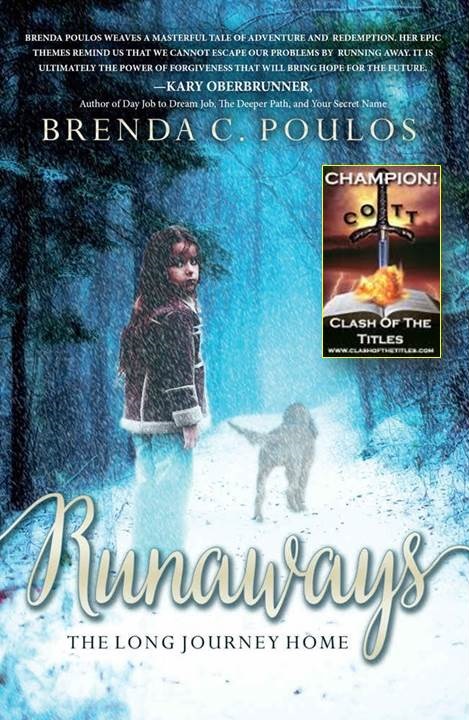
I like my characters for different reasons. In Runaways, I like Charlie because of his quirky grammar and mannerisms; I like the way Claire, Charlie’s wife, reacts like a mother hen to those around her; I love Jake for his bravery and the fact that he is an overcomer; I appreciate Hound because he is always loyal and protective of Jake.

So, that leaves the villain of the story, Ethan. For two-thirds of the way through the book, I didn’t like him. After all, he is a liar, a murderer, and abusive to his son. But, then something happened. Ethan started to come alive. He forced me to take a look, not at his outward actions, but at his very soul. He forced me to dig deep.

Ethan challenged me to tell the story of his own past in such a way that it could be woven together with the present, making him a character deserving of the reader’s empathy. He showed me that he was redeemable—that he was, in fact, someone my reading audience would end up cheering on in his struggle.

Yes, I like Ethan because he forced me to take a look at all of his ugliness and, yet, find within myself the desire and power to forgive him. If, as a writer, I could offer him unconditional love, then I could write his storyline in such a way that readers could, too.

Through the power of story, characters evolve and the life lessons they learn are sometimes ones we find that we need to learn, too. Jake, Ethan, and Charlie take us on a journey through their struggles and bring us all to a place of hope for the future.

Author’s Note: God willing, Runaways, will reach publication sometime in 2015!

Brenda

Sharpening the Ax

When reading my friend Dee Kincade’s blog a few days ago, I decided to ask her if I could have her permission to reprint it on my site this week. She has hit the nail on the head with her ideas on the importance of time spent in preparation for writing. Thanks, Dee!

A quote from Abraham Lincoln “Give me six hours to chop down a tree and I will spend the first four sharpening the ax.” 

The first time I read this quote by Abraham Lincoln I thought about the mountains of Colorado where my husband spend many hours each summer getting wood for the winter.

Picture

When we decided to use wood as our only source of heat, my husband talked to friends, researched the best chainsaws, and studied the different types of axes. Before he went out for the first time, he had to learn the art of where to cut the trees—uphill side or downhill. Do you notch the tree on the side of its lean, or does it matter.
I took the liberty to change President Lincoln’s famous quote to fit authors: “Give me six months to write and I will spend the first four learning how to do it.” Though it doesn’t quite fit, there are some basics that we all need to know before we sit down to write. What about the following? I didn’t know about ALL of them when I started writing.
Genres?
Age group?
Three acts?
Point of view?
Show vs. Telling?
Manuscript set-up
What is acceptable in the current market?
I’ve seen people who’ve decided to write for the first time sit down and do just that. Later, after spending several hundred hours and dollars they have their book line edited. Only to have the manuscript rejected because they hadn’t taken the time to learn before they went out to chop the keys of their keyboard. Now they had to do back and learn the skills.
After the first year, my husband would spend a weekend each summer filling the gas cans, cleaning out the stove and flue, and sweeping up the wood chips from the previous year.  Next, he’d oil the chain saw, and sharpen the chainsaw and ax. Then he was finally ready to go to the forest and cut down the dead trees. The preparation, took as much time as it did to chop the trees. However, it was time was well spent.
As writers, not only do we have to learn the craft, but we need to continue learning, stay up to date with changes in the market, and study new techniques.
How do you stay current with new trends and stay in learning mode?
 A note from Dee:  I write Christian fantasy books for Young Adults and the young at heart. If you’d like to
find out more go to www.deekincade.com   I hope to see you there!

Revisit, Rethink, Revise, Rewrite

A lot can happen between January and April. A writing plan that is made at the beginning of the year, without revision, will simply not take us past spring, into summer and beyond. It’s time to revisit, update and, if necessary, rewrite.

Let’s ask ourselves these questions: Is my plan still working? Is it still realistic? What has changed in my life since the plan was written? Do those changes affect my being able to carry out the plan? If so, what needs to be adjusted?

Here is what I have found. The culprit in my efforts to keep to plan is time. When I wrote my plan in January, I failed to factor in time necessary for research, webinars, and writing-related reading. I hadn’t allowed for the hours necessary for completing submissions. And finally, I had scheduled so many hours of writing, that I hadn’t left enough time available for my personal life—attending family dinners, movies with my husband, walking the dog.

So, perhaps I need to write a life plan that includes devotions, writing, exercise, volunteering, family/friends activities, housework, and leisure. Writing can be a large part of that plan, but I need to allow for the unplanned, too—that surprise visit from Aunt Martha, an unexpected phone call, a refrigerator on the fritz.

This quarter, I am going to tackle this time problem, once and for all. First, I am not answering the door or the phone during my scheduled writing time. I’m going to take advantage of voicemail, email, and texting by answering once my writing time is completed.  Secondly, I am building in an hour of flex time into my day—time for the previously unexpected, which I am now going to dub the “expected interruptions.” I don’t know exactly when they will come, but I do know with a fair degree of certainty that they will come. And when they do, I’ll be ready.

I am hoping this new daily plan will keep me from getting frazzled and help me meet my husband at the door with a smile, rather than the wild-eyed look I have been famous for these last few months. And, oh yes, I am setting up a reward system. I am giving myself a little reward at the end of each day that I actually keep to my plan. Time to pleasure read, calling a friend and chatting (yes, a real conversation, not a text), enjoying lemonade on the patio, and watching a favorite television show are on my short list.

Your problem may not be time. Yours may be self-motivation or organization. No matter what they are, problems will remain problems, unless we meet them head on.

It all starts with a plan. A plan that is tweaked often so that we can better reach our writing goals. A plan that is rewarded in increments so that we are encouraged to keep on writing on a daily basis.

Someone will write words that will inspire others for generations to come. Will they be yours?

Brenda