Reading Trends for Writers

The current image has no alternative text. The file name is: 47572746831_4dd6b67740.jpg

Understanding book sales is important for authors and publishers.

All of my books have been fictional. Each based on ideas that interest me at the time.

However, gurus are suggesting authors take a scientific approach to choosing our topics and genres.

With another book published—and starting to write yet another—I set out to garner information on trends among American readers. 

Recents surveys show that nearly half of Americans polled haven’t read any books in more than a year!

So then, let’s focus our attention on the other half—the readers.

I was surprised to learn that PRINT BOOKS continue to be the most popular format. E-books rank next; then audiobooks. 

The number of female readers is only slightly higher than for males.

Americans love HISTORY, MYSTERY, AND BIOGRAPHY.

Fiction sales gave gone up by 45% over the last five years. 

Non-fiction, especially political and self-help, are currently seeing a decline in interest. 

You can draw your own conclusions, but from these statistics, we might want to focus on women readers of history, mysteries, and biographies.

And although Romance has always been a popular genre—and probably will continue to be—perhaps now would be a good time for Romance writers to couple with the genres above…Romantic Suspense… Historical Romance, and so on.

Those are my thoughts based on a little research.

Different Strokes for Different Folks

What one person likes, another may not.

That’s why it’s important to offer your book in a variety of formats.

For a long time, hardback and paperback were the only options for readers.

Later, e-books and audiobooks were added.

You can widen the market further still by offering your book in other languages.

My newest book was just published on Audible. Within a couple of weeks I will announce an interview on Facebook with the producer, Brian Callahan. You’ll want to be sure to watch it. He’s an accomplished guy that can make his voice sound both feminine and masculine; likable, angry, menacing. 

He’s likable, easy to work with, and very amenable to changes/suggestions. 

Justice for Jessie in audio format is now available on Amazon.

Making Comparisons

Last week, we talked about Hyperboles. This week, we’ll focus on The Simile and The Metaphor.

These are also descriptions using figurative (non-literal) language, but they are not necessarily exaggerations.

They are both used to compare two things, actions, or ideas that are not alike. They make writing more descriptive, persuasive, and poetic. Writers of fiction, poetry, and song lyrics often use either or both similes and metaphors. 

An easy way to tell them apart is that metaphors do not use the words “as” or “like,” whereas similes do.

Example of a famous metaphor: Eyes are windows to the soul.

Here, the meaning is implied through comparison—that a person’s eyes can reveal a lot of information to the observer.

Example of a well-know simile: Without glasses, my father is as blind as a bat.

Here, the meaning is that someone’s vision is poor. He is not blind; he just needs to wear glasses.

I see the use of similes and metaphors more and more today, especially in historical fiction, suspense, and YA.

Journey Ended


6342532860_c45277b707


Today is the Grand Finale of our Journey Through the Genres. The last five genres to peruse are:

Historical: This genre offers readers events and fictional characters that occur within a historical setting. Some authors even include real people that interact with the fictional characters.  

Humor: This genre’s goal is entertainment. However, it should also convey an underlying concept.

Realism: These stories are true to life or sometimes may simply be “inspired” by real events. (Example: The TV series Law and Order.)

Short Stories: This type of story may fit into any number of genres, but is so short that there is only one plot—no sub-plots. 

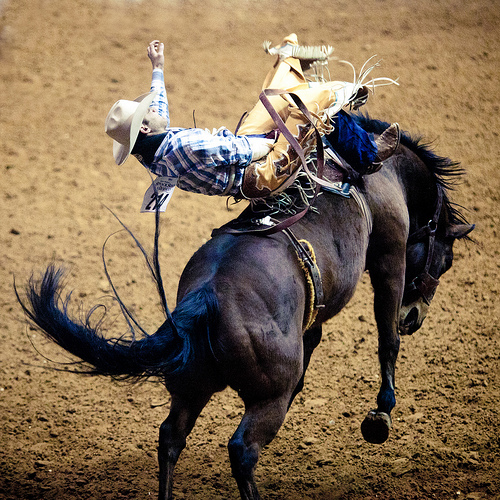
Westerns: These stories take place in the Old West, usually in the late 1800s or early 1900s. They may include the other genres of romance, suspense, and/or realism.

So, that’s it. We’ve covered quite a bit these past five or six weeks. It is always good to refresh our memories as to what genres are available to us. Why not try writing a scene in several different genres? It may not only be fun, but you may be inspired to see what writing a longer version might lead to…