Can Critique Groups Take the Place of an Editor?

The current image has no alternative text. The file name is: image.png

That’s a good question.

From my perspective the answer is: yes—and no.

Critique groups are invaluable. They travel along the writing journey with you. They encourage, proofread, help with story, characterization, and so on.

When your book is completed, they give advice on titles, covers, marketing, and more.

Your manuscript should look clean and polished, so that you may be tempted to save time—and money—by circumventing the editing process and going forward with gusto toward publishing.

This may be a mistake because nothing is so helpful at this point as a “fresh pair of eyes.”

This is especially true in the area of “content” and story flow— delving into whether or not the story makes sense, doesn’t have parts that are contradictory, important points omitted.

Your critique group reads small chunks of your writing as you go along, but an editor reads from beginning to end, offering a totally new perspective. A good editor will map out the entire story and look for unintentional mistakes in areas your critique group just cannot see.

I’m convinced I shouldn’t bypass the editing process.

What about you? I love to hear your take on this subject.

Salaries for Book Editors

The current image has no alternative text. The file name is: photo_3-1-250x166-1.jpg

Are you considering editing/proofreading manuscripts for fellow authors?

Last week’s post focused on certifications/requirements for book editors. This week, we focus on salaries.

My research says the average salary for book editors ranges from $45k to $85k, depending on the amount of time spent, the type of editing one does, and total business garnered. 

The hourly rate in the US is $30.

I don’t know about you, but a large percentage of authors never make that kind of money!

So, if finding and correcting other authors’ mistakes is “enjoyable,” you may want to consider becoming a BOOK EDITOR.

Want the best of both worlds?  Why not consider doing both??

Can You Find the Dog With a Missing Tail?

The current image has no alternative text. The file name is: pexels-photo-6193753.jpeg

As a youngster, I loved getting an educational magazine in the mail each month. A gift from my Uncle Bill, I really enjoyed one of the pages in which I needed to find what was missing from a drawing. The dog might have a missing tail, a plant a missing flower, a car missing a tire, and so on. Basically, the reader was being asked to find “mistakes.”

If you enjoy that same sort of thing, perhaps consider becoming an editor. It might end up being an interesting and even lucrative career.

If you have good punctuation skills, love to read stories, and understand grammatical rules, you’re on your way!

You dont need a license or certification, but, of course, you want to make sure you have the necessary skills or you won’t get good reviews or any “repeat” business.

Even though not required, certifications are one way editors may use to differentiate themselves from their competitors, building the trust of their clients. You may want to take a course by a professional organization that requires you to pass an exam and demonstrate a high level of proficiency. Choose a program offering a comprehensive curriculum in grammar, style, copy and proofreading, and content strategy.

Here are the top Editor Certifications: Adobe Certified Expert (ACE) and Adobe Audition Certifications, Avid Certified Professional (ACP), Apple Certified Pro, and Logic Pro X,  Blackmagic Design DaVinci Resolve Editor Certification, and Grass Valley Edius Editor Certification.

Program costs generally range between $150 and $300.

What are reasonable fees you can charge? I’ll write about that next week.

Auto-correct?

Murder She Wrote


For all of the plusses of a computer over the outdated typewriters—and we all know there are many—some of the drawbacks can be annoying. Writers, especially, must be vigilant in monitoring all of these “helps.”

For instance, don’t depend on the auto-correct function.

I entered the word yarn incorrectly, spelling it as yard. It was the wrong word, but since it was spelled correctly, the computer left it as I had typed it in. I found it later as I was rereading, but still…

Not long after that, I entered the word heart several times. Each time, I noticed the “t” disappear right before my eyes, leaving the word hear. I am not sure why this happened, but again, the word was spelled correctly, but definitely not the word I intended to use.

One last example: I wrote the name Jaxon. I am sure you’re not surprised to hear that it was auto-corrected to Jackson. No matter what I did, I could not get my computer to accept the altered spelling. 

I am sure there are ways around these difficulties—and many others—it just takes persistence in searching out the culprit and overriding the function. 

If you have run into other problems, or have the answer to the few I have described, please share your information.

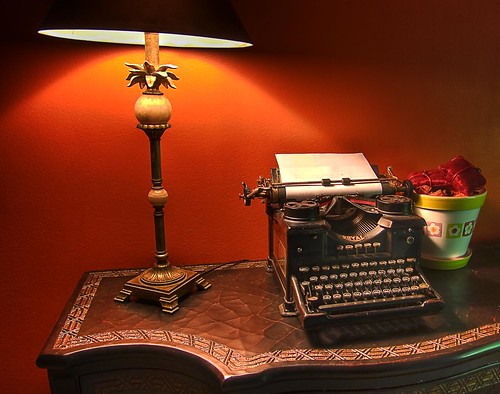
Until then, type carefully. Reread often. Or, you want to get that old Remington out of the closet and create your manuscript the old-fashioned way!


2019 Is Your Year

14185035592_bba2dba94d


Editing is the polishing before your book is published. It is at this point that you place your manuscript in the hands of your editor.

So, what are you looking to get for your dollars spent?

Well, it depends on how much you have done on your own prior to this point. Some writers will need proofreading for typos and grammar, others will want a more in-depth analysis of their story to make sure that it rings “true” with the time period in which it takes place. The editor will make sure that clothing, automobiles, literature, expressions of speech, political references, inventions, references to movies, and so on accurately reflect the calendar year (or decade) as precisely and truthfully as possible.

In one book, I researched “rabbit ears” for television reception. In another, the year of the first Cadillac Coupe de Ville was the issue, and so on.

Some editors will also see that your book is correctly formatted. Others will leave that entirely up to the publisher.

Each kind of editing has a fee attached to it. You can contract the editor to do as much—or as little—editing of your manuscript as you deem helpful.

It is at this point, while I am waiting to get my story back from the editor, that I spend time on my cover image and copy. I usually select three covers I like and then run a Facebook contest to chose the winner. This process stirs up some publicity about my upcoming book, which is a bonus.

At whatever point in the writing process you are now working— prewriting, drafting, revising, or editing—I encourage you to keep on keeping on. 

2019 will be your year, if you don’t let anything distract you and you keep moving ahead toward your goal.