New Trends in Writing/Publishing

The current image has no alternative text. The file name is: pexels-photo-4855324.jpeg

Many popular authors are stepping away from traditional publishing houses. 

Recent surveys tell us that successful authors say they do not need a publisher’s help with covers, editing, or advertising because they already have learned how to master these things on their own.

They report that they what they are concerned about is the creative control and ownership of their work, how to grow their sales, and how to get their books distributed into physical bookstores. 

Online classes are offering help in these areas. I have found Reedsy Discovery and DaveChesson’s Kindlepreneur to be the most helpful. 

It takes patience and time to learn from these, however. And once you’ve spent hours taking notes, authors find out that these companies offer their paid services in these areas (if you end up being as overwhelmed me you might look into this aspect…)

Since help is expensive, an alternative may be to form a writing “co-operative” in which authors with various areas of expertise help each other.

A Friendly Reminder for Authors

The current image has no alternative text. The file name is: pexels-photo-7688522.jpeg

I am in the midst of completing my taxes. This blog post is just a friendly reminder that authors need to have an LLC (in my opinion) and complete tax forms for your business each year. Be sure if you don’t have one to at least read all the information on the internet about them so you can make a wise decision.

I’m sure you’ll agree that your taxes are a lot easier to do, if you keep records of your expenditures. The easiest way to do this is to have a separate business credit card that you don’t use for anything else. That way, you’ll have a running record of every purchase. Also get a separate checking account in the business name so all of your statements will show your writing/publishing direct deposits and payments to your credit card.

Your yearly credit card fee, as well as checks purchased are deductible in certain cases. Check out for yourself.

Still keep all of your receipts from things purchased with cash (which should be rare).

If you have a dedicated home office, measure it. Your tax person will be able to calculate how much of it will be tax deductible, along with a percentage of your heating, cooling, and electricity.

The point of all this is to get those taxes out of the way so you can devote your time to something more enjoyable—like writing!!!

Disclaimer: I am not a tax consultant, so run everything I’ve said by your own tax person.

Deleting a Book From Your Bookshelf

The current image has no alternative text. The file name is: pexels-photo-3769021.jpeg

From time to time, authors may want to delete a book from their KDP bookshelf.

It is an easy process IF it meets the following requirements:  If it is in DRAFT status, has never been published and has never been assigned an ISBN.

Directions: Go to your Bookshelf, click the ellipsis button next to the book, then click Delete Book.

However, take a minute to make sure you want to delete it because once you do, you won’t ever be able to recover it. 

But what about books that have been published? Can they be deleted?

I’ll cover that next week…

You’ll Still Love to Write If You Do This

Over the years, I have heard authors (myself included) lament over the fact that while writing a book is hard work, there is nothing so difficult as having to spend an exorbitant amount of time on editing, publishing, and marketing.

We DREAD it. And it often saps the joy right out of our labor of love.

I’m writing this as I watch the daily struggle of a friend and first-time author as she attempts the task of formatting for paperback and e-book. As she becomes more and more disheartened and discouraged, I tell her 

It doesn’t have to be so!

I will be the first to admit that it does cost money for cover design and all of the rest. Money that I scrimp and save for each week so I can pay for help each time I need it.

So, if you’re about to publish your very first book, here’s my suggestion: Do it all.

That’s right. Try to do everything for yourself. Even keep a log of your hours. In the end, I think (unless you’ve been technologically blessed) you will agree you never want to have to go through that again!

Professionals can get the job done in a mere fraction of the time it took you—and using them for your next book will assure you of coming away from the whole experience still loving to write!

The Magic Month

Students, teachers, and parents know what the month of August means.

Back to School dominates television ads because in most states school begins in August.

So, what about authors? Should the month of August be on our radar, too?

The more times that I’ve heard it over the years, the more I am convinced that from mid-August to mid-December is a golden time of year for those who write and publish books.

A large percentage of people begin their Christmas lists in August. Many actually begin their online shopping.

So, I’m putting the advice I’ve received to the test. 

On August 15th, I published my latest book, Justice for Jessie, and advertised it at a reduced price on Amazon for the first week. (Both e-book and paperback editions).

I will follow its sales through the end of the year and compare those sales with those of my other books which I published in the spring. And, while I am waiting on those statistics, I will be writing for another release in August of 2024.

(By the way, a few blog posts ago, I mentioned I’d soon be publishing, Blinded. However, I discovered that there were already A LOT of books by that title. I renamed my book right before publishing to Justice for Jessie, which I actually like better!) 

Why Do A Pre Launch?

I don’t know everything there is about Pre Launch, but I did learn something very interesting this week.

It seems that all the books one sells before the actual publish date are combined and the author gets “credit” for them on Amazon on the very first day of publishing.

You can use a PreLaunch format to accomplish this, or you can simply go on Facebook, Twitter, a web email list—whatever you’d like—and offer your book at a discount on Amazon until the book is actually published. 

Pre Launches help an author garner publicity early on. So do social announcements, combined with discounts.

By next week, I will have learned much more and will write a blog post about these two methods of pre-advertising.

Until then…

Getting on the Fast Track

One of my favorite subjects to talk about is critique groups. I think because they are (in my opinion) one of the most helpful things an author can do for himself/herself.

I recently moved and have been on the hunt for a writing group in my new area. I was beginning to think I was going to have to start one myself, but just when I began to plan this new venture, I found out about one practically in my own backyard!

This group operates differently than any I have ever been a part of, so I thought I’d share with you how they are set-up.

In this case, there is a large group of thirty-five authors—yep, that’s right. This large group is divided into five groups of roughly seven members each.

The smaller groups meet EACH WEEK—interesting, huh? That’s where the real work of critiquing/editing is done.

Then, the large group meets THAT SAME WEEK. Each author’s submission (reflecting changes due to the small group’s comments) is shown on a screen and read aloud by the author. The large group gives general comments on each submission.

I’ve attended one large group meeting and really enjoyed hearing from authors writing in a variety of genres.

I’d recommend this process for any writers who feel they can keep up with this fast-paced regimen. Submitting to two groups every week can be daunting, but it sure can put you on the fast-track to publishing!

THE END

All of his life, Kevin never finished anything he started. In school, he often turned in uncompleted assignments. Later, he lost a succession of jobs because his projects were either late or only partially done before he was on to something else.

Unfortunately, this carried over to his budding writing career. His efforts were promising, but his publisher had another author work with Kevin on the last quarter of his book, so that it could be finished on time.

Even though he’d had help, his book was the first thing Kevin could remember completing. It gave him a huge boost and today, under a pen name, he is a successful and multi-published author.

I hope this story about Kevin helps inspire those of you who are struggling to complete your book. Perhaps you might go through your files and find something that you’d enjoy working on again.

There’s nothing like the feeling of typing THE END on that last page.

The Value of Writing for an Anthology

Chicken Soup for the Soul books are just one example of a collection, or anthology. Even authors who have published ‘stand-alone’ books often write for anthologies, too.

Why?

For authors, publishing in an anthology offers a diverse and larger audience than having all their stories in one book. 

And~

An anthology, where several authors write on the same theme, offers readers a variety of perspectives and styles.

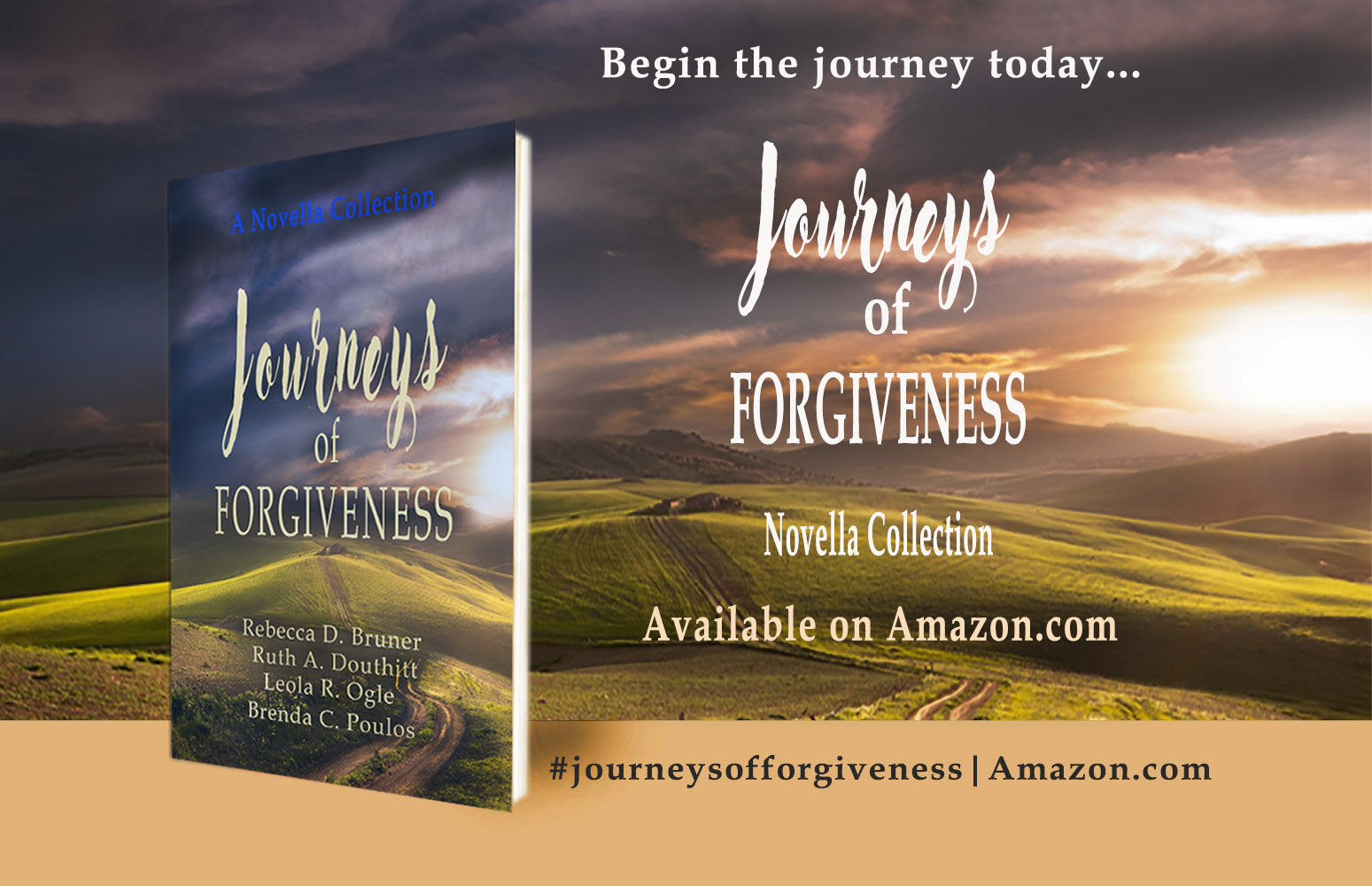
For myself, I wrote in two short story collections last year:  Desert Tapestry and Christmas Tapestry. Then just last week, I published in a Novella collection, Journeys of Forgiveness. 

As we are beginning our sales and marketing, I see that splitting the costs four ways, instead of bearing the costs alone, is another great reason to write in collections—at least part of the time.

Make Your Imprint

You may not be familiar with the publishing term Imprint

Simply put, it is the trade (brand) name owned by a larger publishing house which often publishes books targeting specific niches and reading demographics.

Imprints are essentially branches of the same company.

They all tend to have their own resources like editorial and marketing staff, but share production, design, and sales teams with their larger publisher.

Imprints have the advantage of the larger parent company’s ability to get books into stores/retailers, such as Barnes and Noble.

If the book cover is intriguing and targeted toward the right audience, the average reader usually doesn’t care about reading from certain presses or specific imprints. 

So, you may consider publishing with one of these familiar ones next time around: Penguin Random House, Howard, and Avid Readers Press (just to mention a few).