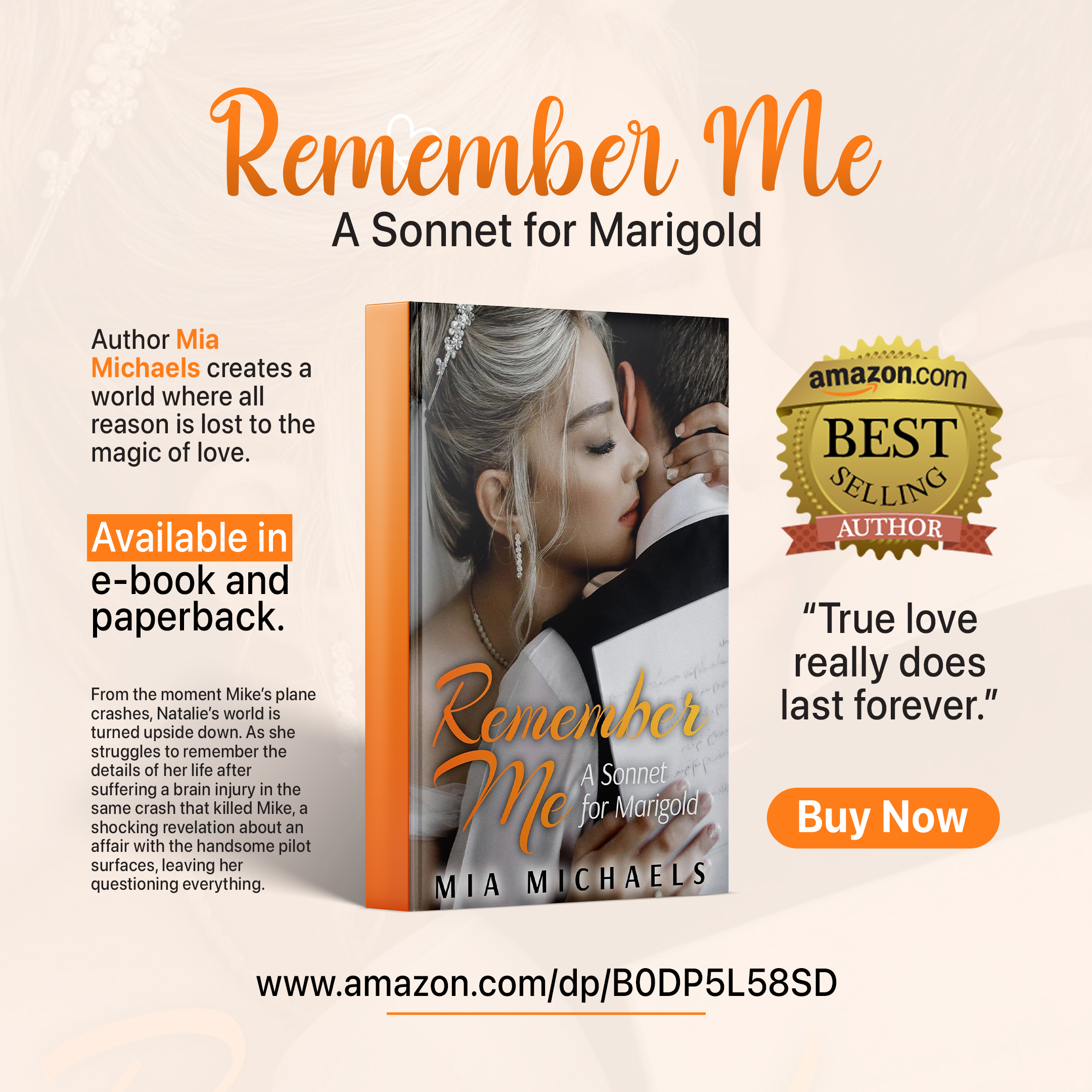
The Perfect Mix of Romance, Mystery, and Fantasy!
It’s two days past the official Valentine’s Day, but it’s not too late to put your Romance Novel on your Facebook page. Most women—and even a growing number of men—are reading love stories as one way to find encouragement, hope, and relieve the stress of everyday life..
Here’s my friend, Mia’s, book cover—and its Amazon link. Consider reading it yourself, as well as sending it to your friends. It’shttps://www.amazon.com/Remember-Me-Marigold-Mia-Michaels-ebook/dp/B0DP5L58SD/ref=sr_1_1?crid=3GPOU9W0X70TI&dib=eyJ2IjoiMSJ9.zYBdJYfWJGrvCOpeXExywkUlY2YBnX_fdMcwBBLvWeXGjHj071QN20LucGBJIEps.k94iT6aG5r7y3uxfnHunmj4K6ZlGmKuYWvGb40P77hw&dib_tag=se&keywords=Remember+Me:+A+Sonnet+for+Marigold&qid=1739555530&s=books&sprefix=remember+me+a+sonnet+for+marigold,stripbooks,151&sr=1-1
It’s a real pager-turner. A mixture of romance and suspense!
Understanding book sales is important for authors and publishers.
All of my books have been fictional. Each based on ideas that interest me at the time.
However, gurus are suggesting authors take a scientific approach to choosing our topics and genres.
With another book published—and starting to write yet another—I set out to garner information on trends among American readers.
Recents surveys show that nearly half of Americans polled haven’t read any books in more than a year!
So then, let’s focus our attention on the other half—the readers.
I was surprised to learn that PRINT BOOKS continue to be the most popular format. E-books rank next; then audiobooks.
The number of female readers is only slightly higher than for males.
Americans love HISTORY, MYSTERY, AND BIOGRAPHY.
Fiction sales gave gone up by 45% over the last five years.
Non-fiction, especially political and self-help, are currently seeing a decline in interest.
You can draw your own conclusions, but from these statistics, we might want to focus on women readers of history, mysteries, and biographies.
And although Romance has always been a popular genre—and probably will continue to be—perhaps now would be a good time for Romance writers to couple with the genres above…Romantic Suspense… Historical Romance, and so on.
Those are my thoughts based on a little research.
If you are an author that writes according to the trends of the reading audience, I suggest looking back at what the most popular trends were in 2023 and take your writing in one of those directions.
Remember, however, popularity of genres change from year to year—even season to season.
So you may want to stick with your current genre or try your hand at one of these rising stars:
Romance was #1, again! (No surprise). However, a new kind of romance has taken readers by storm in the last year or so. It is called Romantasy (Adult Romance Fantasy). Other new twists were Sports Romance and Dark Romance.
Also, rising to popularity are stories about robots and other AI-related.
Crime fiction always gets lots of readers, but a new twist are those whose targets are authors. Yikes! (An upcoming movie soon to be on the big screen—if you are interested— is on this very subject).
I don’t want to forget to mention memoirs, satires, and short story collections.
Finally, this one might surprise you. There seems to be a resurgence of re-reading favorite books.

There is such an appeal for people—especially retired people—to write a book.
You’ve had an idea in your head for years and now you finally have time to put pen to paper.
However, after you publish, your sales aren’t what you’d like—or expect—them to be.
What went wrong?
Dozens of things could have been the reason for poor sales, but usually the reason can be traced back to the beginning.
Before you wrote a single word.
Here’s the problem in a nutshell. You have written the story you wanted to write, with little or no regard to your audience.
In other words, you didn’t consider what readers like to read… what is popular in today’s market.
I was guilty of the same thing. That doesn’t mean we cannot write what has been on our heart for decades, but we do have to understand that it may not translate into sales.
We have talked about romance being popular. And there are so many variations of romance: teens, tweens, cowboy (That’s right. It’s still popular) and so on; and cozy mysteries (which also often include a romantic aspect). These include a lot of inheritance themes. Young ladies inheriting bed and breakfasts, hotels, bakeries, seaside cottages, just to name a few.
So, I guess the bottomline is this. If you want to sell books, write about what people like. If your goal is to fulfill a lifelong dream, then sales take second place.
But whatever it is you write, do it well. Given time, readers may find you and come to appreciate your passion.
To me, that’s the best of both worlds.
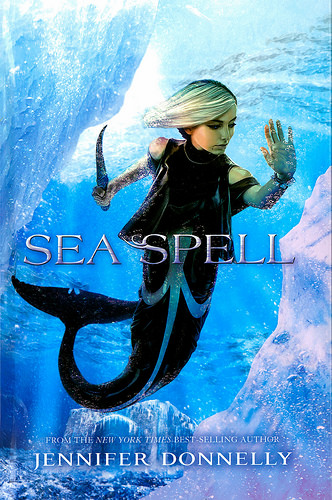

Do you dream of having one of your books made into a Hollywood movie? If so, this is a good bit of research you might want to consider.
Do you know which writing genre is made into the most movies?
Here’s what my research turned up, starting with #1:
Sci-fi
Horror
Action
Comedy
Drama
Fantasy
Thriller
Adventure
War
Mystery
Musical
When I began writing, I tried my hand at screenplays with some success. I wrote four comedies and two dramas before I threw in the towel.
It was a good experience , but the writing process is unlike writing for the reading market.
Take another look at the list. There is one genre missing. It’s the one—if I were guessing—that would have been at the top of the list.
That’s right. Romance came in fifteenth.
Don’t tell that to Nicholas Sparks. I’ve watched several of his movies over the past five years or so.
Just goes to show you.
Don’t believe everything you read.


So, you have the writing bug and are faced with a big decision: “What genre should I write in?”
Genres fulfill reader expectations.
Readers buy certain books because they have enjoyed similar stories in the past. Reading these novels is like sitting down with an old friend. These books give them a sense of belonging.
Here are some things to consider:
3) Having said that, you could choose a more narrowly-read
genre, so that your writing will “stand out” among fewer
authors. The least read fiction is labeled Literary Fiction
which focuses on the human condition and is more
concerned with the inner lives of characters and themes
rather than plot.
4) Choose a fairly new genre in which readers are least familiar.
Here are the names of some: Cashier Memoirs, Bitpunk,
Twitter Novels, Lucid Fiction, Combinatorial, and
Hmong- American. **I know next to nothing about
these. However, I will research them in the weeks to come
and feature them on this blog. Stay tuned…
5) Choose your audience, first. Perhaps you’d like to focus on
Young Adults. Then, choose a sub-genre: focus on mysteries,
Dinosaurs, Monsters, Sports, Baby-sitters Clubs, School-
related, Young Romance, and so on.
6) Do you have a message you’d like to get out? For years,
now, I have focused on “Stories of Forgiveness.”
7) Hot sellers. Lately, I see that a lot of authors have chosen to
write about young men or women who have inherited
businesses from family members. Their challenge is to learn the
business and win the heart of an adversary. Another big one
is The Cowboy Who (Did this or that). Amish stories
were big for quite a few years, but seem to be dwindling a
little, lately. Last year, I read at least five or six books about
“Marriages of Convenience” which, of course, turned into
the most popular: Romance!
This is by no means an exhaustive list, but it does tell us this: there are many, many, things to consider when you are starting out!!!!
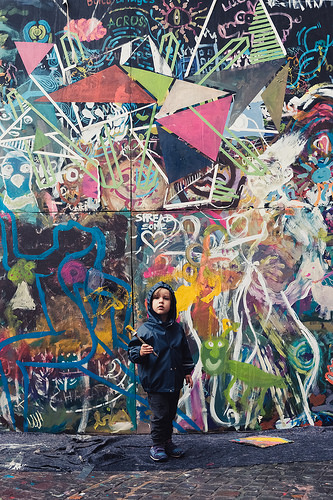
They say a picture is worth a thousand words.
And words, skillfully put together, paint word pictures.
Just how detailed should a writer’s word picture be?
Should settings and other descriptions be in-depth and intricate? Should they follow the example of realism, like the famous artists Jean-Francois Millet and Honore-Victorin Daumier and, thus create a word painting that “looks” real—like it would in real life?
Or should descriptions lend themselves to the more abstract, placing more of an emphasis on visual sensation, as did Picasso and Van Gogh?
My personal opinion, is that this is a matter of writing style— and as yours evolves, you will find that you prefer one over the other.
But, remember:
Readers, also, will have a preference as to which authors they like to read. Some love to read flowing prose that uses up word count with lots of descriptive elements. Others may prefer minimal descriptive words, freeing them to fill in the gaps with their own imaginations.
Myself? Well, I find that I prefer to write—and read—somewhere in the middle. Give me enough description so that I understand the “big picture,” but not so much detail that it slows me down. I want to focus more on the action—the story—and let my mind fill in the descriptive blanks. I’m an abstract/realist.
Some genres may use more description than others. For instance, Fantasy and Sci-fi need more detailed descriptions because the writer is creating a world totally unlike our own earth. A large part of what makes those genres so interesting IS the description of the settings and characters in those alternate worlds.
Romance novels also use a lot of description because the reader has to find the characters desirable, so they will want to keep reading to find out if the “guy gets the girl” in the end. Thus, the reader must believe they are worthy of pursuing and being pursued.
So, should you paint your picture using a thousand words? Probably not.
It is fun—also a challenge—to see how well you can describe something using a minimal amount of carefully-chosen words.
When you do this, you spark the imaginations of your readers so that they can actively participate in interpreting the word pictures you paint.
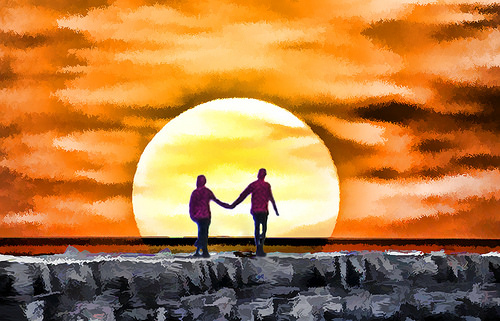
Shopping for the perfect valentine for my husband was an almost impossible task. No one card could have possibly included everything I wanted to say.
I thought about writing my own valentine, like we often did when we were kids.
That got me thinking about writing romance novels.
I was curious. Just what is genre ROMANCE?
Here’s the breakdown:
Historical Romance– story takes place in the past.
Contemporary Romance– story takes place in the present. (Humorous Romance and Romantic Suspense are often listed as sub-genres.)
Regency Romance- This is shorter than Historical Romance, set in the Regency period and emphasizes society and dialog.
Futuristic, Fantasy and Paranormal- These stories take place on other planets or in imaginary lands, or involve creatures such as pixies, ghosts, werewolves, or genies.
Time Travel Romance– Romances involving time travel.
Gothic Romance– In the past, this was a separate sub-genre, but currently most of these are being published as Romantic Suspense.
Romantic Suspense- Stories with plots involving drug dealers, serial killers, smugglers, etc.
REMEMBER: If you write in another genre, you will probably find that your story is much more interesting when you infuse your books with a little romance here and there…
 brenda poulos