Care for a Goldfish?

13938793988_0e69d62831


“I loved your book. I was up all night reading. I just couldn’t put it down!”

Comments like those are music to this author’s ears.

From the bottom of my heart, I am grateful that The Choice: Will’s Last Testament is getting such wonderful comments and reviews.

Such a warm reception gives me the energy to forge ahead and begin writing book #3!

It’s curious, isn’t it, what things give a human being the confidence to press on toward accomplishment?

A friend of mine is running a half-marathon in a few weeks. It’s something that she has never done before. It’s the challenge from another friend that pushes her to train each day.

I know someone who is trying to break an internet record for the most podcast interviews done in a certain length of time. It’s a lofty goal involving weeks of podcasts!

When teaching my daughter to drive a stick-shift, I remember finally resorting to popping a Goldfish cracker into her mouth each time she didn’t grind the gears!

So, the goal must be set.

But, there must be something that keeps the person moving toward that goal—a reward of some kind—that pot of gold at the end of the rainbow:

A record broken,

A pat-on-the-back,

A person’s name in lights,

Winning a contest,

Great five-star reviews.

So, dear writer, don’t bail on your dreams. Maybe, like me, all you really need is a little encouragement because

YOU CAN DO IT!!!  I KNOW YOU CAN!!!


The Black Moment

Your story has taken your hero out of his comfortable, ordinary life and sent him on a quest.

It stretches his limits.

Pushes him to accomplish whatever he must in order to reach his goal.

The end is in sight. He’s almost there.

And then, at approximately the 75% mark, the unthinkable happens

and beats him back and down.

It looks bad for our boy. You think, “He’s just not going to be able to pull it off!”

He was almost there…he’d almost won…they’d almost gotten together…he’d almost achieved his dream…

but then—out of nowhere— came

THE BLACK MOMENT…                           8422302030_3f048bb4ea

the old boyfriend

the chilling diagnosis

the colossal misunderstanding.

But, the story is not over.

After a few minutes/days of contemplation…feeling sorry for himself…wanting to just give up and go home

he rallies.

With new resolve—and oftentimes a new plan—he plunges ahead

against all odds.

He rejoins the battle

and although he may be the weakest and least capable,

he conquers the giant

defeats the bully

climbs the mountain

and

we stand and cheer!!!!

“Wow,” we say, “that was a close one…a nail biter…EXCITING.”

The intensity of the climax, whether a book or a movie, is directly proportional to the intensity of the BLACK MOMENT.

So, if you want your reader to be hooked—to ride the big waves with you to a thrilling and satisfying end— then be sure to include an intense and seemingly iron clad BLACK MOMENT.

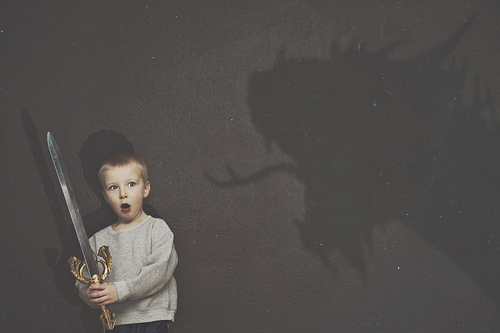
A Hero in Pursuit of the Dragon

13963965215_57aa71c491

My dog wakes up at 5 A.M. each morning and whines to be let out.

The cat meows at precisely 5:15 A.M., wanting ice cubes in his recirculating water dish, and again at 9:00 P.M. to remind me to brush him.

My dog sits by the door at 3:45 P.M., waiting for my husband to come home from work.

If you have pets, I’m sure you’ll agree that they are creatures of habit.

So, what about people?

Do they like things the same, day after day?

Sometimes…but unpredictability spices things up.

Think about books you’ve read and movies you’ve watched.

You wait patiently while the story is getting set up, but then if something doesn’t happen pretty soon to knock your socks off, you lose interest.

In a book, it is an event that changes the course of the story from “same-o- same-o” into something worth investing our time in.

Something exciting…mysterious…dangerous…unusual…

And, we have to know—we just simply HAVE to know—what will happen next.

So, we read on.

If our books just meander around without purpose and without thrusting our hero onward in pursuit of

the dragon,

the beautiful girl,

the new job,

Or out of the clutches of

the killer,

the monster,

or the wicked stepmother,

readers won’t keep reading.

So, after you establish what is normal life for your character, then disrupt the normal (he suffers a loss…he’s betrayed…) and get him on his way to

the rest of the story

and the Black Moment,

which I’ll talk about next time…


“What? Are You Crazy?”

You spend months or years in learning the craft of writing.

You spend another 1-3 years actually getting words down on paper.

You type that last period               mockup2

on that last page.

Then, you run into a brick wall: publishing/marketing.

And find yourself overwhelmed.

So, do what I always do when life seems to be getting the best of me.

Break it all down into little pieces.

Little fragments that seem like I might be able to accomplish.

And, I avoid those that are too perplexing, too difficult—seemingly insurmountable.

What I am going to say next may seem surprising…actually I know if will because even as I type these words, I’m envisioning your reaction.

I followed a bit of advice I picked up somewhere (I honestly don’t remember where) that said the best way to promote your work is not social media or big ad campaigns.

IT IS TO WRITE ANOTHER BOOK!

Now, I know you are thinking just what I thought when I heard it for the first time:

“That doesn’t sound easy. I thought I could sit back and take a rest once my book was completed! And, now you’re telling me to lock myself away and start writing yet ANOTHER ONE??? Are you crazy?”

Yes and No.

Yes, write another one.

No, I don’t think I’m crazy.

Because I put it to the test and here is what I am finding:

The Choice has been out a couple of weeks, now, and since its arrival, Runaways’ sales have picked up, again.

No kidding.

Don’t misunderstand. It’s not earthshaking.

But, IT IS FASCINATING.

So much so that—yes, I’ve already started writing book #3.

I’m on a roll. A slow roll, perhaps, but still it’s a roll.

Like a snowball rolling down a hill, I am picking up new readership and sales.

Mostly it’s what’s happening on the inside of me that’s amazing, however.

The “I think I can do it” is turning into “I am doing it!”

I’ve Changed My Mind


2626749848_017cc65a8a


After a meeting, yesterday, the topic of how often one should write (every day? how many hours per day?) came up.

I listened as inexperienced writers eagerly listened to more seasoned authors on the topic that is as dear—and as often-debated—as toilet training is to young parents.

In one of my previous posts, I said that if you are researching for your book or article, or attending a conference, or viewing a webinar, that “counts” as your writing for the day.

Well, like I told the others after the meeting, I now know a bit more about the craft of writing and have changed my mind about what I advised a year ago.

There is no substitute for WRITING.

Here’s why:

You cannot learn to dance by reading a book or studying diagrams of nimble feet doing the Cha Cha.

You cannot learn to fish without baiting your hook and casting the line into the water.

There is no substitute for actually DOING.

We need to practice writing. All the reading and conference going—although worthwhile—cannot take the place of good, old-fashioned application.

Some people find themselves in such an endless cycle of “learning how to write” that they never actually sit down in front of the computer and try their hand at it.

They think that if they will just read one more book or watch one more webinar, then they will be ready…qualified…fully prepared.

All of that is well and good, but as my neighbor’s son studies his driving manual, I am reminded that he must also get behind the wheel and gain the experience of actually driving.

As a child, I heard my mother say, “Wishing doesn’t make it so,” many times. (Mostly this was in reference to having a clean room.) But, apply it to writing an article or book and you can make the connection, can’t you?

So, my conclusion is this: you must learn the skill of writing by writing, writing, and writing some more.

Every day?

Yes.

An hour a day?

At least.

Grab a partner and dance.

Bait your hook and cast your line.

Back out of the garage and get out on the highway.

Turn on the computer and let your fingers fly across the keyboard!

Inspirational Words With a Twist

15437460076_a0fe6ae86a

Watch your thoughts,

for they become Words.

Watch your words,

for they become actions.

The are the beginning lines of a well-known inspirational poem.

However, as I look at them, I see a hidden message for us writers.

When I first began writing, I had to break myself of the habit of telling.

I remember having so many critiques returned to me with the following in the comment section:

“Give more thoughts…show more action.”

How?

Word choice.

In a lesson for my young students, I now give an example of how choosing the correct words can make a huge difference in the meaning that is portrayed:

Max walked down the street.

Max ran down the street.

Max skipped down the street.

Max hobbled down the street.

Max fled down the street.

And on and on…

Each new verb changes the picture for our minds’ eye.

And that picture, changes the mood…the intent…the meaning.

A dictionary, a thesaurus.

These are a writer’s best friends—especially the thesaurus.

They make our work more accurate

more vivid

more exciting.

They change telling stories into “word movies” and ho-hum books into sheer excitement for the reader.

“Ya Know What I Mean?”


8647203304_0e9dfda704One of my relatives is fantastic…colorful…quirky.

At least a dozen times in the space of a fifteen-minute conversation, she ends a sentence with, “Ya know what I mean?”

Here’s an example of something she would say:  “I left the house and realized I hadn’t closed the garage door. I had to drive all the way back. It almost made me late to work. Ya know what I mean?”

I try to overlook it, even though at times it is VERY distracting.

However, it is the perfect example of something authors can use to make their characters real…human…interesting…unforgettable.

There’s a fine line, though, between making our characters unique and belittling or mocking certain traits/habits they might have. The very thing you and I might think is clever, might offend a reader—especially if they happen to identify, on a personal level, with what you have written.

Imagine a nail biter reading about a character that constantly bites her nails.

Or someone with a small tic or speech impediment that encounters a character in a book that has the same difficulty.

How can we use some of these characteristics and still be empathetic?

First of all, we need to realize that these characteristics evoke real feelings in readers. Then, being sensitive to that fact, we make sure that we don’t present them as flaws to their worth as a person…don’t use them as demeaning remarks.

In fact, we can turn some of them around, making them their “saving grace,” their “redeeming quality”…the very thing that serves to transform other characters in the story as they come to know and love them.

Just last week, I started working on a new novel—one involving a mentally handicapped young man. From page one, it must be a constant effort on my part to be true to his intrinsic worth as a person. Although some of the things he does are humorous, the thrust of the story is not to laugh at him, but show the growth of the other characters in the story because of his involvement in their lives.

Sensitivity to our readers—and our characters—is just one more thing authors must keep in mind when choosing vocabulary, writing scenes, and developing characters.

Ya know what I mean?

(Note: The character arc is the subject of a previous post. See in “archived posts.”)

Platform Building, Part 2

27906087470_d1381c176b


Your writer’s platform is basically the group of activities you engage in that get your name and work noticed by the public. It’s marketing, not of a specific work, but of you as the author. It’s everything you do to build your brand.

Nowadays, publishers require that their authors are willing to get out there and market themselves. And, if you’re an indie author, as I am, all the more important for you to learn all you can about marketing.

  1. Aside from making publishers happy, there are a other side benefits to platform building:
  2. You may be able to generate some side-income from teaching and speaking.

You can also build your brand as an expert in your writing niche.

No matter what your goals, fans want to connect with a real person. That means we need to be ourselves, both as writers and individuals. We must show our true faces to the world.

The good news is that the technology of today (Twitter, Facebook, etc.) can play a major role in building our platforms, and are based on genuine, personal interactions.

*So, with an online presence on Facebook and Twitter being ESSENTIAL, I will also suggest that you start a website/blog and or weekly newsletter. Weebly and WordPress basic websites are FREE. I got mine (www.brendapoulos.org and www.spiritualsnippets.com and runawaysthelongjourneyhome.wordpress.com) started in practically no time at all. I am not techie, so if I can do it, you can, too! (There are others, such as communit.com, but these are the easiest to get started with and to keep going on a consistent basis.)

You’ll have to be diligent about blogging at least once weekly, adding your bio, announcing new book launches, sharing information on writing and about your life in as specific details as you are comfortable.

*Speaking at writer’s groups, libraries, book clubs, etc. can get you in front of the public. You’ll meet new people (potential followers) and meet other writers.

Although public speaking isn’t for everyone, it’s never a bad idea to get out there and let people see the face of the author behind the words. Take a guest book along with you, asking interested attendees to give you their email address so you can keep in touch with news, offers, etc.

*Teaching the craft of writing is another great avenue to help brand you as an expert. It will also give you something to blog about. Although this is often done as a freebie on an author’s part, you can make some decent side money by teaching either in person or online via podcasts or webinars.

So, decide what your specialty will be. Some websites I’ve seen involve cooking, crafting, scrapbooking, animals, travel—almost anything that is of interest to you will also be of interest to that certain group of others with similar likes, goals, and beliefs.

*Don’t overlook doing book give-a-ways on Goodreads and Amazon and Book Bub. You can also create products, such as pens, mugs, bookmarks, etc. Then, used these to market your brand by using them as give-a-ways at fairs, conventions, etc.

Get creative! I leave my business cards on bulletin boards and in restaurants when I pay my bill. A friend of mine leaves them in the pockets of the clothing she tries on when shopping!

*Support other authors. Join a professional writers groups/organizations. These are great ways to make contacts, lasting friendships, and get in on some great teaching. May I recommend American Christian Fiction Writers (ACFW) and the local chapter in your state.

It is important to remember that platform building will be different for every author because it will depend on your target readership, your unique expertise, and the message you want to present to the world.

Platform building is a creative process, just as is your own writing…

Use your imagination.

Begin small and build in increments.

Be persistent.

Don’t give up!

Neglecting your platform in today’s world can be a big mistake. You may have written a best-seller, but no one will know that if you don’t make your presence known!

Dive Write In

28444534094_5cf068a2ac

No doubt, you are aware of how the writer’s mind works: it can be thinking about something and then, zing, it’s off in another direction, contemplating a different idea which is only remotely related to the subject at hand…

So, here I was watching the Olympics last week, intent on the elements of synchronized diving. Two divers walked onto the platform, and then, in a flash, my mind went to “Writer’s Platform.”

Yes, there is always a thread there to connect one thought with the other, but still…off I was thinking about writing—yet, again.

Knowing that the writer’s platform is one of my weakest areas, I decided to find out more.

With two novels under my belt, I was worried that it might be too late to declare my platform to the world.

Following an afternoon of “research” I was relieved to know that I hadn’t missed the boat, entirely.

It turns out that the consensus of opinion is that a platform is something that is built over time.

That’s right. You—and I—can start building our platform right now without a detailed plan.

Another bit of good news: If you are a fiction writer, you DO NOT need a platform to get published. Your publisher or agent will make a decision first based on the quality of your work and its marketability.

Your platform will grow out of your body of work.

Now, it’s hard, if not impossible, to build a platform for work that does not yet exist. So, if you are new to the writing profession, take a deep breath. There’s still time to build that ever-so-necessary platform.

On the other hand, we cannot delay. To be successful, we must create an online identity.

We need to build our readership. And, that takes time.

But, remember, our brand is US…not our latest book.

Our efforts must go into building a connection between ourselves and our readers.

So, just what is a platform and how do we connect with our readers? Well, it’s a big subject and I am learning right along with you, so we’ll pick this up, again, next week. By then, I will have more tidbits to share.

Until then, be thinking about what makes YOU and YOUR Message unique.

Platform building is an organic process and will vary from author to author, but there will be a framework from which we can work–and  that will be the topic for my next post.


When Less Is More


28388587681_c5b638f00b

Have you heard the phrase “Less Is More”?

This expression is often associated with the architect and furniture designer Ludwig Van Der Rohe (1886-1969), who noted that clarity and simplicity lead to good design.

It refers to a minimalist approach, noting that when there are less items on a display shelf, they don’t have to compete for our attention and, thus, we can focus on them, individually, and enjoy each one for its own special qualities.

So, less decoration, properly employed, has more impact than a lot.

What implication does this have for writers?

I think it can have several:

1) For the most part, writing that is less complicated is often better understood than that which is more complicated or complex. This  works well for non-fiction and even most fiction books. However, readers of mysteries thrive on untangling clues and figuring out motives, so making them simpler would just water them down and kill all of the excitement of the hunt.

2)   Brevity of communication is more effective. I am reminded that we live in a world of emails and texting. Short, choppy, sentences and phrases are the way we communicate with each other. So, it stands to reason that readers want to see more white space on a page.

Long past are the days of flowery language and lengthy descriptive paragraphs. Readers want writers to be more to the point than ever before.

To carry this idea forward for a moment, authors are seeing more sales of books in a series, rather than books with a healthy 500 pages to plow through. So, authors, you can make more money by putting those hefty books in 250-300 page “installments.”

3) Finally, there is a fine line between just the right amount and far too much description. Readers want authors to give them some description of the characters and setting, and then allow the readers to visualize the rest for themselves.

(I recently stopped reading a book at page four because the author was still describing the character’s physical attributes, educational background, family relationships, and idiosyncrasies. With no action—no story, yet— I just couldn’t take it any longer!)

Like spices, sprinkling this throughout the book in small phrases keeps the story much more interesting. The less we tell and the more we guide the reader, they will feel more involved in the process…more a part of the reading experience. 

It’s important to note that over the years trends change. Writers, just like those employed in any other industry, must be willing to adjust to what our reading public tells us they want.

Until then, give them less and they’ll want more!