Where To Read Good Examples of Flash Fiction


19956383441_b13d9de0d6


Daily Science Fiction:  Science fiction emailed to you every day!

Every Day Fiction:  This site has been along for a long time. It will send a new story to your inbox every day.

Flash Fiction Chronicles:  This is part of Every Day Fiction. It lists great resources and also has a yearly contest with a cash prize.

Flash Fiction Online: Not free, but it’s worth visiting this one.

50 Word Stories: A good way to break into Flash Fiction. 

Nanoism: A Twitter fiction site.

The Journal of Compressed Creative Arts: For literary types.

Vestal Review: Boasts at being the world’s longest-running flash fiction magazine.


I hope you have enjoyed this series of blog posts on Flash Fiction!  

By the way, did you know there is a National Flash Fiction Day??? (Now in its seventh year, it was celebrated on June 16th.)

Flash Fiction Tips


5888372038_998152dc74

Some reminders before you put pen to paper:

1. Flash fiction shouldn’t be more than 1,000 words.

2.  It is NOT easy to get a whole short story into so few words. It requires a lot of PLANNING and EDITING.

3.  Writing Flash Fiction often takes MORE time than longer works.

4.  Focus on the small moments that shape bigger ideas, rather than on the big ideas.

5.  A good idea is to base Flash Fiction stories on things readers already know, such as myths and fairy tales, for example.

6.  To get your word count down, leave out dialogue attributions and in-depth descriptions.

7.  Focus on one central idea.  

Next week, we’ll finish off the series on Flash Fiction by sharing where you can go to read some good examples of Flash Fiction.

Flash Fiction


7021119035_bec2f15687


There are many different types of creative writing. 

Let’s look at a relatively new idea called Flash Fiction.  As its name implies, it refers to a very short story ranging in length from 300 words to 1,000 words.

Even though extremely brief, Flash fiction still offers character and plot development. Requirements? It must have a beginning, middle, and an end. (We’ll take a look at this in my next blog and determine how difficult the actual writing of Flash Fiction might be…)


Sometimes referred to as the minisaga, microfiction, sudden fiction, the nanotale, micro-story, and the postcard, flash fiction has its roots in fables and parables.

In France, they are called novellas; in China, they are referred to as pocket-size stories, minute-long stories, and the smoke-long story (just long enough to read while smoking a cigarette).

Examples of early Flash Fiction are Aeosop’s Fables in the west and Jataka tales in India. You may be familiar with short stories of the 1930’s, collected in anthologiies, such as The American Short Short Story.

Access to the Internet has enhanced an awareness of flash fiction, with online journals being devoted entirely to the style. Examples are the SmokeLong Quarterly, Wigleaf, Flash Fiction Online and Flash Fiction Magazine.

Social media has enabled a rapid spread of this genre. Such publishers as The Anonymous Writer and The Third Word Press use flash fiction to create stories online.

Learn how to write Flash Fiction in my next blog.


Put It In Their Hands

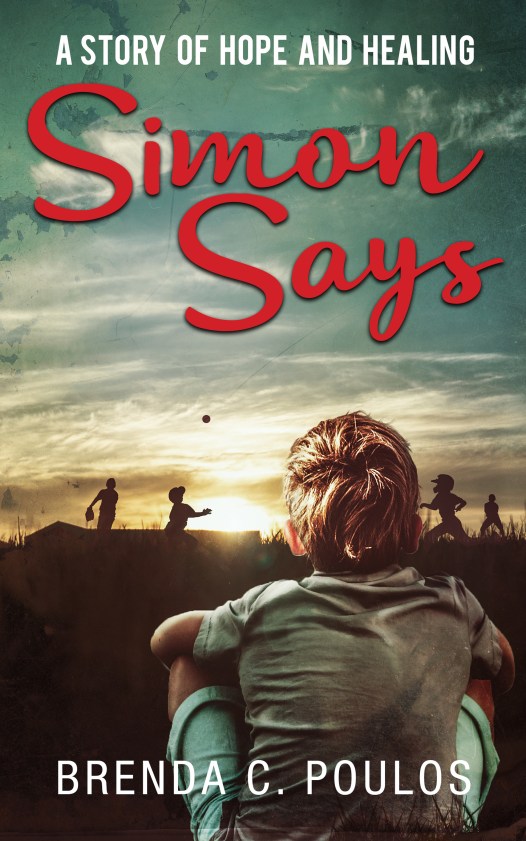
SIMON SAYS_KINDLE


If you have seen my Facebooks ads, you know that my new book, Simon Says, is finally listed for sale on Amazon. If not, I’d like you to see the blurb from the back cover.

But first, I’d like to share with you what I learned from having Beta Readers involved as part of the final process.

Prior to the final edit,  I sent my Beta Readers the manuscript as an email attachment, along with instructions and a series of questions to focus on while they read. The majority of them read the book—in its unedited form—on their computers. One printed out all 250 pages.

I got the most useful information from the person who printed it out. She held it in her hands (most similar to reading a book) and actually marked on it, leaving comments in the margins.

I remember an author friend of mine making the suggestion several years ago that we put the manuscript on Create Space so we could actually send it to Beta Readers in book form, as proof copies. This would allow them to hold it in their hands, turn actual pages, write in it or flag pages to be referred to on the comment sheet.

At the time, I thought that was a lot of work and expense, but now I can see the value in following my friend’s suggestion. It was immediately obvious to me as I read the feedback from my Beta Readers. (I have written, previously, about the value of using Beta Readers, so if you didn’t see that blog, please retrieve it from the archives).

The reason we involve Beta Readers is so we can use their feedback to improve our final product. So, it is to our best advantage to set up the entire experience so we are able to gather the best possible information.

That being said, Here is my final product, in time for your summer reading:

Abandoned by his father at birth.

Tormented by neighborhood bullies.

Misunderstood by classmates and teachers.

Then, at seventeen, things begin to change for Marcus. 

A victim of years of rejection due to physical abnormalities and social awkwardness, he finds purpose as the result of an unlikely friendship and faith in God through the power of grace. 

But when past disappointments resurface and create roadblocks to his new life, will Marcus find the strength to extend forgiveness to those who mistreat him?

Will he finally experience the love and acceptance that has eluded him for so long?

Relax and Refocus

41181289741_1e0f1db0c4


I sometimes get stuck in the middle of the day. My mind starts listing out any number of things I need to complete by six o’clock. This can lead to a near panic attack, I kid you not.

I always intend to go to an exercise class at the local gym at 12:30, but rarely take time for it because I’m too busy…you know, all those things I need to get done by six…

Yesterday, however, I unchained myself from my computer. I yanked on my tennis shoes and headed for the car. I arrived at the gym at 12:20 and perused the class listings for 12:30. (Yes, I knew there would be a class. But, no, I hadn’t a clue if it would be aerobics, muscle, or stretching.) It turned out to be Beginning Yoga.

How hard could that be?

Not hard at all, as it turned out. But, I was in for a few surprises.

The exercise room was dark, except for little battery-operated candles that were scattered on the floor throughout the space. Soft music played over the speakers. 

I stumbled to an empty spot near the back. I soon realized I couldn’t see the instructor from that location, so I moved to the front row.

Her soothing voice and the soft melodies soon pushed my myriad thoughts aside, as I focused on my breathing and sense of well-being.

Tranquility in the middle of a busy day! 

Stress that I carry in my neck and shoulders all but disappeared. My face relaxed. 

If there had been a bed nearby, I could have crawled into it and napped the rest of the afternoon.

Back at home, I grabbed a glass of iced tea and headed toward my office. My head was now clear of the “clutter” and I was able to complete four hours of more creative and productive work than I could recall doing in weeks.

OK. So, you’ve tried yoga and it’s just not your thing. I get it. Try going for a stroll, riding a bike ride, enjoying a massage, taking a drive up to the lake…

The point is: take a break.

Unchain yourself from your computer.

Relax and Refocus.

I’m betting you’ll find yourself doing the best work you’ve produced in a long, long time.

And, remember:  close it down at six o’clock.


The Tribute

DSC04992 (1)


Although this blog’s content most usually focuses on writing books, there are times when you may elect to write an article for a magazine, a short poem, or an essay.

Some of us have experienced writing a eulogy (a speech or piece of writing that praises someone or something highly. Most often when the person has recently died.)

However, you may want to honor, celebrate, or praise a living individual at an award presentation with a speech or in written form.

This type of writing is called a tribute and has few, if any, “rules” or guidelines. 

One thing it is NOT, however, is a “roast,” which is typically humorous and pokes fun at an individual.

The tribute is a serious piece of work that can vary in length and style.

Being Memorial Day weekend, with Father’s Day soon to be celebrated, I thought I’d try my hand at writing one.

A Tribute to My Father

Dad wasn’t an officer. He was a lowly Navy seaman.

He didn’t earn a purple heart or any special commendations.

He was a young, nineteen year old kid that loved his country. He was proud to serve…proud of his fellow servicemen.

Dad didn’t do anything memorable, but he gave 100% every single day.

He still has a picture of his ship, the USS Stickle, hanging in his home. If asked about it, he enthusiastically relates story after story.

His parents had been proud of him. My mother was proud of him.

So am I. 

This gentle man went on to give 100% to his job at Allied Signal.

He also gave 100% to his family.

He’s slowing down, now. He and Mom live in Assisted Living. 

We all have a lot of great memories because men like my Dad gave their all.

100%

Christ was—and still is—his example.


Give Up Your Make-up

33683957570_e95195b7ac


I need to free up more of my time for writing.

I used to shave off sleep time—go to bed later, get up earlier. That can only work for a few days if one is in a pinch. However, over the long run, being tired and being creative aren’t compatible.

What I need is a good, productive chunk of time. So, I’ve decided to do the unthinkable.

Two days a week, I am not going to wash my hair, put on makeup, or go to my exercise class.

I know, huh?

But, desperate times call for desperate measures.

I’m also considering having my husband pick up take-out food on his way home and having him walk the dog.

All in all, I can squeeze four more hours out of my day—and allocate all of it toward writing.

Are you feeling the need to increase your writing time?

Think outside the box.

What can you do to get more hours in your day?

Choosing a Genre

34993403826_6851dfb9bf


Should you write in the genre you enjoy or write in a genre that “sells?”

That’s a complicated question, isn’t it?

If your “genre-of-choice” is one which isn’t hugely popular—and if getting sales is your primary objective—then jumping over to a more sought-after genre may be just the ticket to get you discovered.

However, if you have misgivings about writing in a particular genre (Erotica, for instance) or simple no interest in it (say, Westerns), then don’t switch over.

It’s like selling yourself out.

Why? Because we are writing for the joy of the craft…because it makes us happy…it fulfills us the way nothing else can.

What is the writing experience worth to you?

Figure that out and then you’ve answered my original question.

For me, it has nothing to do with chasing the dollar. 

It’s all about the journey.

Know It All

15587746244_302607e44e

Today, we will tackle the difficult to define—and even more difficult to write—Omniscient Point of View.

In this POV, the story is told from the perspective of the narrator, who knows all and sees all.

In this POV, the narrator reveals the actions, thoughts—even the motives—of any and all characters, all the while maintaining a god-like distance.

The narrator is unbiased and simply reports the story. Because of this, writing in the Omniscient POV often ends up in telling—not showing—which, of course, is a writing “no-no.”

Writing in the Omniscient POV is very difficult and has largely fallen into disuse. Many writers who attempt the Omniscient POV are accused of “head hopping” (when a narrator jumps without warning from the perspective of one character into the perspective of another).

In Omniscient POV, the narrator observes the mindsets of the story’s characters. Thus, it is ever so tempting to portray these thoughts in the characters’ voices. But, be warned: no direct thoughts are allowed in this style of POV.

Before trying your hand at Omniscient POV, read several books written in this style. Doing so will give you a good idea of how other authors have tackled it—and if you even enjoy writing that way.

Some books written in the Omniscient POV are: Bleak House by Charles Dickens; The Brothers Karamazov by Fyodor Dostoevsky; and Fearful Symmetry by Audrey Niffenegger.

Enjoy challenges? This is one on a grand scale. However, if you master it, I guarantee you will stand out in the crowd.

Rocky Road, Anyone?


8391892893_2692ae6e9a


The subject of writing a series of books has come up, again. 

Since a series has value for both authors and readers, let’s look at just how authors can accomplish this.  

The key to writing a series is to find a commonality and then keep reproducing it.

You can:

1- Tell virtually the same story, but from the viewpoints of different characters.

2- Tell different stories in the same setting. (Stories set at the beach, a certain city, etc.)

3- Tell similar stories in different settings (CSI is a good example of this)

4- Stories around the same theme or profession (sports, babysitters, cooks, teachers, fire fighters, doctors)

5- Stories of characters that were once children, and are now grown up.

6- Characters who have different adventures by traveling to different countries. 

7- Stories that simply continue from the previous book.

Look for that common thread and then weave your story in a new and exciting way.

If a reader enjoys your first book, chances are they will buy the second in the series. Then, if that second book delivers, consider them hooked. 

However, even good things can get boring. My husband can attest to this because he is finally getting tired of Rocky Road ice cream, which he has been eating for YEARS. He is trying different brands right now hoping for a slight change in flavor. (The latest favorite has chocolate covered almonds).

Something similar may happen when readers tire of mysteries and seek out different authors who may use a fresh twist to their plots. 

So, be careful not to make your series too long and too predictable.

Write each story so that it can be enjoyed on its own merits, while giving readers just enough pertinent background information from previous books in the series. 

Do everything you can to make sure your road to success isn’t a rocky one!