
The Rules Keep Changing

The current image has no alternative text. The file name is: pexels-photo-4027658.jpeg

I picked up a used paperback novel from 1998, this week. I scrutinized the front and back covers, the interior layout, paragraphing, and the author’s writing style.

I was intrigued by how much the rules of writing have changed over the past twenty-five years. What once was considered to be commonplace is now touted as a “no-no.”

I consulted Amazon to see if this particular book—by a very well-known author—was typical of that era. Once I determined that it was, I decided to share my observations here.

Back in the 70’s. Front covers weren’t nearly as exciting and didn’t give many clues as to actual content, back covers didn’t always include a book description (in fact, many times the author’s picture was all that was displayed there).

The biggest changes I found were inside. Paragraphs were laboriously long, sometimes two pages in length! They were often single-spaced.

What we refer to now as “head-hopping” was quite common. The point-of-view of several characters found in a single paragraph! Finally, many times stories were “told” rather than shown by action.

This all makes sense because we now live in a world of texting, which prompts the use of short sentences. There is a lot of white space on our pages, as readers are familiar with that style on their computers. With so many movies and videos, readers want lots of action vs. pages and pages of introspection.

Writing/reading styles reflect the times in which we live. That means authors constantly adjust their “product” according to current trends in our society.

Fashions change. Tastes change. Due to our connection to social media, they race ahead at record speed. No need for us to be surprised that writing trends are constantly changing, too.

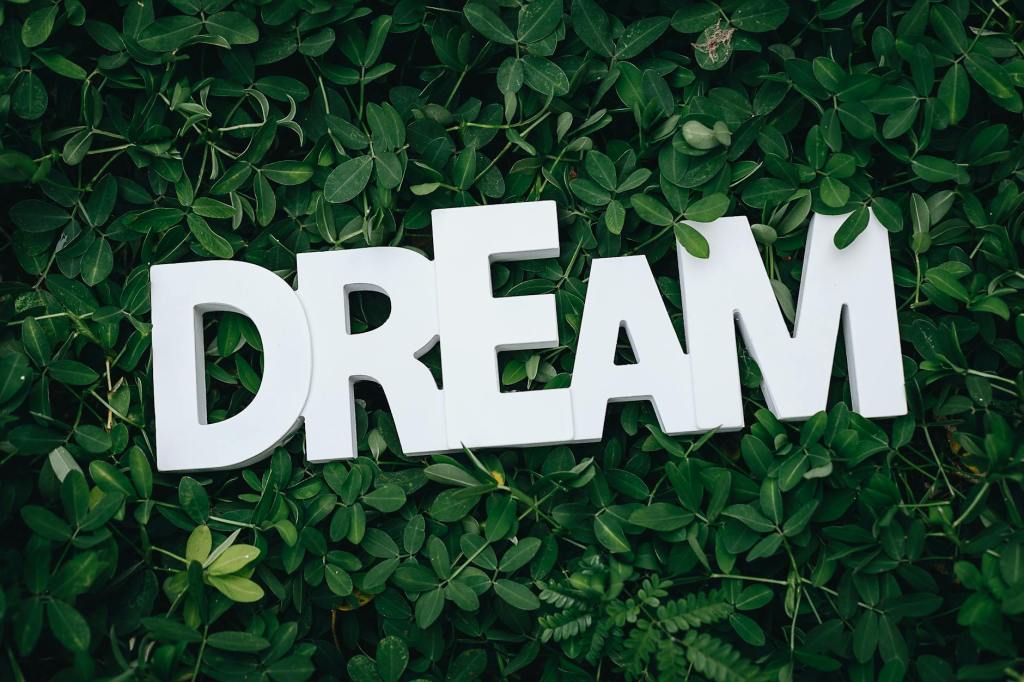
What’s Your Dream?

The current image has no alternative text. The file name is: pexels-photo-1535907.jpeg

For the last few weeks, I have been blogging about dreams. When and how to use them in our writing.

Today, I’m asking a simple question: What are your dreams? Where do you see yourself going as a writer? Do you want your books to entertain, inform, bring your readers to some kind of action?

As a Christian author, my dream/goal has always been to share God’s love and truth with a hurting world.

I concluded that using the medium of fiction would be the best avenue to take… that nonfiction was too “in your face” for a lot of people… that seeing a fictitious character’s life change by coming to know God would be the best approach.

In the years since I began writing, I’ve occasionally heard from readers that my books have been a blessing to them and to friends/family members with whom they have shared them.

And that’s what keeps me writing.

How about you?

Reading Trends for Writers

The current image has no alternative text. The file name is: 47572746831_4dd6b67740.jpg

Understanding book sales is important for authors and publishers.

All of my books have been fictional. Each based on ideas that interest me at the time.

However, gurus are suggesting authors take a scientific approach to choosing our topics and genres.

With another book published—and starting to write yet another—I set out to garner information on trends among American readers. 

Recents surveys show that nearly half of Americans polled haven’t read any books in more than a year!

So then, let’s focus our attention on the other half—the readers.

I was surprised to learn that PRINT BOOKS continue to be the most popular format. E-books rank next; then audiobooks. 

The number of female readers is only slightly higher than for males.

Americans love HISTORY, MYSTERY, AND BIOGRAPHY.

Fiction sales gave gone up by 45% over the last five years. 

Non-fiction, especially political and self-help, are currently seeing a decline in interest. 

You can draw your own conclusions, but from these statistics, we might want to focus on women readers of history, mysteries, and biographies.

And although Romance has always been a popular genre—and probably will continue to be—perhaps now would be a good time for Romance writers to couple with the genres above…Romantic Suspense… Historical Romance, and so on.

Those are my thoughts based on a little research.

The Cover is the Hook

At an auction, I ended up with a book by an unfamiliar author. I had a stack of books at home to read. I certainly didn’t need another one, but as I placed it on the bottom of the stack, I wondered to myself why its author had decided on such a nondescript cover. Not beautiful. Not exciting. Not memorable.

With dozens of books in my Must Read stack, why would I even include this one?

I made the mistake of turning to page one. Five hours later, I looked at the clock. I’d almost finished the entire book!

It was a great book. Unique plot. Suspenseful, with touches of humor—certainly proof that you can’t judge a book by its cover.

But should you?

Is it really important to have an engaging cover that will attract readers?

Of course it is! Case in point, if I hadn’t accidentally come across this book, I would not have read it. There was nothing compelling about its cover.

Authors, there is so much competition out there! We cannot afford to leave it up to chance readers to pick up our books. Be intentional. Hook the reader from the moment they see the cover–and keep them reading to the end.

 What Do Readers Want in 2024???

If you are an author that writes according to the trends of the reading audience, I suggest looking back at what the most popular trends were in 2023 and take your writing in one of those directions.

Remember, however, popularity of genres change from year to year—even season to season.

So you may want to stick with your current genre or try your hand at one of these rising stars:

Romance was #1, again! (No surprise). However, a new kind of romance has taken readers by storm in the last year or so. It is called Romantasy (Adult Romance Fantasy). Other new twists were Sports Romance and Dark Romance.

Also, rising to popularity are stories about robots and other AI-related.

Crime fiction always gets lots of readers, but a new twist are those whose targets are authors. Yikes! (An upcoming movie soon to be on the big screen—if you are interested— is on this very subject).

I don’t want to forget to mention memoirs, satires, and short story collections.

Finally, this one might surprise you. There seems to be a resurgence of re-reading favorite books.

Different Strokes for Different Folks

What one person likes, another may not.

That’s why it’s important to offer your book in a variety of formats.

For a long time, hardback and paperback were the only options for readers.

Later, e-books and audiobooks were added.

You can widen the market further still by offering your book in other languages.

My newest book was just published on Audible. Within a couple of weeks I will announce an interview on Facebook with the producer, Brian Callahan. You’ll want to be sure to watch it. He’s an accomplished guy that can make his voice sound both feminine and masculine; likable, angry, menacing. 

He’s likable, easy to work with, and very amenable to changes/suggestions. 

Justice for Jessie in audio format is now available on Amazon.

Passive Voice vs. Active Voice

I uploaded a page of my chapter into an editing program I had considered purchasing. In less than thirty seconds, the screen blinked and then displayed this message: Be careful not to rely on passive verbs in your writing.

Yikes!

Had I really written something so “non-exciting” that they actually called it passive?

Yes; I vaguely remembered that term. I decided to refresh my memory. Here’s what I found.

Let’s start with the basics: a verb is an action word.

Example: Run, cry, hit, sing.

Depending on how you word a sentence, a verb can be passive or active.

Example of active verb:  

Jon beat Peter in a game of chess.

Example of passive verb:

Jon was beaten by Peter.

In the first example, the subject of the sentence (Jon) is doing the action. In the second, something is done to the subject.

The term voice refers to these two different ways of using verbs.

Passive voice is used most often in formal documents, research papers, and so on.

Active voice is used most often in creative writing (fiction).

Passive verbs are broken down into: present simple, present continuous, present perfect, past simple, past continuous, past perfect, future, and future perfect. There are good examples of all of these on the internet, so I won’t go into each here. 

Especially since my purpose here is to remind those of us writing fiction, that we need to make our writing exciting by using action verbs (active voice).

No; I didn’t purchase the editing program. But its blinking screen and its warning in red CAPITAL LETTERS will be forever etched in this writer’s brain.

The Averages

At one time or another, we have talked about word count for short stories, novellas, novels, non-fiction, etc. However, if you missed one of those blogs, here they are for you. All in one place

These are averages because almost every article I read on this subject reported different word counts. Each publisher or contest will furnish writers with guidelines, including minimum and maximum word counts.

Fiction

Novel: 55,000-300,000

Novella: 30,000-50,000 (Average: 17,500)

Novelette:  7,700-17,500

Short Story:  Less than 7,500 (The “perfect” S.S.= 6,000)

Flash Fiction: Works under 1,500

  Non-Fiction

Biography:  80,000-110,000

Memoir: 60,000-90,000

Business & Money:  40,000-80,000

History:  60,000-100,000

Self-Help & “How-to”:  20,000-70,000

Painting WORD Pictures

En-route to the FICTION section in my local Barnes & Noble Bookstore, the cover of one of the children’s books displayed on a table caught my attention. The art work was breathtaking. I picked it up and flipped through page after page of mesmerizing illustrations. 

In my humble opinion, it is often the Illustrator (and not the author) that should be credited for the success of some of many of these so-called picture books.

I am not a Children’s Author. However, I have read many such books to my kindergartners over the years. And I realized as I stood in the bookstore that one of the things I liked most (and the students responded to) was the VISUAL.

But, writing FICTION, as I do, requires the ability to  paint the VISUAL of my stories with rich vocabulary… to use language to give readers that other dimension necessary for limitless enjoyment.

So when they browse the pages of my books, they too will be mesmerized with the VISUAL that only an author’s words can paint.

The Writing Journey

People sometimes ask me how I got started writing. I think it really started with reading. I grew up in a home where my mother modeled the love of reading.

In elementary school, I was fortunate to have teachers who took time to read to the class after lunch recess. (A perfect way to calm down a rowdy group after a lively game of volley ball). I looked forward to this time of day, as they read to us about children in other countries, cultures, and time periods. My understanding of the power of the written word to transport and inspire began in those classrooms decades ago.

It shouldn’t surprise you, then, to hear that I grew up to be a teacher and that one of the favorite parts of my day was reading to my own class after lunch. I literally had to force myself to read only one chapter because I could have easily read to my students all afternoon! I could look out at that sea of young faces and tell which ones were also caught up in the story and equally disappointed when we rejoined the present world and turned toward our math lesson.

When my own children were small, I didn’t have a lot of time for writing, so I wrote short stories, poems, or skits. I guess it was just enough to satisfy my yearning to create. But, I definitely wanted more.

Once I retired, I worked part time as a reading teaching for a few years before I decided to write in earnest. I remember the day I first sat down in front of the computer. I knocked out that first paragraph

My husband and I love to go to movies, so it was a natural next step for me to try my hand at screenwriting. I loved the action and I could see in my mind’s eye just what my characters would say and do—how they would interac. However, I soon learned that without relocating and forming connections in a world of actors, directors, and producers I was going nowhere.

So, that brings me to the present. It is a stimulating time for me because I have found that writing fiction fulfills that inner longing to create and bring to life characters that not only I, but other readers, can enjoy. By the power of the written word, they come to life. They live, they breathe, they have a voice. 

I live in their world, as much as I do in mine. My characters become my friends and my constant companions. And, yes, I do still harbor that secret hope that some day they will live for all to see—on the big screen!

Please write and let me know how you started your writing journey.

**Summary of earlier post.