It Was a Nice Trip, But…

The current image has no alternative text. The file name is: woman-happiness-sunrise-silhouette-40192.jpeg

We just returned from a vacation up north, where we experienced a reprieve from the summer heat. It was a nice trip, but I agreed with my husband when he said he was “ready to go home.”

I thought about his remark this morning as I  completed another chapter of my book. I’m winding down. Writing it has been a good experience, but I’m ready to finish this latest book.

Although title, cover, publishing, marketing all lie ahead, I always feel I’m “home” once the writing is done.

If you’ve been looking forward to reading Sunset Pointe, you won’t have to wait much longer. It could be out by the first of the year, or perhaps it will find its “home” in the midst of this year’s Christmas releases.

Better Than the Original

You’ve been writing your book for the better part of a year. You’ve tied up loose ends in the editing phase and are ready to publish.

Then, you find out—like I did—that the title of your book was used by a dozen or so authors in years past.

Do you stick with it because you like it and because it is already recognizable by lots of readers?

Or do you choose something else and get the job done?

Well, that’s what happened to me just a few weeks ago. I discovered that the book I had entitled, “Blinded,” had already been used by quite a few other authors (nice to know others thought it was a good title, too) and I had a choice to make.

I spent a couple of sleepless nights trying to think of another title that I liked just as well.

I was ready to throw in the towel when I woke up one morning and a title just came to me out of the blue. The new title, “Justice for Lucie” was just so-so for me, so I changed the main character’s name to Jessie with the Find/Replace option in Word.

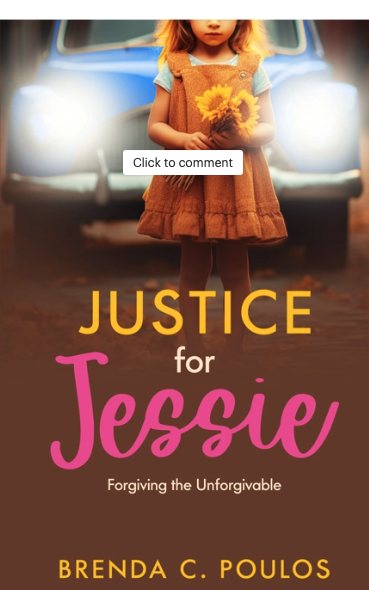
It took a few days for me to get used to it, but now I absolutely love my new title, “Justice for Jessie.”

I have learned that there is almost nothing you cannot fix if you put your mind and effort to it. And, like myself, you may end up liking the change better than the original.

Look for Justice for Jessie in September 2023.

Choosing Your Subtitle

A subtitle should tell the consumer additional information that cannot be conveyed by the title alone.

You’ll want to choose one, if possible, because it gives you an additional chance to add more keywords on Amazon.

Keywords are simply the words a person would type in the search bar to identify the kind of book they are looking for.

Authors are allowed to choose ten keywords. These will come from the title, subtitle, back cover blurb, and book description you write for your Amazon sales page.

I wrote down dozens of ideas for the subtitle for my soon-to-be-released book, Justice for Jessie. I decided on Forgiving the Unforgivable because it further described my book, along with being “catchy”—at least to me. It was also short and sweet, making it more memorable. 

Remember: Your subtitle should represent the genre in which you write, mine being Christian Suspense.

Can You Say It In Three Minutes?

Are you able to pare your story down to three to five sentences?

Can you say it smoothly within three minutes?

The sole purpose of a pitch (the in-person conversation with an editor or publisher) is to convince them to give your story a look.

Be sure your pitch includes:

Hook: Why they should read your book. 

Synopsis: What the story is about. (Be sure to include the title, length, and genre of your novel). Your

target audience; and where it fits in the market (Titles of books similar to yours—and why yours will be different); and your bio.(including why you are qualified to write the story and what you are willing to do to promote your book after it is published.)

Remember to take your business card with you. You don’t want to be writing down your information on a gum wrapper while going out the door!

Four Essentials In Writing a Successful Book

Have visions of your book literally flying off the shelves? You can do four essential things to make this happen:

The first three are all on the outside.

First is the title. It must be catchy, exciting, edgy, and unique. It needs to capture the essence of what the writer is trying to portray. It needs to give the reader a hint at what’s inside without giving everything away. (I am speaking of FICTION books. Non-Fiction books need to hit on the very topic to be covered. Non-fiction readers have a certain bit of information they are looking for. The title is their first clue they have found what they are seeking.)

Dave Barry’s BIG TROUBLE is probably one of the funniest books I have ever read. The title had me hooked from the “get-go”.  The spine told me just enough to get me to pluck it from the shelf. 

Then I saw it—the second essential—one of the most creative and unique covers I’d seen up to that point. The closeup of a crocodile’s face, bumpy and wild-eyed. Who wouldn’t want to read a book about a crocodile that caused “Big Trouble”? 

I turned it over and then I read it—the third essential—the back cover blurb.  Amazing. Captivating. Hilarious. Irresistible.

The fourth essential is inside the book— the writing. And, Big Trouble did not disappoint.

If a book’s cover, title, and back cover blurb can get me to shell out my money, THE WRITING HAS TO DELIVER. PERIOD. If it doesn’t, it is just a big promise not kept. It’s a marketing ploy and nothing more.

If the book doesn’t live up to the hype, a reader won’t feel satisfied. And an unsatisfied reader will NEVER PURCHASE A BOOK FROM THAT AUTHOR AGAIN. 

They feel CHEATED, BETRAYED, CONNED.

You’ve probably heard that you only have one chance to make a good first impression.  That statement was originally said about face-to-face meetings, but it is never truer than when said in reference to a book.

So, target all four essentials. Make sure that the writing on the inside lives up to the title, cover, and back cover blurb on the outside.

Because you never get a second chance to make a good first impression!