SUPER-SIZE IT!


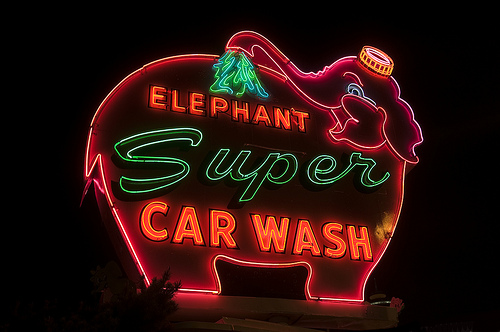
Things used to be so simple. Now, everything must be bigger and better to draw our attention.


7987633544_3602716368


For example:

Superman

Supermodel

Super Mario

Super Chunk

Super Hero

Super foods

Supercuts

Super soft

Super cool

Super star

This “Super” mentality makes it difficult for a lot of people, including writers.

Our audience demands more.

And, so we must demand more of ourselves.

The pace must be faster.

The characters must be larger than life.

Quirkier…

more colorful…

smarter…

more interesting.

So we dig deeper…widen our appeal to a broader audience.

We meet the challenge…

up the ante…

we super-size it!


Do You Have What It Takes?

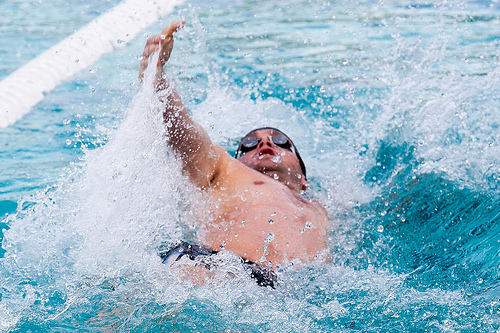
I am looking forward to watching the summer Olympics. Just days away, I am already planning my evenings to free up a few hours to view the games.

The dedication, the hours of practice, the self-denial of other pleasurable activities—these are just the beginning of what it takes to be an Olympian.

These young athletes didn’t just wake up one day with all the skills necessary to perform at these high levels.

They didn’t read a magazine article, get inspired, and experience instant success.

Their roads have a common thread of self-denial, determination, and hard work…really hard work…for hours, months, years…

Anyone who has achieved a high level of success at anything will tell you it isn’t an easy road.

It isn’t all glamorous.

It often isn’t even fun.

Sounds hard?

Ah, but you said you want to be a writer!

The same rules apply. In fact, we can think of successful writers in much the same way as we do Olympic athletes.

Do you have what it takes?

Drive.

Determination.

Perseverance.                             9001587131_7cd4b8ed82

A thirst for knowledge.

A willing, teachable spirit.

An unstoppable desire to achieve.

Because it will take all that from each of us and more…

Do you possess that innate quality that keeps you going in spite of reading a negative review, hearing a hurtful comment, receiving a rejection letter— and dust yourself off and get back in front of the computer and keep on creating?

As the Olympics unfold, the sports commentators will doubtless refer to the resilience of the human spirit.

No doubt history will be made by those who were told it couldn’t be done.

We will watch as races are won and records are broken.

The events may serve as the basis of a magazine article or the theme for a book.

Writers are sure to be inspired. Energized. Challenged.

Who knows?

You may find your gold medal in a future book deal, a letter to the Editor, or as a guest blogger.

Whatever it is

Whenever you experience it

Be assured

You have the makings of a Champion.

STEAMPUNK

15537714549_0e355f818d

There was a time when I started writing a few years back, that I had to learn the meaning of quite a few terms. For example, I had no idea what speculative fiction and YA meant.

Recently, I relaxed a little, thinking that I’d caught myself up on all the terms and lingo. I was wrong, however.  As I read biographies of authors on Twitter last week, I came across an unfamiliar term.  Several authors spoke of writing Steampunk.

What in the world is Steampunk?

Here is what I found out:

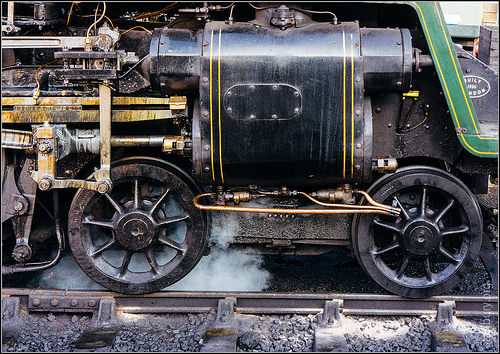
Steampunk is a subgenre of fantasy and speculative fiction that first became popular in the 1980’s.

These are works set in an era or fantasy world where steam power is used, often in the 19th century Victorian era England.

They have prominent elements of science fiction and fictional technology like that found in the works of H.G. Wells and Jules Verne.

Some steampunk contains alternate history, such as in a post-apocalyptic future where steam power is in use, or in a fantasy world that similarly employs steam power.

Steampunk may also use elements from fantasy, horror, historical fiction, or other kinds of speculative fiction.

One of the earliest short stories relying on steam-powered flying machines is the 1844 The Aerial Burglar.

Recent books are: Khurt Khave’s Chainsaw Alice in Wonderland (2014); Quercia’s Lincoln Pocket Watch Conspiracy (2014); and Butcher’s The Aeronaut’s Windlass.

So, now we know.

It doesn’t sound like what I would enjoy reading, (or writing, for that matter) but I hear through the grapevine that it is a favorite among geeky teenagers and young adults.

Seems like it would take a lot of research and a good deal of imagination.

It might be right up your alley.

Authors: Introverts or Extroverts?

So often we think authors must be introverts, since writing is such a solitary, introspective endeavor.

Public speaking seems to be more in line with what an extrovert would do. After all, they thrive in environments full of people—malls, cafes, concerts, conferences.

Actually, it seems there is no direct correlation between being a writer and being an introvert or an extrovert.

Sure, if given a choice, introverts may rather express their ideas in writing than in speech and extroverts more often enjoy taking to the stage.

But, for both, writing provides a way of expression, although perhaps a more comfortable medium of expression for introverts.


27626409046_4216b88b2c


There is also a third category, called ambiverts, striking a balance between these two extremes. This personality trait includes the qualities of both introversion and extroversion.

I am convinced that the longer a person writes, the possibility of him/her becoming anambivert increases. After all, introverts find that much of their career depends on marketing, publicity, and teaching opportunities. Extroverts realize that even though they thrive on social contact, they must still spend a good deal of their time working  alone.

Of course, people retain their basic personality type, but environment and heredity both play a significant role in the blending of these two types into one super type—the best of both worlds—the ambivert.

A hybrid. A super communicator. A writer.

What I Learned Today

8082030670_255734e0bc

A couple of days ago, we had new countertops installed in our kitchen. As I stood there afterward, admiring them, I said something to the installer about my having heard that Windex is a good cleaner.

“Oh, no!” he said. “Please never put Windex on your granite.”

“Oops,” I answered. “I learn something new every day.”

And I do.

I either learn through the circumstances of my day—just as from the installer—or by purposefully seeking the answer to a question I’ve had.

One of my friends is writing a Novella. I asked her exactly what that was (I was already considering writing one myself the instant that she said the name. So beautiful it sounded to my ear: No-vel-la.)

She said it was a short novel.

Ok. I knew there had to be more to it than that., but I was too embarrassed to tell her I didn’t know.

So, I went to the computer with my question. Here is what I found:

A novella is a work of fiction. It can be thought of as a short novel or a long short story.

Whereas a novel has over 50,000 words, a novella has an average of 30,000 words.

A writer may plan to write a novella ahead of time, as my friend has. It’s alright if the novella ends up to be longer (then you’ve written a novel) or shorter (then it qualifies as a short story).

Novellas are not the most popular or best-selling format. You may not find a publisher that will readily accept a novella, but it may be perfect for someone self-publishing.

So, there you go. Perhaps we’ve all learned something new, today.

Whatever you decide to write—a short story, novella, novel, or magazine article—writing is a most-rewarding form of self-expression.

So, don’t miss the opportunity to try your hand at writing.

Why not start small?

Perhaps a novella…

Are You Addicted?

When we think of addictions, we often think of drugs, alcohol, pornography, and gambling.

Addictions like those are a bad thing.

I’ve been addicted to chocolate, french fries, soft dough pretzels, and peanut butter.

Lately, I cannot resist vanilla shakes, avocado-bacon burgers, and Amish Romances.

Others might be addicted to shopping, golf, cell phones, and to taking “selfies.”

Those addictions can be a bad thing, too.

Anything we desire to do over and over, again, on a daily—or even minute-by-minute–basis can be addictions.

And, not all addictions are bad (at least in my opinion).

So, let me ask you…5449316690_afb701325f

Are YOU an addict?

Is your writing so fulfilling that your day is just not complete unless you write for at least a few hours?

Are your characters so real that you simply cannot wait to get back to them each day?

Do you find the alternate worlds you’ve created to be intriguing…fascinating?

A writing addiction can be a GOOD thing.

Just like swimmers and gymnasts practice for hours and hours a day—because they are addicted to their sports—writers need to do the same. And, on the days you cannot make that happen, you should expect to feel irritated, frustrated, and disappointed.

Why?

Because on those days you haven’t met your inner need…that almost intangible longing you have for self-expression that, for you, cannot be met in any other way.

My grand daughters dance. They are addicted to it.  They live and breathe it. It completes them.

Just as painting is to artists.

Just as music is to musicians.

Writing is addictive to authors.

And that can be a VERY GOOD THING!

A Welcome Intrusion

I often view life, rather the “stuff” of life, as an intrusion on my writing. Just this month alone, I have had taxes to prepare, a book signing, a mammogram, a 13,000 mile oil change and maintenance check on my car, a haircut, a visit to a new allergy doctor, a weekend conference, close of escrow on a new home, two yard sales, six blogs to write—well, you get the picture.

I’ve only been to my exercise class twice this month and only visited my aging parents, once.

Sometimes I feel like throwing in the towel!

If you are experiencing similar feelings about your life, I am going to suggest something rather odd.

Take on yet another responsibility.

I know, it sounds crazy. However, I have recently done exactly that.

I needed a “shot in the arm”—something to energize me—and so I thought about mentoring.


24841939102_48f28f9d59

I have begun informally mentoring a couple of “new” writers.  One is a young girl—a cosmetologist—who has answered the call of her heart and begin to write in the evenings after her young children have gone to bed.  The other is a “winter visitor” here in Arizona. We will be able to communicate by email, for the part of the year she is away.

I love to “talk writing” and the opportunity to help others is why I went into public school teaching in the first place. Besides, one can learn so much by teaching others. I’m sure I will be the one benefiting the most from these two relationships.

ou may think you have nothing to offer a new writer, but nothing could be further from the truth.

You can share what you have learned at conferences, read in books, heard from the members in your critique group. If nothing else, you can listen to their frustrations, make suggestions,  and offer an encouraging word.

By doing so, you may find yourself energized and more productive as you are working on your own writing projects.

Think back to when you first started writing. Recall what kinds of questions you had, where it was you went for answers. Share what you found to be helpful.

Think back to some of the more notable mistakes you made. As you mentor someone, relay what you learned in those situations.

Instead if being an intrusion in your busy life, you just may find that becoming a mentor is just the thing to kick-start your next writing project!

Ellipsis…or Em Dash-?

It seems I never think full, flowing thoughts anymore. My husband would add that I don’t speak in whole, fluid sentences, either!

This shows up in my writing, as my thoughts pour out in chunks, rather than a steady stream.  And, I think it is for this very reason, I have adopted using the ellipsis and the em dash.

My purpose, here, is to acquaint you with their various uses—though not in any way try to convince you to use them in your own writing—as some find them confusing and irritating—or so I am told.

The ellipsis, or …, indicates an unfinished thought, a pause, awkward silence, an echoing voice, or even a leading statement. (The aposiopesis is the use of an ellipsis to indicate the trailing off of a voice or noise into silence. For example, “But, I thought she’d…”)

The em dash is often used in place of a colon or parenthesis, showing an abrupt change in thought, to set apart definitions, show interruptions— by another speaker or self-interruption—contemplation or emotional trailing off, lengthy pauses, bleeps (as in censorship), substitutions, or where a series of commas have already been used in a given sentence.  (Much like the one I just wrote!)

So, if you tend to speak, think, or write in frequent spurts and stops, consider how much easier and quicker the writing process might be if you consider using the both the ellipsis and em dash.

I’m just saying…

Are You A One-Trick Pony?

So, here you are

in front of your computer,

pens all neatly in a row,  a stack of scratch paper nearby,       stock-photo-businesswoman-using-pc-computer-on-her-office-table-215226196

ready to write.

Want to do something different?

Fun?

Challenging?

Write the first paragraph of a story in different genres.

The characters are: Twelve-year-old Shauna Price and Twenty-year-old Stockton Miller.  Setting: Windsor Mall. Sunday afternoon.

I’ll begin:

Suspense:  The point of Stockton’s knife had already torn a hole in Shauna’s bulky sweater. Her eyes searched for the nearest exit. Would she somehow be able to slip away, and lose herself amongst the other shoppers in the crowded mall? She took one calming breath, then another. After saying a silent prayer, the twelve-year-old twisted her wrist from his grasp and ran in the direction of the escalator.

Now, it’s your turn:  Using the same characters and setting, write the opening paragraph of the story as Fantasy, Sci Fi, Romantic Comedy, and so on.

I found this to be a fun exercise. After all, I am a fairly new writer. I am not yet settled on any one genre. My first book, Runaways: The Long Journey Home, is Fiction Suspense. However, the novel I am writing currently, The Choice, is completely different.

It is true that writing in only one genre, may help a writer grow a following of readers. And, it is also true that a writer may be able to hone their skills more quickly if they stick to one genre.

However, if you are a new writer and haven’t yet settled on a particular genre, now is the time to try your hand at different genres, techniques, and writing styles…before you are “type-cast” (I borrow this term from Hollywood) as one kind of author or another.

And, if you find you like writing in, say, two genres, there is always the possibility of writing in one genre under your real name, and using a pen name to write in the other genre. Lots of authors do this very successfully. Their followers are frequently unaware that their favorite Historical Romances are written by a well-known author of best-selling Thrillers!

Stir Their Hearts. Make Their Skin Crawl.


Fiction entertains. It mystifies. It sometimes makes us cringe. It oftentimes invites readers to experience different worlds…odd creatures…unusual circumstances. It makes us laugh. It makes us cry. It stirs our hearts…

Non-fiction informs. It often tells of heroes, the downtrodden. It recounts historical events and the people who lived through them. It takes us to different countries, cultures, and peoples. It entices us to travel and experience all that our world has to offer…

As writers, we hold within our pens the power to spark many different emotions in the hearts of our readers: fear, surprise, empathy, anger, love—the list is endless. We take them on a wild ride, of sorts. And, they love it.

Their hearts pound. Their skin crawls. Their tears flow.

They crave it. We deliver it.

But, by the end of the book we need to wrap it all up. Sometimes neatly…sometimes not so much.

For myself, I choose endings that encourage, uplift, offer hope.

In this fast-paced world full of hurting people, in this climate of unrest and uncertainty, my goal is to give readers something to hold onto.

When they read that last page and turn out the light, I want them to rest a little easier, feel a little safer. I want them to have experienced relatable characters that have triumphed over insurmountable odds…who have claimed victory over negativity or self-doubt…who have learned a life lesson and emerged the better for it.

I want my books to change them in some way.

Maybe they’ll experience release from a false belief about their own self-worth. Perhaps they’ll be energized by an idea they find within its pages. Perhaps they’ll be inspired to reunite with a family member or old friend.

I want to give them the same thing I want from a good book: to emerge from the reading experience a little wiser, more sensitive to the needs of others, more open to change, happier—just different somehow.


cover with badge