Does Writing Make Authors Gain Weight?

Writing and dieting definitely do not mix..

When writing something exciting, or if I am having trouble working out a plot, I find I often wake up in the middle of the night and cannot get back to sleep.

However, the latest research says that getting a good night’s rest helps with weight loss. The reverse is also true. Not enough sleep results in weight gain.

Secondly, writing something exciting causes me to snack. The faster I type, the faster I shovel it in. The more suspenseful the writing, the more I am likely to go for something small and easy to pop into my mouth, like popcorn, nuts, or M&M’s.

Finally, writing is a sedentary activity. We writers need to get up and move around every hour or so to clear our brains, stretch our muscles, and burn a few calories.

I’ll never write a cookbook. 

Just imagine what might happen if I focused on yummy recipes all day long!

Make It A Real Page Turner!

If someone says you should “Milk It,” when they critique your work, they are saying to give the scene

MORE ACTION

MORE EMOTION

MORE INTERNAL THOUGHTS

MORE DESCRIPTION

MORE CONFLICT 

Because that’s what makes a story exciting and satisfying. If you want your book to be a real page turner, then a writer has to deliver ON EVERY PAGE.

DON’T SKIMP. 

Use rich vocabulary. Lots of adjectives and verbs. Paint a visual picture. 

Furnish the details. Let them get inside the characters’ heads by revealing their emotions via DIALOGUE, ACTIONS, AND THOUGHTS. 

PLUMP UP the plot. Make the content EXCITING. Compel your reading audience to keep turning the pages… all night long!

So if you have a nice little story lacking PIZAZZ, why not make it a page turner?

Spice it up. 

Change it up. 

Shake it up. 

MILK IT!!!!

What NOT To Write

I love to read. 

I read a couple of books a week.

However, for the past six to nine months, it seems like I am reading the same book over and over.

Oh, the name of the town in which they live and the characters’ names change, but the stories… the plots are almost identical.

Writers should be more creative than this!

Please don’t join the hundreds of authors who write about:

  1. Mailorder brides.
  2. Couples who marry because of circumstances in their lives and not because of love. (For instance, they need to marry by a certain date or lose their inheritance.)
  3. Ladies, mostly, who inherit a hotel, bed and breakfast, or ranch and find a handsome cowboy or business-type who helps them learn the ropes.
  4. Mysteries involving cats.
  5. Let me just interject here a plea of a different order. Please refrain from including overused phrases in your writing. Here are two I find in almost every book: “He reached forward to tuck a wayward curl behind her ear” and “She let out a breath she didn’t realize she’d been holding.” 

Resist the urge to write on someone else’s coattails. Spend some time brainstorming to come up with unique stories of your own that will please both you and your readers alike.

Kindle Vella

What follows is a brief overview of the new serialized fiction reading program released to the public in April of 2021. For more detailed information, please see the full description for readers and authors on Amazon.

I recently received a couple of emails from Amazon about this new opportunity for writers, so I finally took the time to dive in and find out what Kindle Vella is all about.

It all boils down to this: readers can access stories which authors release in short episodic installments. 

They read these using the Kindle Vella app (for ios or Android) or the KV website on their computer desktops. 

The first three episodes of any story are free, but readers need to acquire and use tokens to unlock future episodes. They can give their opinions of the stories in the form of follows, likes, and faves.

Authors create new, original stories in their KDP dashboards. After the stories have been on Kindle Vella for at least 30 days (and are at least 10 episodes long), the author is allowed to publish them in a book format if they wish.

Authors earn 50% of what readers spend to read their episodes on the app in the form of tokens purchased from Amazon, plus certain bonuses. Note: Amazon retains the right to price the episodes originally and to change the token pricing at anytime.

I’d be the first to tell you that I haven’t delved into the compensation model, but it is explained on Amazon for those of you who are further interested.

This doesn’t seem to be geared toward getting authors more money. However, if you consider that the episodic release model might be a good fit for your writing, it may be worth looking into.

The big plus, as I see it, is that this is an innovative way to reach and grow new readership.

Are there other episodic installment platforms out there? Yes. Two others you might consider are Wattpad and Radish.

Confessions of a Hybrid

A “pantser” is a person who writes by the seat of their pants. He writes with little to no advance planning of plot, characters, and so on. A “planner” does just the opposite. He/she plans out the plot, the scenes, the character arc—all of it—in advance. 

I suppose you could call me  a “hybrid.” I have a definite beginning and ending in mind for my books. I even have a rough idea of how I am going to get there. However, as my characters develop, I really do listen to them. If they can argue a good case for any given action, I can be swayed.

I am always willing to use the delete key any time they bring a better idea forward.

Case in point: In Runaways: The Long Journey Home, Charlie and Claire convinced me to allow them to remain at the “Summer House” longer than I had anticipated. They had valid reasons why this would be essential to the plot.

I caved. They stayed.

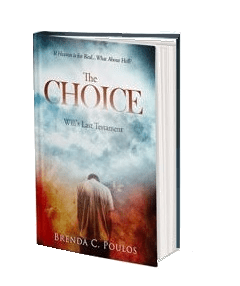
In Will’s Last Testament, I allowed Will to remain healthy longer than I originally had written because he defended his reasoning so well. The resulting timeline is much more satisfying.

I also listen to my critique partner and writing group. If they say they are confused by a scene or they don’t understand a character’s motivation, for instance, I reread my submission to myself and usually decide they are absolutely right. They are my “voices of reason” when I get so caught up in the story and so close to the characters that I cannot be impartial.

I’m a self-professed hybrid: a “plantser.” How about you?

Writer or Author?

I recently shared with someone that I am a writer, but as I drove home I asked myself if I really understood the difference between being a writer and an author. I decided to find out. 

I discovered that although the words might be used interchangeably, they really are different.

An author creates the idea or content of what is being written, whereas a writer uses someone else’s ideas.

But, it is not that simple because a writer can be an author if  he/she is expressing his own thoughts or ideas.

And there’s more.

As pertaining to writing books, if you develop the plot and write your own ideas, you will be known as the author only when it is published. 

Even if you write A LOT, but never get anything published, you will be known as a writer—and there’s no shame in that. Lots of good work, great ideas, and a wealth of information/enjoyment comes from writers. 

But, if you do have aspirations of being an author, follow these 2 steps:

  1. Write, using your own ideas.
  2. Publish your work.

Great Expectations

The book started out pretty well. It met all of my expectations. It was a page turner.

However, about the middle of the book things started getting bogged down. Plot problems, character problems, difficulties with point of view. There were even errors in grammar and spelling.

I considered giving up on the book because the author just wasn’t delivering the goods. I was disappointed. I had spent about twelve hours reading the book so far, and was at the point where I would either have to cut my losses or keep reading in hopes that the author would be able to pull it all together in the end. 

Readers ask that authors deliver on our promises. 

Before buying a book, the back cover, reviews, advertising and friends’ recommendations help make for a somewhat informed decision on the part of the consumer. 

After the purchase, readers settle into that comfortable chair and expect to be wowed.

Whether you are a well-known writer with a huge following, or you have yet to publish your first book, we must all write something that is worthy of being read.

Reading and Writing

Writers like to read. Need to read.

Not just pleasure reading, which is a “given”.  But also reading about writing. The craft. Punctuation and grammar to be sure, but also reading about genres, point-of-view, voice, character development, plot and hundreds of more things we need to consider—need to master—in pursuit of excellence in writing.

James Scott Bell’s How to Write Dazzling Dialogue and Steven Pressfield’s Turning Pro are two books to add to your library.But don’t forget to pleasure-read, too. 

“All work, and no play, makes Jack a dull boy.”

I read that somewhere…

It’s More Fun to Write

It’s a LOT more fun to write than to rewrite.

One moment the page is blank. Within a few minutes, the page is half-filled.

One moment, it is a small spark in the brain. The next, it is a living, breathing organism—a grouping of thoughts begging to be a story.

Sometimes the ideas come so fast that there’s no time to check for grammar, spelling, or errors of any kind. They spill out and if they aren’t acknowledged right away, they fade. It’s hard to recoup them. Often, it’s not possible.

So, like many of you, I carry a pad of paper in my purse and a notebook in my car. If an idea comes into my head, I pull over and scribble it down. If I’m in a restaurant, a napkin may have to suffice. In the doctor’s office, I once wrote down an idea on the paper liner from the exam table. 

Desperate times call for desperate measures.

So what happens when you are in the middle of writing and someone calls you to say, partake of luscious ribs from the grill?

That’s what just happened to me in the middle of writing this blog. My husband  announced that the ribs were ready an hour earlier than I had expected.

I closed down my writing program and graced my husband with my presence at the table. The ribs were great and I wasn’t sorry I let them interrupt my writing.

But now I am back in front of the computer and I’m stalling…

I’ve lost my momentum, my train of thought. I’ve forgotten where I was headed with all of this. 

So, I’ll give this what I call the “Fifteen Minute Rule.”  If, within the space of fifteen minutes, I haven’t written anything meaningful, I’ll shut my computer down. 

Power off.

Because it is much more fun to write. Not so much fun to rewrite. 

It’s not as exciting when you’ve lost that edge, that quirky way of expressing something ordinary in a new and different way that makes us all sit up and take notice.

So, go ahead and have a plate of delicious ribs. But, as for me, I think I’ll pass—next time.

[Rewritten from an earlier blog post.]

Mom Loved to Read

My writing journey started with reading. I grew up in a home where my mother modeled the love of reading.

In elementary school, my teachers read to the class after lunch recess. (A perfect way to calm down a rowdy group after a lively game of volley ball). I looked forward to this time of day, as they read to us about children in other countries, cultures, and time periods. My understanding of the power of the written word to transport and inspire began in those classrooms decades ago.

It shouldn’t surprise you, then, to hear that I grew up to be a teacher and that one of the favorite parts of my day was reading to my own class after lunch. As I looked out at a sea of young faces , I could tell which ones were also caught up in the story and equally disappointed when we rejoined the present world and turned toward our math lesson.

When my own children were small, I didn’t have a lot of time for writing, so I wrote short stories, poems, or skits—just enough to satisfy my yearning to create. But, I definitely wanted more.

Once I retired, and decided to write in earnest, I found that writing fiction fulfills that inner longing to bring to life characters that others can enjoy. By the power of the written word, they live, breathe, and have a voice. 

And, yes, like most writers, I harbor that secret hope that some day they will live for all to see—on the big screen!

Please write and share how you started your writing journey.