Move Over, Procrastinators–Here I Come


24042412056_d5c3c25f59I get my Christmas shopping done early. I’m ready. I avoid the long lines. I get first pick of what’s in the stores—what’s new for the season.

In contrast, there are the procrastinators. They wait until the last minute, braving the crowds and getting amazing deals.

Often, the very items I bought two months before those shoppers ever showed their faces in the malls, are sometimes 50-70% off a few days before Christmas!

The procrastinators are getting rewarded!

Now, if you are one of them, don’t think I am having negative thoughts about you.

Quite the contrary.

I am in awe of you. And, next year, I am joining you.

Why not?  I’ve watched the trend for the last five years and I don’t see that it is going to be any different next season.

So…watch out. Next Christmas Eve (or perhaps just a day or two prior) I will be out there with the best of you, raking in those last-minute bargains…laughing all the way home!

But, as an author, I cannot recommend procrastinating. In fact, just the opposite.

Writers need to be organized and just one-step-ahead in order to get our product out there—and thus, into shoppers’ hands in time for gift-giving.

This year, I started seeing some books marketed for Christmas as early as August. That means, by the latest, an author needs to be wrapping up the editing process, cover selection, and started on pre-marketing by mid-summer.

So, you see, the winter/spring months should really be ones filled with hard work, if you are thinking about targeting the Christmas market. To be sure, though, December isn’t the only month that is profitable. Valentine’s, Easter, and Mother’s Day are times when lots of sales can be made. So, they are great markets to focus on, also. In fact, the summer season is also hot (ha!-I didn’t see that one coming, really…) Think about all of those beachy reads…

In the past, I have just written and published when a book was ready, giving no heed to seasons, holidays, and trends. But in 2018, I’m going to give this aspect of book marketing some serious consideration–perhaps even write something with a Christmas theme…

If that idea doesn’t appeal to you, an easier route would be to simply make a boxed set of your books, or tie a virtual ribbon around your existing series and market it at a special price.

Marketing is the hardest, most time-consuming aspect of writing for me. If it is for you, too, stay tuned. I will be sending tips your way in 2018. As I learn, I will be passing ideas along, in hopes that you will share those that you have found helpful, too.

Let’s make 2018 an amazing year of getting things done.

No procrastinating!

Merry Christmas

15430696613_eae85e88da


Here it is. Sunday afternoon.

And, just like every other Sunday, I am at the computer for the sole purpose of writing my two blogs—this one to you, my writing friends.

However, today isn’t like any other day, is it?

It’s Christmas Eve and my thoughts are fragmented. There’s a meal to prepare, last minute gifts to wrap. There are tables to set, pets to keep calm, and church to attend.

Okay. I’ll admit it. Writing is the last thing on my mind.

But, I am guessing that perhaps your mind is on other things, too. In fact, taking time to read this blog post might just be the last thing you want to be doing right now.

I get it. I really do.

So, today I’m not going to send you more writing tips, “rules”, definitions, or suggestions.

I’m just going to say, Merry Christmas. I wish you happiness, peace, and joy–deep and abiding joy–God’s gift to you through Jesus, His son.

Terrific Tuesdays

15985554795_22ccaf868e


Some years back, my sister and I used to meet up once a week for a day of shopping, with breakfast and lunch sandwiched in-between. Those “Terrific Tuesdays” were great.

We maintained the habit over the course of several years. However, our lives got busy with jobs, families, and masters’ programs, so we changed our ritual to once a month. It wasn’t long until it became two or three times a year and then, finally, we abandoned any hope of maintaining a regular schedule.

I know you can relate.

I should have hung onto those days like gold. We should have found a way…

So, just how does that relate to writing?

Well, let’s say that I have my writing calendar all filled out, appropriating 4-6 hours of writing  to each day of the week.

But, then the holidays come along and I’m torn between writing and meeting a friend for coffee and catching up on old times. Or, on a trip to visit Grandma for Christmas, I feel compelled to sneak up to the guest room and hammer out the plot for my next book while my kids remain downstairs helping to decorate the tree.

The truth is, there’s just no other way to create memories unless you’ve been there in the first place.

In the long run, whether our book comes out in March or May will not really matter. But, our interactions with others—our relationships—will grow, or they will die on the vine, depending on how much we cultivate them.

Take time to nurture yourself and others without guilt over meeting your writing goals.

I know there are very talented authors who will tell you to write everyday no matter what. I used to believe that. And, it led to a lot of heartache.

This year, I’m giving myself permission to take part in the celebration of the season, to laugh, to foster relationships, to turn off my computer and shut my office door.

No, this year I won’t be writing during the week of Christmas.

Instead, I will be making memories that will last a lifetime.

Sharing Good Advice

Uruguay, Montevideo:   Inside a bookstore.

I recently went to another writing conference. One of the speakers, best-selling author Jennifer Ashley, offered her perspective on what sells books (and she should know because she has written more than 100 of them). I’ll share her TOP THREE ideas:

First, connect with your readers. She says the best way ISN’T Facebook, Twitter, etc. It is, in her opinion, good writing. So, she says to focus on your writing 90% of the time. The other 10% can be devoted to marketing.

Secondly, you must have an Intriguing Premise, so followers will want to read/learn more.

Finally, write about iconic characters, such as firemen, policemen, and cowboys.

I hope these little nuggets are useful to you, especially to those of you who may be choosing characters for a new book, considering the message you want to get across, or facing a marketing vs. writing crisis.

Christmas Letter


31082694023_c739f57abf


On my “To-Do” list this week, is writing my yearly Christmas letter to friends and family. I am making a list of trips, health updates, and accomplishments I’d like to include.

That got me to thinking about YOU and what I’d like to share as the Christmas season fast approaches.

First of all, I’d like you to know how much I appreciate your encouragement and support by reading/commenting on my blogs each week. I hope they have been both helpful and encouraging to you as we walk this “writing road” together.

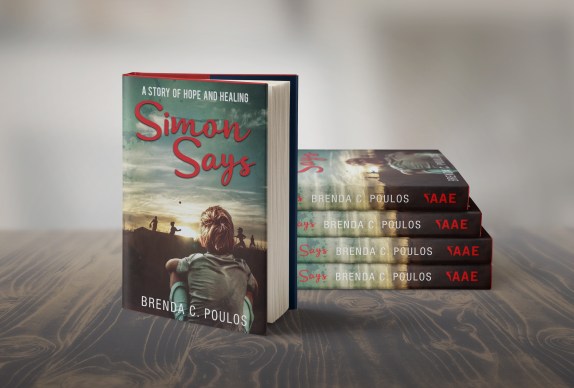
To catch you up on what I am doing, currently, I can say that my Beta Readers are doing their work right now, critiquing Simon Says. I look forward to hearing from them over the next few weeks.

Meanwhile, I am busy writing back cover copy, revising my “About the Author” page, looking at a myriad possibilities for the front cover, and jotting down ideas for the second book in the series.

Finally, I am finishing up the manuscript for my second interactive Alzheimer’s book, I Remember Bible Stories,” as well as interviewing illustrators.

On a more personal level, I continue to be more involved in my parents’ lives at their care center and am taking on some of my mother’s previous roles, such as the big family gathering on Christmas Day. I am fortunate to live near a Honey Baked Ham store, as I am planning the meal around a nice spiral-cut ham.

I wish you all a Merry Christmas and the Happiest of New Years as you move ahead toward both your personal and writing goals.

Brenda

Character-driven vs. Plot-driven


8650390712_2739f9ee37


Someone commented to me that she felt my books are mainly character-driven. I agreed, but vowed to do some investigating on the age-old controversy: Character-driven vs. plot driven. Is there a clear winner?

Here’s what I found:

Character-driven writing focuses on the inner conflict of the characters that you’ve created—their attitudes, decisions, and how they, in turn, change the shape of the plot and the story as a whole. Character driven is often referred to as “literary fiction” since it features characters that possess multiple layers that are exposed as the story develops.

The emphasis is on characterization, inner conflict and relationships. The story often depicts the character’s inner struggle to resolve issues from their past, such as overcoming grief, learning to live again, mending broken relationships.

Plot-driven stories place a larger emphasis on the actual plot itself. Factors such as plot twists, action and external conflict are what make up the focus of this style of writing.

Often the story goals are more external such as obtaining, winning, escaping, or changing a situation. Defeating the bad guy, catching a murderer, solving a mystery are some examples.

A good story will certainly have some of both, but there is almost always a heavier focus on one over the other.

Take a look at your own writing. Is it character or plot-driven?

A fun exercise is to rewrite a page. Make it more character-driven, if you write plot-driven. Change it from character driven to plot-driven, if that is not what you would normally write.

You may find that adding just a little more of your “non-preferred” style to your writing may give it more depth, richness, and excitement.

And that’s the clear winner.


Sing, Dance and Write!

33690085034_e24a633494


Dance like no one is watching.

Sing like no one is listening.

Write like no one is reading???

Really?

The idea is to do things with abandon…freedom…passion…not caring who might be watching, isn’t it?

Let me ask you something.

If you knew no one would ever read your words, would you still write? Would it still be satisfying? Would it still make you all warm and fuzzy inside to know you have put your words—and thus your feelings and emotions—on paper?

Can you be fulfilled even if you are the only one who will ever read what you have written?

If so, you have the heart and desire necessary to be a writer.

Now, true, if you are going to put your words “out there” in the form of an article or book, you also need to do a good job of writing and editing–as if everyone will be reading what you write.

Make it as perfect as you can.

But, when it all comes down to it, write with the freedom and abandon that draws your readers in and invites them to sing and dance right along with you.

When Divisions Can Make Perfect Sense

35577498971_eb18f0228f

Last week, I read a book that was divided into three “parts.” I toyed with the possibility of doing this with my latest book.

It wasn’t too late. I was still on the final edit.

I asked myself what would be the reasoning behind dividing my book into parts and just what were the “rules” for doing so?

Here’s what my research showed:

Authors often divide their books into parts to show a natural shift in the story. For example, two people may be separated by a disaster in Part One, and then they may be reunited in Part Three.

Most authors use a three act division to shows where there is a natural divide in the story.

A part change may also show readers where they can stop for awhile, and pick back up later.

If a book spans a period of many years, imposing a structure by dividing it into several sections helps indicate the passage of time.

Simon and Marcus have known each other for almost twenty years. Dividing my book into parts will not only show the passage of time, but also how their relationship has changed from Chapter One through Chapter Twenty.

Divisions makes sense in this case.

Test it out. If your book takes place over a span of time, the story has natural shifts, or you think your readers would appreciate pauses between particularly tense action, dividing your book into “Parts” may be a good choice for you, too.

The Power of the Preorder


11542112_10155804265685174_6967391244578362338_nApple is an expert in the use of the preorder. So is Clinique. I know this because whenever they have a promotion, I get an email asking me to preorder so I can receive a gift-with-purchase.

We all love a good deal, whether it is on an I-Phone, make-up, or a good book.

We want to get it, use it, have it—FIRST.

And we like a good deal—a freebie, reduced cost, or a new release at an introductory price.

That’s why I’m gearing up to do a preorder of my newest book, Simon Says. While Beta Readers are wading through the pages, I will be working on the back cover copy.

Roughly three months will be devoted to the preorder while revisions, editing, and a cover contest take center stage.

After that, it’s show time and planning for another book.

Would you like to preorder?  Be watching for a special offer, coming soon.

Hang a Wreath

31789234356_5ce9a915fe


I went to one of my favorite hobby stores last week. After spending an hour there and filling my cart, I joined other shoppers in the check-out line.

I saw quite a few people purchasing seasonal wreaths. Some bore the symbols of Halloween while others were decorated with fall leaves and Thanksgiving messages.

Wreaths are a colorful and fun way to send a subtle message to friends and neighbors, in much the same way as decals and vanity plates on cars.

Since our writing has messages that are more pointed–more in-depth–within their pages, we might want to think of our covers as wreathes for our books.

The artwork and titles—even the colors and fonts that are used—all work together to form a subtle impression for the purchaser.

It is the entire “package” that entices a reader to buy. Careful thought to even the smallest detail can mean the difference between a sale or casual glance as they walk on by.