Are You A One-Trick Pony?

So, here you are

in front of your computer,

pens all neatly in a row,  a stack of scratch paper nearby,       stock-photo-businesswoman-using-pc-computer-on-her-office-table-215226196

ready to write.

Want to do something different?

Fun?

Challenging?

Write the first paragraph of a story in different genres.

The characters are: Twelve-year-old Shauna Price and Twenty-year-old Stockton Miller.  Setting: Windsor Mall. Sunday afternoon.

I’ll begin:

Suspense:  The point of Stockton’s knife had already torn a hole in Shauna’s bulky sweater. Her eyes searched for the nearest exit. Would she somehow be able to slip away, and lose herself amongst the other shoppers in the crowded mall? She took one calming breath, then another. After saying a silent prayer, the twelve-year-old twisted her wrist from his grasp and ran in the direction of the escalator.

Now, it’s your turn:  Using the same characters and setting, write the opening paragraph of the story as Fantasy, Sci Fi, Romantic Comedy, and so on.

I found this to be a fun exercise. After all, I am a fairly new writer. I am not yet settled on any one genre. My first book, Runaways: The Long Journey Home, is Fiction Suspense. However, the novel I am writing currently, The Choice, is completely different.

It is true that writing in only one genre, may help a writer grow a following of readers. And, it is also true that a writer may be able to hone their skills more quickly if they stick to one genre.

However, if you are a new writer and haven’t yet settled on a particular genre, now is the time to try your hand at different genres, techniques, and writing styles…before you are “type-cast” (I borrow this term from Hollywood) as one kind of author or another.

And, if you find you like writing in, say, two genres, there is always the possibility of writing in one genre under your real name, and using a pen name to write in the other genre. Lots of authors do this very successfully. Their followers are frequently unaware that their favorite Historical Romances are written by a well-known author of best-selling Thrillers!

Spring Cleaning!


It’s spring—at least where I live, in Arizona.

Friends that do what they call “spring cleaning,” disposing of the clutter and mess associated with the winters months. Me? Well, my husband and I love to buy homes and renovate them, so we are usually ready to find a new project house and move anywhere from March to May each year. We joke with each other and say, “The windows need cleaned. It’s about time to move!”

I know. I know. It would be so much easier just to get a bucket of water and squeegee those windows, huh?

At any rate, on a somewhat smaller scale, I need to focus on my home office. It is in dire need of reorganization—all to be done, of course, in the honor of my favorite season of the year—spring!

If you are like me, an organized desk and supply closet results in an organized mind, which results in more meaningful work accomplished.  You might not think so, but just little things like cleaning out and organizing my pen/pencil container can be the catalyst for a story about a…oops, I digress from the subject at hand.

A list should keep me focused:

1) Put all reference materials, including my Thesaurus, back on the same shelf.

2) Put marketing/publishing materials into folders and refile.

3) Take out bits of paper, napkins, and gum wrappers with story ideas collected all winter and add them to the master list in “Future Stories” file.

4) Go through writing-related books. Type notes from the ones I have read. Put the books I’ve not yet read into a stack, front and center on the shelf, so I see them every day.

5) Put books no longer needed/wanted into a box and into the trunk of the car headed for a Goodwill store or share with my critique group.

6) Go through my supply cupboard, making a list of supplies such as copy paper, ink, notepads, etc.

7) Treat myself for getting this far, by going to the mall to pick up items in #6 and then having a mid-week lunch with my sister before returning home.

8) Arrange supplies just purchased on closet shelves—oops, first organize shelves, putting things that are out of place back where they belong—now, for the addition of the new fashion-colored Post-it-notes…

9) Go through old phone messages, to-do-lists that are only half done, and throw away or consolidate onto one page, if possible.

10) Locate the “new” pictures of the grandkids received at Christmas and replace the framed ones on my desk.

11) Dust/vacuum.

There. Ready for the new year.

I sit for a minute, looking at my clean desk and organized shelves. The adrenaline starts to flow, just like clockwork. An idea for a new book chapter begins to take shape when my husband calls to me from the sofa where he has been putting in some serious time on the I-Pad. Seems he’s found a “fixer-upper” for sale just a few miles away.

I may not have to clean the windows this spring after all!!!!!

Stir Their Hearts. Make Their Skin Crawl.


Fiction entertains. It mystifies. It sometimes makes us cringe. It oftentimes invites readers to experience different worlds…odd creatures…unusual circumstances. It makes us laugh. It makes us cry. It stirs our hearts…

Non-fiction informs. It often tells of heroes, the downtrodden. It recounts historical events and the people who lived through them. It takes us to different countries, cultures, and peoples. It entices us to travel and experience all that our world has to offer…

As writers, we hold within our pens the power to spark many different emotions in the hearts of our readers: fear, surprise, empathy, anger, love—the list is endless. We take them on a wild ride, of sorts. And, they love it.

Their hearts pound. Their skin crawls. Their tears flow.

They crave it. We deliver it.

But, by the end of the book we need to wrap it all up. Sometimes neatly…sometimes not so much.

For myself, I choose endings that encourage, uplift, offer hope.

In this fast-paced world full of hurting people, in this climate of unrest and uncertainty, my goal is to give readers something to hold onto.

When they read that last page and turn out the light, I want them to rest a little easier, feel a little safer. I want them to have experienced relatable characters that have triumphed over insurmountable odds…who have claimed victory over negativity or self-doubt…who have learned a life lesson and emerged the better for it.

I want my books to change them in some way.

Maybe they’ll experience release from a false belief about their own self-worth. Perhaps they’ll be energized by an idea they find within its pages. Perhaps they’ll be inspired to reunite with a family member or old friend.

I want to give them the same thing I want from a good book: to emerge from the reading experience a little wiser, more sensitive to the needs of others, more open to change, happier—just different somehow.


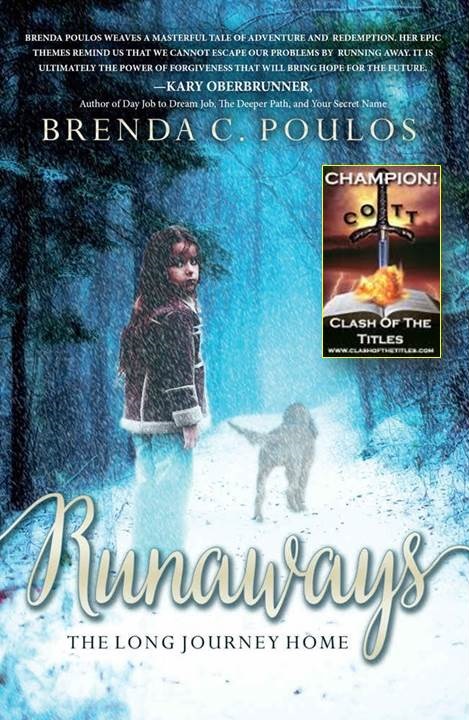
cover with badge

Do You Want More of It?

We are repeatedly asked to rate products and services on a variety of surveys and questionnaires.

Teachers sometimes use “thumbs up/thumbs down” with their students.

Some people use a scale of 0-10.

Others use a sad face, neutral face, and a happy face.

I was in a store last week in which customers indirectly rated their choice of ice cream BEFORE they ate it by selecting it by size labels:  Like It!     Love It!    Gotta Have It!

Wouldn’t this be an interesting way to get feedback on our books (AFTER they are read, of course)?


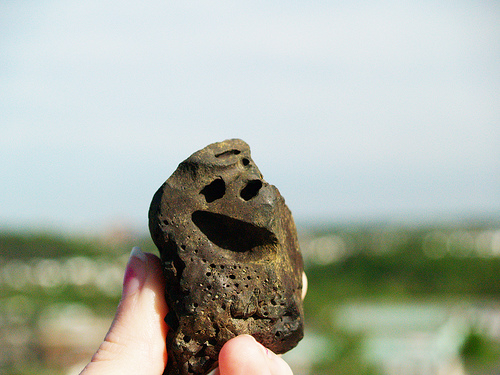
2568882956_ee8f716fc1


Like It! Might mean is was ok. Not particularly noteworthy but not a waste of time, either.

Love It! This choice would mean, perhaps, that it was very exciting or especially funny. It was well worth the time invested in reading it…the reader would consider reading another book by the same author.

Gotta Have It! This choice would mean that the book was really a page turner. It was inspiring. It spoke from heart-to-heart. It was a great read. The reader would like to read another book by this author.

Didn’t Like It!  To be fair, we need to add this category to indicate a book that was not exciting or interesting or worth the time spent reading it. Perhaps, it even might be used to label a book that the reader put aside, mid-read, never to be picked up again.

And just so we include all possible reactions to a book, we might add a final category for books that are “over the top.” We might call it:

Gotta Have More of It! This would indicate a book that so resonated with the reader and he is watching for the author to pre-release his next one so he can continue the experience! He can’t wait to get his hands on another book from the writer. The author has gained a new follower!

I am close to the end of a novel right now. I think I’ll give it a try.

What about you? What books have you read, lately, and how would you score them on the “ice cream” scale?


photo credit: <a href=”http://www.flickr.com/photos/68894626@N00/2568882956″>Happy Rock</a> via <a href=”http://photopin.com”>photopin</a&gt; <a href=”https://creativecommons.org/licenses/by-nc-nd/2.0/”>(license)</a&gt;

IF…THEN

If you watch your gas gauge, then you will not run out of gas.

If you clean your plate, then you can have dessert.

If you listen in class, then you will learn.

It’s really simple, isn’t it?

If…then.

Writers can use the “if…then” principle, too.

If writers will learn the fundamentals of the craft, then the quality of their writing will improve.

If writers will dedicate time to reading, then they will learn much from published authors.

If writers will join a writing/critique group, then they will find encouragement from fellow writers.

If writers will schedule a block of time for writing every day, then they will become a more disciplined writer.

If writers will make a Thesaurus their best friend, then their writing will become more interesting.

If writers will attend a writing conference, then they will find increased opportunities to network.

If writers will pursue writing with their whole hearts, then one day they will find they have a tangible product:

an article

a journal

a book.

If…then.

If not now, then when?

Changing Desires Into Habits

Is writing a habit or a desire for you?

Let’s be sure we distinguish the difference between the two:

A habit is something we do as a regular tendency or practice. Almost without thinking about it, we just do it.

A desire is a strong wish or want. Thus, it IS thought about—sometimes thought about A LOT—but it may, or may not, actually happen. And certainly doesn’t happen on its own, without effort on our part.

So, just what does it take to move writing out of the desire category and form it into a habit?

Glad you asked.

They say to form a habit, it takes breaking the old habit and replacing it with a new habit.

That takes, according to Dr. Maxwell Maltz, author of Psycho-Cybernetics, a minimum of 21 days for the old image in our brains to disappear.

Then, according to Phillippa Lally, University of London researcher, it takes from 66 to 500 days for a new behavior to become automatic.

Let’s see. That comes out to be a total of 3-18 months for the entire process.

It may seem easier for you to keep writing in the desire category than spend the time necessary to build writing as a habit, but…

are you really content with a life filled with only desires???

A life as a non-writer?

A life as a dreamer of dreams, but with no dreams realized?

Be honest. Because this is where the rubber meets the road…where the pen meets the paper, isn’t it?

This is a new year. Honor yourself by taking those dreams of being a writer and acting on them.

Realize them this year by forming the habit of writing.

Make a reasonable writing plan.

Reaffirm your plan every day by sticking to it.

Re-evaluate your plan on a quarterly basis (at the very least).

Recognize that you may need help: from “how-to” books, conferences, pep-talks from other writers, a mentor, and so on.

If you will do this, next January you should be able to say “I AM A WRITER!”

Get that? NOT “I desire to be a writer,” but instead you’ll enjoy the fact that you will have formed the habit of writing.

Actors, ice-skaters, gymnasts, singers, magicians…they ALL had to form habits of being what they desired to be.

Writers are no different.

We have to replace the old habits of watching too much television or taking long afternoon naps or shopping  too often and replace them with actively writing every day or we will NOT meet the goal.

So, let me ask you again:

Is writing just a desire for you? Or are you willing to do what it takes to make it a habit?

A Handshake and a Smile

I grew up in the era of the door-to-door salesman. The Fuller Brush Man. The Avon Lady.  Most of them had great smiles and talked really fast. If they had a firm handshake, my mother kept the door open a little longer.

What do a handshake and a smile have to do with being an author?

EVERYTHING!!!

You may think that you’re selling your book…your words…but, the truth is, in large part, you are selling YOURSELF.

Most of the authors I follow, and read loyally, are people I like. Oh, I’ve not met many of them, personally, but you can learn a lot about a person by reading their blogs, visiting their websites, and so on.

You may be fortunate enough to go to one of their book signings or visit with them at a writers’ conference.

The truth is, if you like them…feel like you connect to them in some way…like the same sports, movies, food…you are more likely to read their books than those of someone with whom you feel a disconnect.

Just saying.

So, when the proverbial shoe is on the other foot, the same goes. A potential reader may catch up with you at a book signing, extend their hand, and before you know it…that’s right, the dreaded handshake.

You can tell a lot about a person by how they shake your hand. Extroverts and those with self-confidence have firm grips. Introverts, with less self-confidence, often show fear or weakness by displaying  cold, clammy, soft, limp, lifeless handshakes.

So, work a little on that handshake. A great one earns respect and will impress others:

A handshake should last only 3-6 seconds.

It should be firm, but not a death grip.  Apply the same pressure as the person you’re shaking hands with. This will convey warmth and sincerity, confidence, and equality.

Make sure to make eye contact and repeat the person’t name, as you shake their hand.

Finally, just like a burger needs a bun, a handshake needs a smile.

So, here are a few hints in that direction:

Displaying a confident smile ensures that people take you seriously.

A true (not fake) smile reaches all the way up to your eyes so that the corners crinkle.

Part your teeth, slightly (this is where good hygiene goes a long way), widen your eyes a little, put your shoulders back, and maintain eye contact.

Remember, when you appear more enthusiastic and motivated, others will see you as more cheerful, attractive, and young…at least that’s what researchers say.

And who wouldn’t want to appear younger?

Finally, I’d say that, as much as possible, let your writing display these same, positive qualities. Let your words on the page exude warmth, caring, and friendliness. Let them be your handshake and a smile.

No More Excuses!

Okay. So, a dream of mine is owning a “writing” cabin. A place where I can go to be alone, without distractions, and just write.

A fellow writer recently announced that she and her husband just purchased, and have already moved to, just such a place. I am so excited for her!

But, for myself, I am not quite able to do that just yet.

So what is a writer to do?

Well, my husband rented us a home for two weeks on the Washington coast—high on a bluff, overlooking the ocean—a dream of mine come true.

I will write. He will fish with his buddies. Life doesn’t get much better than that!

But, let’s bring this discussion back into perspective. Crank it down a notch or two.

The point is this: writers need a place to write, set apart from the noise and activity that abounds at home. If you can afford to buy a cabin—wonderful! If you can rent one for a short period and immerse yourself in writing—fantastic.

If neither of these is plausible, at this point, just opt for a bedroom you can convert into an office, or a separate bedroom with a desk—and a lock on the door…someplace with relative peace and quiet that you can utilize to separate yourself from daily life…a place where you can immerse yourself into the “world” you are creating in your book…a place where your characters come alive and speak to you…a place where you can thrive as an author.

If these aren’t options for you, then consider blocks of time when your family is not at home and you can write without annoying distractions…a time when the house is quiet and you can write—type—pace—talk out loud—whatever you need to do to move forward with your writing.

You may have to schedule available time by enrolling your children in sports or a Parks and Recreation class, etc. It may require a monetary, as well as a time, commitment.

I have a friend who finds Starbucks a great place to write…

But, listen, in all seriousness, doesn’t everything that is important, require a sacrifice of some sort?

So, no more excuses not to write.

Be creative. Find what works best for you. Take a trip to your favorite office supply store and buy what you need and then get back home and get to it.

No more saying, “I don’t have time to write.”

No more saying, “I don’t have a place to write.”

No more excuses.

M-O-S-Q-U-I-T-O-E-S

I don’t know where they came from, or how they got inside my house, but I have a couple of pesky mosquitoes that have taken up residence in my home office. They may not have planned it that way, but I think they stay around because they see a free meal…

The first day they showed up, uninvited and unannounced, I got eaten up, badly. Within an hour, I had huge welts on my legs, arms, neck, and hands. It wasn’t just exposed skin they were going for, as I recall from past experience, these mosquitos also bit me through my shirt!

The fact was, I needed to work at my computer. It was in my office. And, so were the intruders.

I needed a plan. I needed to be proactive.

I tried the fly-swatter method. They seemed to know I was armed and waiting, so they laid low. It was only after I put the swatter down and started working that they ventured out, again.

If I wanted to get any work done, I had play defense: Type. Swat. Type. Swat.

Finally, I  went down to the corner drugstore and bought insect repellent. I sprayed the air, the carpet, my clothing, and doused all exposed skin.

Finally, I was successful. I repeated this every four hours, making it possible for me to get my work done every day this week.

Proactive. That’s the name of the game.

The same goes for writing. I have found I have to get proactive. I have a writing plan and as long as I stick to it, I can get a lot accomplished.

If  something or someone comes around to disrupt me, like say a phone call from a friend, I end up not being very productive—if I don’t follow the plan I put in place way back in January (no answering the phone or emails between 9:00 a.m. and 3 p.m. each day). And, that hurts.

I have to be proactive: answer emails, start the laundry, straighten up the house—BEFORE 9 a.m. If I do that, the next six hours are productive. If I don’t take charge of my writing life, there are always little mosquitos that buzz around with only one goal in mind: to suck the hours of productivity right out of me!

M-  Mom and Dad (they are older, now, and I need to check on them every day).

O-  opening emails and physical mail.

S-  snacking (the refrigerator and pantry are just a few feet away).

Q-  quiet (every little noise can be a distraction).

U-  up and down (the dog wants out, I need to stretch, change to laundry from the washer to 

      the dryer…)

I-  ideas that pop into my head at the most inopportune times, distracting me from the work at

    hand.

T-  telephone (a temptation to answer every time it rings…I put it on silent mode).

O-  opportunities (little things that seem to come up every day; seemingly “good” ideas, but 

      really nothing more than distractions in disguise.)

E- energy—lack thereof.

S-  social media. Need I say more????

How do you handle the “mosquitoes” in your life?

Lights! Camera! Action!

One of the first rules of writing, is to begin your story, chapter, or scene by dropping your reader into the midst of the ACTION.

You ask, “But, what about the backstory?”

Well, you tell me. Which is more exciting? The beginning of Story A or Story B?

A)  Claudette, a forty year old nurse, was born in Kansas City, met and married Charlie right out of high school. Together they had three children, a cat, and a dog. Her husband died last year, her parents the year before that.

B)  Claudette crept from behind a cluster of large oak barrels on the deserted wharf. It would soon be dark. If she was going to attempt an escape, she would have to do it soon. With the gag still in place, she couldn’t scream for help. Her wrists were raw where she  strained against the ropes binding them. Surely those hoodlums had mistaken her for someone else—someone rich and famous. Charlie would never be able to pay such a high ransom. He didn’t do well in stressful situations, anyway. No, if she was going to get out of this alive, she’d have to do it herself.

My point is, that once you drop your reading audience in the midst of the story with your character, you’ll have plenty of time to feed them the backstory, a little at a time, in the form of ACTION.

I find it easiest to accomplish this kind of writing by VISUALIZING my characters DOING: talking, moving, reacting. It’s a book, but the characters still have to be SEEN in the readers’ internal eyes.

In a movie, actors SHOW us what they are doing. However, in a book, it is the author’s WORDS that help readers SEE what is going on. If they are just sitting there on a sofa, it is likely the book will soon be tossed aside. (Would you want to watch a movie where the character didn’t say anything, talk to anyone, express any thoughts??)

I have made myself lists of verbs, adjectives, exciting phrases, facial expressions, and so on. These are displayed on huge poster boards hanging inside my office closet.

I refer to the board, often. If I use a word or phrase from my list, I put a mark beside it. I strive not to use it again in the exact same way in that particular book. I mean, do you want to read “huge crocodile tears ran down her cheeks” every time Mary cries? It takes some creativity, but it IS possible to say the same thing in a variety of ways.

So, there you have it. A book is really a movie, in a different format. If you are a screenwriter, you can count on actors and actresses—even animation—to make your story come alive. But, a writer?  Well, you must rely on your words—actions verbs, colorful adjectives, emotionally laden. You’re a “one-man-show.

When you write this way, not only is the book a more exciting read, the entire writing process becomes more exciting for you, as well. There are actually times I feel my heartbeat and breathing accelerate along with my character’s. My mouth goes dry when his does. My hands really and truly shake on the keyboard.

Now, that’s action!

And this is “a wrap!”