Action!

44883151522_9316db154b


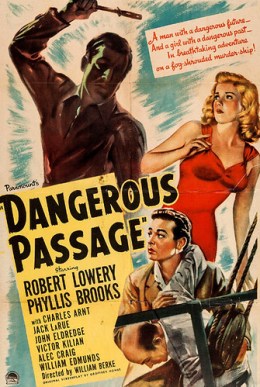
“Help! Someone help!” Luanne screamed as the masked man swiped at her once again with the gleaming blade of his knife.

Elizabeth read the supermarket ads.

Sweat beaded on Paula’s forehead as panted through another contraction.

Sandy settled down with a new paperback.

Lightening zigzagged through the darkened sky as rain pelted the frightened boy.


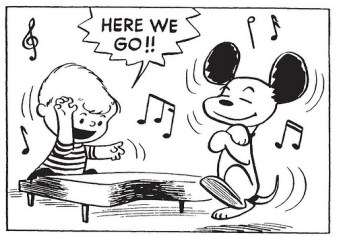
“Drop your reader in the midst of the action” is one of the very first writing “rules” I heard. (Running a close second to “Show, don’t tell.”)

That’s good advice. 

Face it, a book is a lot more exciting when, like a blockbuster movie, there’s a lot of action.

The examples above, show varying degrees of action. Writers need to strive for this a good percentage of the time.

Conflict is a great way to generate action.  Man vs. man; Man vs. animal; animal vs. animal; Man vs. the universe; Man vs. the occult and so on.

But, even action needs to be offset now and then, with periods of more introspection, internal dialogue, description, and conversation (unless it’s a heated argument—then, that’s action!) 

Everyone needs to experience “down time” every once in awhile. That’s true of readers, too. So be sure to include some softer scenes in your writing as well.

I don’t know that there is a formula or a magic percentage that anyone has come up with, but for myself, I try to start each chapter with action and end them with a cliffhanger.

What better way to keep the reader turning pages?

Then, I vary the scenes within each chapter with description, conversation, and action which keeps the story rolling along.

Once I finish writing a book, I give it a rest for a few weeks and go back to reread it before the final edit. I look for quite a number of things on my checklist, but first of all, I am sensing whether or not the story has varying amounts of action that make it an exciting and satisfying experience for the reader.


While You Are Sleeping

31347272568_4b8667741f


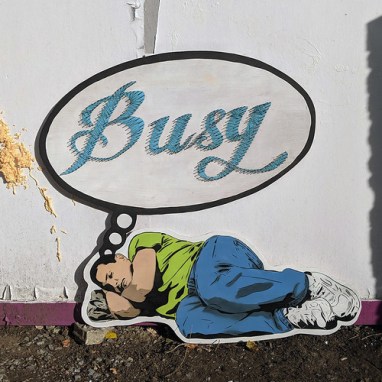
I have heard that while we sleep, our brains are still busy—problem-solving… working things out… trying to make sense of things.

So at the end of my writing day, when I failed to come up with a page-turner final sentence to my chapter, I decided to put it to the test. 

I crawled into bed, reviewing what I had just written in my mind. I turned out the light and told my brain to take the night shift.

I woke the next morning, excited about the possibilities of what my brain had come up with. I reread yesterday’s work from start to finish. That’s when the thoughts started pouring in.

I kid you not.

When ideas just won’t come, give your body a rest, while allowing your brain time to work things out.

See you in the morning!

Writing In Its Many Forms

48272913432_874dde9cb2


So, you’ve tried your hand at writing a novel, but it just didn’t work out for a number of reasons. You’d like to write something, but your head is spinning.

Have you ever thought of writing in a different format? 

Here is a list I made. Perhaps you’ll find a new possibility: 

  • Novellas
  • Short stories (Guideposts is always looking for inspirational stories.)
  • Non-fiction
  • Poetry
  • Blogs
  • Tweets (yes, you can write and sell your original Tweets. They can be humorous, quotes, inspirational, etc.)
  • Newspaper articles
  • Magazine articles
  • Newsletters
  • Greeting cards
  • Directions for products
  • Directions for games (such as board games)
  • Jokes (yes, there is a big market for you jokesters!)
  • Skits
  • Educational textbooks
  • Wants Ads/ For Sale Ads
  • Screenplays (Movie scripts)
  • Television Scripts
  • Plays/musicals
  • Menus (believe it or not)
  • “How-To” Manuals
  • Television Commercials
  • Sky Mall Magazine Product Ads (The daughter of a friend of mine wrote for this airplane magazine for several years).

Choosing the Perfect Words

431383433_8ec665387d


In this world of texting, Twitter, and Facebook, it is more important than ever to watch our words, making sure we aren’t using offensive language or words that can be misinterpreted.

For writers, it is important to choose our words carefully because—even though they may be synonyms—an ever so slight variation in meaning can change the impact on and interpretation by the reader.

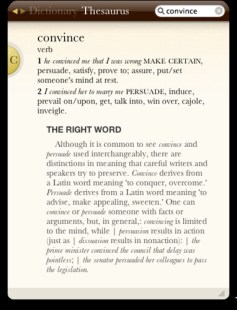
That is why a Thesaurus is on my desk at all times. It helps me choose the exact words to represent feelings, intentions, descriptions and so on. These words also make fine distinctions between meanings—and what you do, or do not, want to portray.

Here’s a recent example. My word choices for the concept of “getting used to” were:

Succumb (to)

Tolerate

Embrace

Acquiesce

I found that tolerate, embrace, and acquiesce meant “to accept,” whereas  succumb did not.

Tolerate and embrace meant to support.

Embrace meant to welcome.

But, acquiesce and tolerate meant to “put up with.”

Succumb meant to surrender or die from.

So, these words, although similar enough, could be placed in order on a continuum, from less to more positive:

SUCCUMB>ACQUIESCE and TOLERATE>EMBRACE

Once I read back my paragraph in light of the intended meaning, I was able to easily choose the perfect word.

It took a little work, but it was worth it.

You might say I embraced the process!

Thanks for Sharing Your Cookies

2691469144_d2cfcb8765


I was reminded this morning about a story I’d heard before. Maybe you’ve heard it, too.

It is about a lady waiting at the gate for her plane to begin boarding. The man seated next to her reached over and took a cookie from her bag and ate it. She became more and more irritated at his brazenness as he kept helping himself to one cookie after another.

The lady, afraid he’d eat all of the cookies, began to eat some as well. When they both had eaten their fill—and only one cookie remained—the man broke it in half and gave the lady one half and kept the remaining half for himself.

Still harboring anger toward the stranger for just helping himself to her cookies, the lady boarded the plane. It wasn’t until later that she looked into her over-sized purse, embarrassed to see her bag of cookies inside, unopened.

Sharing should be such a simple thing.

Such a natural thing.

But, it really isn’t.

Authors, like those in other professions, have the potential to be competitive by nature. However, I have not found that to be the case.

Over the years, there have been countless occasions for writers to share what they know with others—conferences, blogs, podcasts, and so on. And each time, they share their expertise with seasoned writers as well as those just starting out. 

If you are one of those authors who have invested your time and expertise in others, I just want to say

“Thank you for sharing your cookies!”


The Invitation

33690085034_e24a633494


You hear the music and laughter as you walk up the steps and ring the doorbell. The host of the party opens the door, steps outside, and tells you about the great time guests are having inside. Then, he closes the door, leaving you standing there thinking, “I got an invitation. Why didn’t the guy invite me in?”

Contrast that with a gathering I went to recently. A few moments after I rang the bell, the host ushered me into his home. Smiling, he offered me a drink, showed me where the snack were, and drew me into a fun conversation with a group of party-goers.

I immediately felt at home…valued…welcome. 

Sound like some books you’ve read?

Sometimes you feel like your time and money have been wasted; others have a way of keeping you turning the pages late into the night. 

What makes the difference?

The author of the second book welcomed you in, showed you to the snack table, and made your stay interesting. 

As writers, we are told to begin our books by dropping our reader into the midst of action. This is “showing.”

But, some writers “tell” their stories. And that doesn’t make the reader feel a part of the reading experience.

Dropping the reader into the midst of the action is MORE than just making the story exciting. It also makes the reader feel they are sharing the experience.

They’ve been invited to the party and welcomed inside.

(Note: This is a reprint of an earlier post.)

A Blog’s Purpose

172811114_0897f41b3f


I recently saw a movie entitled, “A DOG”S PURPOSE.” Heading home, I contemplated on my own purpose, making a couple of meaningful observations along the way.

Moving ahead to today, I asked myself yet another thought-provoking question: What is the purpose of blogs, in general, as well as the purpose of this blog, in particular?

I started this blog five plus years ago when I started writing. Its purpose was to gain a following—a reader base.

Secondly, I wanted to use it to encourage other new writers.

Then, as I learned more about writing, I began to share more concrete information, such as what I learned from conferences, guest speakers, classes, books, research , etc.

Even though I moved past my original purpose, encouraging others is still at the forefront of my mind and heart.

So, how can I encourage you today?

Here’s what I said a half decade ago—and I say it as much to myself as I do to you—with all certainty, perseverance is all-important. 

I know it has been key for me.

So, keep on truckin’…keep on keeping on…keep up the good work…hang in there…continue to learn…and, as my friend used to say, 

“Don’t let the grass grow under your feet. If you want it, go after it. Books don’t write themselves, you know.”


Put Your Legos to Good Use

31408008188_2ce0c455a0


I am sure you have seen scale models of subdivisions in offices of new housing developments. These usually depict lots available for building, green belts, water features, even planned schools and businesses.

While writing a chapter in my “upcoming” book last week, I needed to describe, in detail,  the street on which a character lived. Since this is a book in a series, I recalled doing a similar description in an earlier book a couple of years ago.

It would have made my job so much easier if I had actually sketched the street layout, much like a map, and kept it in a file to refer to at a later time.

And, now that time had come.

But, since I didn’t do that, I had to reread that portion of my previous book and draw the neighborhood, including streets, which characters lived where, and the location in which certain scenes took place. 

No, I will not be building a full-scale model of the neighborhood. (I will leave that task to you overachievers.) But I guarantee that I will save it so that I can refer to it when writing future books in the series. 

Models and/or maps are good reminders—as are notes of characters’ descriptions, facts about their lives–even as detailed as ages, eye color, and so on.

The more information you retain in your files NOW, the more time it will save you in the long run.

With or Without An ‘S’?

48104961921_4b1279e4bd


I read several books on my vacation. In doing so, I encountered the variations of several words, spelled differently by at least a half-dozen authors. This sparked a question I had researched at one time, but had not written about previously.

In case you have wondered about the following words, here is a short explanation about whether they are correctly spelled with (or without) an ’s’ at the end.

The following ARE correct either way:

toward/towards

backward/backwards

forward/forwards

upward/upwards

downward/downwards

inward/inwards

**Here is the only one that is different: outward is only correct without an ‘s’. That is because it signifies the plural form of the word if you add an ’s’. (This does not apply to the other words in the list above.)

 So, there you have it. The dictionary has spoken.

That’s What it Sounds Like

**This is a requested reprint from 4-14-19.
6872071078_077e194f6f


I’m in editing mode this week. Specifically, I am unsure about the use of italics.

Yes, I understand that they are used to denote titles, and foreign words. They are also used for book titles, poems, plays, television shows, musical compositions, newspapers, radio podcasts, names of ships, and airplanes.

The list goes on and on (See the 7th edition of the MLA handbook for more of the above.)

However, here, I want to share about the three most common uses of italics by authors.

The first is to show emphasis for readers. For example, “She dated five men at the same time.” If you italicize the word “five,” it helps to emphasize the fact that you feel this is extraordinary and you don’t want your reader to miss it. Thus, the sentence would read, “She dated five men at the same time.”

The second is to set apart a character’s inner thoughts and/or  dreams. This avoids confusion for readers by signaling that those words were not spoken out loud. Longer italicized portions of text show the reader that the character is dreaming. This is important because otherwise they may think that those actions are taking place in the here and now.

Finally, I come to the rule that has been confusing me as I give my own manuscript a final pass. That is, should sounds be italicized?

I did some research and I found the answer to be very simple:

The name of a sound does not get italicized, but the sound itself does.

Here is an example:  The dog growled. (I named the sound, so no italics.) vs. “Grrr” (this is the actual sound, so it should be italicized).

Simple?

That’s what it sounds like to me.