The Power of the Preorder


11542112_10155804265685174_6967391244578362338_nApple is an expert in the use of the preorder. So is Clinique. I know this because whenever they have a promotion, I get an email asking me to preorder so I can receive a gift-with-purchase.
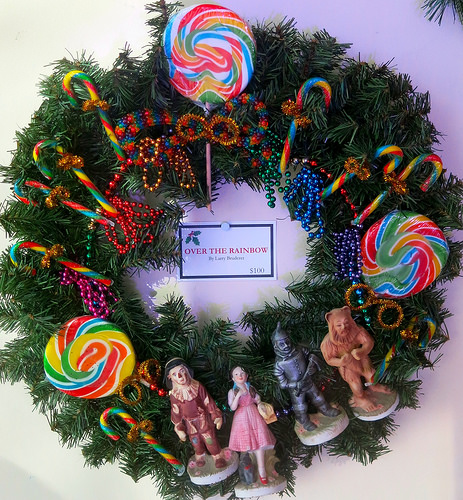
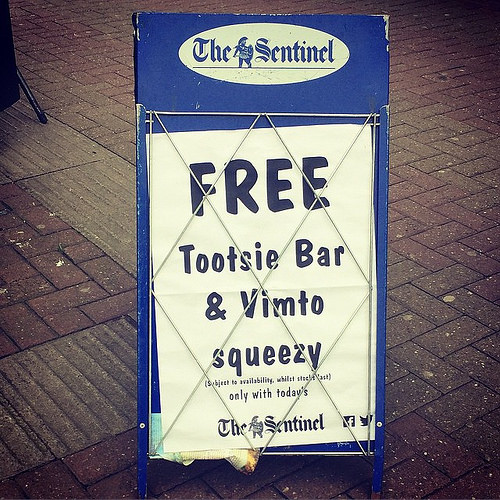
We all love a good deal, whether it is on an I-Phone, make-up, or a good book.

We want to get it, use it, have it—FIRST.

And we like a good deal—a freebie, reduced cost, or a new release at an introductory price.

That’s why I’m gearing up to do a preorder of my newest book, Simon Says. While Beta Readers are wading through the pages, I will be working on the back cover copy.

Roughly three months will be devoted to the preorder while revisions, editing, and a cover contest take center stage.

After that, it’s show time and planning for another book.

Would you like to preorder?  Be watching for a special offer, coming soon.

Hang a Wreath

31789234356_5ce9a915fe


I went to one of my favorite hobby stores last week. After spending an hour there and filling my cart, I joined other shoppers in the check-out line.

I saw quite a few people purchasing seasonal wreaths. Some bore the symbols of Halloween while others were decorated with fall leaves and Thanksgiving messages.

Wreaths are a colorful and fun way to send a subtle message to friends and neighbors, in much the same way as decals and vanity plates on cars.

Since our writing has messages that are more pointed–more in-depth–within their pages, we might want to think of our covers as wreathes for our books.

The artwork and titles—even the colors and fonts that are used—all work together to form a subtle impression for the purchaser.

It is the entire “package” that entices a reader to buy. Careful thought to even the smallest detail can mean the difference between a sale or casual glance as they walk on by.

FREEBIES

17813604540_8c42fae48d

Having been out of the teenage and young adult categories for years, now, I find I don’t buy music like I once did.

Oh, I still enjoy listening to good vocalists and great music, especially Jazz. It’s just that I don’t purchase it.

However, last week I received an email offer for a free CD. It was music I knew I’d like, so I claimed it.

I wasn’t as though I had been “shopping” for it, but it tempted me—because it was FREE.

Now, my point is this:  often times a reader isn’t looking for your book—maybe not even for something to read from your genre—but they can be lured by a free offer (and may even leave a stellar review).

If your books are on Amazon, you have an easy option of doing an out-and-out Giveaway or take advantage of running a Countdown Deal. Book Bub and Goodreads have similar promotions.

On your own website or Facebook page, you can offer free copies of your book or something else free. (I “won” a box of beautiful handmade greeting cards as a giveaway prize from another author a couple of years ago.)

The point is: people like getting something for free AND it may get you noticed which, as all new authors know, is HUGE.

Freebies—just another way to promote yourself, your brand and your message.


Cooking Up A Good Story


34735793923_64a76cfcb7


When I was a child, I had a problem with stretching the truth just a little bit, especially when doing so would help me avoid punishment from my father. When I would finish my “explanation” of events—the defense of my actions—he’d often say, “You sure cooked up a big one this time, didn’t you?”

Maybe storytelling does have some similarities to cooking.

Just this month, for example, my writing involved what one might call three culinary aspects. 

Now that I have written the last page of my next book, I am starting my rewrites. Starting on page one, I checked my list of ingredients, i.e. plot points. Were they all there? Did I add them in the correct order?

Next I trimmed the fat—those phrases, scenes, even chapters–that didn’t really go anywhere and didn’t lend to moving the story forward.

On the next run through, I focused on the spice, the sauce, asking myself if there was just enough to keep the story interesting for the reader.

After that, I closed up my file. I will let the story simmer for awhile. Although I will not actively work on it, I will use this time to let new thoughts/ideas come to the forefront, contemplating things that will improve the story and trashing those that won’t.

A few months from now, I will open the file and begin my second round of rewrites before giving it to my taste testers (beta readers) who will read it and give me their opinions which will be used for the final rewrite.

The next phase is up to the customers. Will they my latest recipe?

They say the “proof is in the pudding.”


Don’t Quit on a Bad Day


4811366714_039d7c4d34


A freckle-faced junior high student threw his glove in the dirt and stomped off the field. “I’m just not cut out for baseball. I quit.”

Danny had walked every player he’d pitched to the whole game. He had heard enough boo’s and seen more than his share of raised fists to last a lifetime. He was the victim of defeat.

His parents talked to him later that evening, telling him that they’d stand behind him in his decision, but he needed to think about it over the weekend and then talk with them one more time.

They were teaching him a very important lesson: never quit on a bad day.

Writers have days when our stories just don’t come together, when constant interruptions steal our momentum, or the well of creativity seems to have dried up.

A day or two later, we have a good day and are on a high because things just flow together. We swear there isn’t a more wonderful thing to be doing with our time than w.r.i.t.i.n.g.

If we had quit because of a bad day, we would never have experienced the success that was just around the corner.

So, if the agent doesn’t sign us, we don’t win a coveted award, or our sales for the month aren’t what we had hoped for, let’s not give up.

Because

success is waiting for us

just around the corner.

The Pause that Refreshes

30846325906_c37d6b4ee5

“I’m going for a walk.”

“Want me to go with you?”

“No, I just need a little space.”

“Space for what?”

“You know, some time by myself to do a little thinking…to get my thoughts together before the big meeting.”

Jim voices a common need for many of us. He knows the value of a reflective pause.

Juliet Funt, CEO of White Space at Work, calls this pause for restoration—this brief period of reflection, this pause between activities—White Space.

As authors, we may need White Space many times throughout our work day. I often head for the refrigerator to refill my glass with ice, sit on the concrete bench in my backyard, or drive to the dry cleaners. Others may go for a walk or a swim.

It doesn’t really matter where we go or what we do, the fact is we need to let go of thoughts that rob us of productive time at work.

It may happen at specific times of the day or it may be quite unexpected. It may be caused by overwork or fatigue.

The point is we often need White Space to redirect our attention back to the task at hand, so that productivity climbs and creativity is restored.

So, take that nap, or walk the dog.

White Space is “a break with a lofty purpose.”

To Blog or Not to Blog

36327641750_2e35f4d62d


“Still posting each week? I can’t believe you’re still at it. I hope it has been worth all the time and effort.”

My friend’s comment prompted me to re-evaluate my blogging habit. Was it just a useless exercise or was there real value to it?

Just how was this use of my time impacting my writing business?

Here’s what I discovered:

1)  Blogging on a regular basis is one of the most effective ways I’ve found to keep my customer base engaged.

2)   Blogging definitely raises my rank in target keywords in search the engines.

3)   Blogging lets visitors to my site know that I am active in my craft.

4)   Blogging keeps me actively learning so I can pass along relevant information to my followers.

For me, blogging on a regular basis is definitely worth it.

If you are a writer without a website of your own, I would strongly recommend getting one. If you don’t feel that you’re ready to commit to at least a once-a-week blog, I urge you to find several sites you like and write a comment on each of them every week.

A Journey Worth Taking


29976106396_90c5fd33bb

Diana Nyad is an American long-distance swimmer. In 2013, she became the first person confirmed to swim from Cuba to Florida without the aid of a shark cage.

This was her fifth attempt to do so.

Did you know that Diana is also an author? Her book, Find A Way, has hundreds of insights into the life of this remarkable woman. Well worth reading.

In a recent interview she was asked how she kept pursuing her goal in the face of four defeats. She replied that she had always had the attitude that, “Even if we never make it, it’s still a journey worth taking.”

That’s how I view the writing journey.

Even if I never

sell a lot of books,

hit the best-seller’s list,

become particularly well-known,

I consider that the writing journey is definitely worth taking.

What about you?

Who Can You Call On?

HA0521 - Bedford staff and M1. A set of images  of HA staff in the Bedford office and new section of M1, north of junction 9. March 2010


Whether you are the newly-elected President of the United States or appointed as a group leader in a college class, you will find out early on that you cannot do it all by yourself. You need the advice of those who have certain areas of expertise.

Just like in your circle of friends you find that one is your main confidant, and another makes you laugh when you feel down, so a writer needs to be surrounded with a group of fellow authors which are especially good at certain aspects of writing.

I have a “go to” list which I have labeled “Details”, “Word Choice/Imagery”, “Backstory,” “Historian”, “Show-Don’t Tell”, and “Encouragement.” When I am stuck, I know exactly who to go to for advice.

They have my back.

And, you need a similar network, too.

These people may be local or accessed by phone or internet. They may be members of your critique group or not. But, they should be trustworthy, honest, possess quality writing skills, and willing to help.

And, don’t forget. They’ll need you, from time to time, too.

Think about those skills you will share with them and what positive impact you will have on the quality of their writing.

There are lots of helpful books on various aspects of writing. Most of us have dozens of them.

However, nothing beats the personal investment one can make in the life of a fellow writer.


Got GRIT?

5397272930_fcb48d8b4a


All writers need it.

Successful authors have it.

So, just what is “GRIT”?

According to best-selling author, Angela Duckworth, GRIT is “sustained perseverance and passion, especially for long-term goals.”

We are able to recognize it in ourselves and in fellow writers.

It’s determination to succeed.

It’s that fire in an author’s eyes when asked a question about writing or when a new idea for a book “pops” into their head.

It’s a lamp glowing on their desk at 2 A.M.

It’s that relentless scribbling of notes as the writer attends their umpteenth conference.

It’s that mesmerized look as a writer meets their favorite author in person for the very first time.

It’s hours, days, months, and even years of hard—and oftentimes—lonely work, punctuated with a willingness to forgo momentary pleasures in order to fulfill their dream.

It’s that smile on their face as they proudly display the cover of their new book for the camera while secretly planning the next one in their head.