Writing’s “New Normal”


48876479606_7399137fae


In this unprecedented time, there have been a lot of suggestions on newscasts as to how we can keep our emotional health in tact by sticking to a schedule of work/play at home.

Our writing time is no different.

Keeping to our normal routine as much as possible will do wonders for our outlook, as well as keeping our skills honed.

On the other side of things, we can improve our skills by spending some of our “free” time reading, doing research for our stories, and taking online writing classes.

So, I guess the name of the game is to improve what we can, while at the same time making sure to keep essential skills in place.

Finally, connect with author friends and others on the internet who are writing as well. It’s a great time for sharing ideas! Using Google Docs, Zoom, and other popular programs will still allow your groups to function until things get back to “normal.”

For Auld Lang Syne


30763174246_e0310b4b1a


Many of us sang poet Robert Burns’ song “Auld Lang Syne” on January first.

Almost no one, however, remembers that those famous words mean “days gone by.” (I looked it up).

A friend tells me that she doesn’t like to read books that require her to keep a dictionary nearby so she can look up unfamiliar words.

She likes to read fiction for pleasure.

I found out that only half of Americans read at an Eighth Grade reading level.

And get this, when reading for fun and relaxation, people prefer to read TWO GRADE LEVELS BELOW what they are capable of reading.

You may want to keep this fact in mind if you are beginning to write a new book this year. In fact, I would suggest that before you publish the one you are currently writing, you pare down any difficult vocabulary.

Make your book a pleasurable read!


Write on Christmas Day

35294772960_969c158110


For those of you who feel strongly that you should write every day of the year, may I suggest the following alternatives on Christmas Day?

  • Don’t just sign your name on Christmas cards. Instead, write a newsletter including highlights from the past year, or consider at least writing a short, personalized paragraph at the bottom of each card.
  • Write a blog post.
  • Write a letter or email to someone you have lost contact with over the years.
  • Write affirmations to be share around the dinner table on Christmas Day.
  • Take a small gift to your neighbors and include a short note.
  • Practice your skills by writing a short story about an especially  meaningful Christmas in the past, someone who has been instrumental in your life this year, or plans for the year ahead.
  • Write a love letter to that special someone in your life.
  • Write out some of your favorite recipes, tie them with ribbon, and give them as a gift, door prize, or …

You get the idea. There are many alternatives to actually working on your book on Christmas Day, so use your writing to connect with those you love.

Merry Christmas to each of you. May the New Year be filled with endless possibilities…


That’s What it Sounds Like

**This is a requested reprint from 4-14-19.
6872071078_077e194f6f


I’m in editing mode this week. Specifically, I am unsure about the use of italics.

Yes, I understand that they are used to denote titles, and foreign words. They are also used for book titles, poems, plays, television shows, musical compositions, newspapers, radio podcasts, names of ships, and airplanes.

The list goes on and on (See the 7th edition of the MLA handbook for more of the above.)

However, here, I want to share about the three most common uses of italics by authors.

The first is to show emphasis for readers. For example, “She dated five men at the same time.” If you italicize the word “five,” it helps to emphasize the fact that you feel this is extraordinary and you don’t want your reader to miss it. Thus, the sentence would read, “She dated five men at the same time.”

The second is to set apart a character’s inner thoughts and/or  dreams. This avoids confusion for readers by signaling that those words were not spoken out loud. Longer italicized portions of text show the reader that the character is dreaming. This is important because otherwise they may think that those actions are taking place in the here and now.

Finally, I come to the rule that has been confusing me as I give my own manuscript a final pass. That is, should sounds be italicized?

I did some research and I found the answer to be very simple:

The name of a sound does not get italicized, but the sound itself does.

Here is an example:  The dog growled. (I named the sound, so no italics.) vs. “Grrr” (this is the actual sound, so it should be italicized).

Simple?

That’s what it sounds like to me.


Christmas Letter


31082694023_c739f57abf


On my “To-Do” list this week, is writing my yearly Christmas letter to friends and family. I am making a list of trips, health updates, and accomplishments I’d like to include.

That got me to thinking about YOU and what I’d like to share as the Christmas season fast approaches.

First of all, I’d like you to know how much I appreciate your encouragement and support by reading/commenting on my blogs each week. I hope they have been both helpful and encouraging to you as we walk this “writing road” together.

To catch you up on what I am doing, currently, I can say that my Beta Readers are doing their work right now, critiquing Simon Says. I look forward to hearing from them over the next few weeks.

Meanwhile, I am busy writing back cover copy, revising my “About the Author” page, looking at a myriad possibilities for the front cover, and jotting down ideas for the second book in the series.

Finally, I am finishing up the manuscript for my second interactive Alzheimer’s book, I Remember Bible Stories,” as well as interviewing illustrators.

On a more personal level, I continue to be more involved in my parents’ lives at their care center and am taking on some of my mother’s previous roles, such as the big family gathering on Christmas Day. I am fortunate to live near a Honey Baked Ham store, as I am planning the meal around a nice spiral-cut ham.

I wish you all a Merry Christmas and the Happiest of New Years as you move ahead toward both your personal and writing goals.

Brenda

A Journey Worth Taking


29976106396_90c5fd33bb

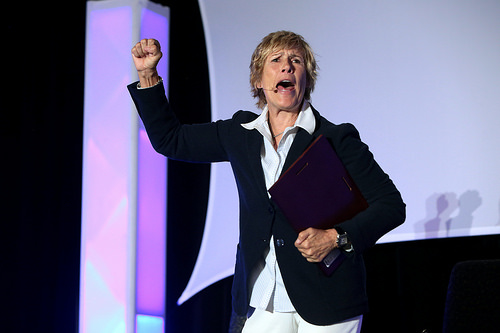
Diana Nyad is an American long-distance swimmer. In 2013, she became the first person confirmed to swim from Cuba to Florida without the aid of a shark cage.

This was her fifth attempt to do so.

Did you know that Diana is also an author? Her book, Find A Way, has hundreds of insights into the life of this remarkable woman. Well worth reading.

In a recent interview she was asked how she kept pursuing her goal in the face of four defeats. She replied that she had always had the attitude that, “Even if we never make it, it’s still a journey worth taking.”

That’s how I view the writing journey.

Even if I never

sell a lot of books,

hit the best-seller’s list,

become particularly well-known,

I consider that the writing journey is definitely worth taking.

What about you?

How Much Is A Facebook “Like” Worth?

6962664528_ab182384f7

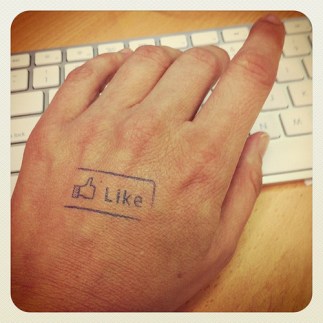
Although you can find articles on the Internet which place the value of a single Facebook Like at between $8-12, others say each like is worth an average of $174.

Things like your budget, resources, and objectives determine just how much a “LIKE” is worth to you.

You may also want to consider that just because someone “Liked” your page doesn’t mean they will automatically like all of your posts or purchase your books.

Experts say that a page “Like” should be viewed as a potential client. In fact, some say that until a visitor to your page purchases a book, they should be considered to have a worth of “zero.”

I think, however, it is more useful (and realistic) for us to consider just how valuable the Facebook Community is to a writer as a whole.

Now, I happen to believe that someone is valuable if they engage in my posts, share content, and interact with me on one of my websites or subscribe to my emails.

Therefore, I want to make them happy. I want them to feel appreciated. I target my marketing to appeal to them.

I furnish them with information, share their opinions, offer them free and/or discounted deals, and of course, I visit their Facebook pages and “Like” them!

Even though we may never meet in person, Facebook Friendships are reciprocal relationships and we need to view them as such.

The value of a friendship?

Priceless.

Reflect, Then Rise Above!

5312551987_36a112892b


So, here we are.

Another year draws to a close. Time to reflect.

Have we done all we set out to do this year?

We can use this time to beat ourselves up about not accomplishing as much as we’d wanted to, I suppose.  But, what good is that going to do?

Not one of us knows what the next day will bring.

So, let’s encourage one another to

go further,

climb higher,

rise above.

Happy New Year!!!

Protagonist vs. Antagonist

30091018165_2d04676559

In a writing workshop I recently attended, the presenter took us “back to the basics.”

If you’ve been writing for awhile, periodically it’s a good thing to revisit the essential elements of story.

The terms “protagonist” and “antagonist” are about as basic as it gets.

Let’s look at their definitions and what those two elements have to do with a well-written story.

The protagonist is the hero of the story—the central character whose journey we follow throughout the book. He’s the “good guy”. The one we cheer on. The one who experiences set-back after set-back, but emerges victorious at the end.

The antagonist, is the villain. His role is to block the hero’s progress toward his goal at every turn.

The cruel step-mother.

The demanding boss.

The rival for the hand of the princess.

Whoever they are, it’s essential that they do their part by providing those set-backs or road blocks to the hero on his journey.

It is this struggle to overcome that moves your story along to a satisfying ending.


Note: The inciting incident, another basic, was discussed in a previous post, entitled “Creatures of Habit.” You can read it under ARCHIVED POSTS.

I’ve Changed My Mind


2626749848_017cc65a8a


After a meeting, yesterday, the topic of how often one should write (every day? how many hours per day?) came up.

I listened as inexperienced writers eagerly listened to more seasoned authors on the topic that is as dear—and as often-debated—as toilet training is to young parents.

In one of my previous posts, I said that if you are researching for your book or article, or attending a conference, or viewing a webinar, that “counts” as your writing for the day.

Well, like I told the others after the meeting, I now know a bit more about the craft of writing and have changed my mind about what I advised a year ago.

There is no substitute for WRITING.

Here’s why:

You cannot learn to dance by reading a book or studying diagrams of nimble feet doing the Cha Cha.

You cannot learn to fish without baiting your hook and casting the line into the water.

There is no substitute for actually DOING.

We need to practice writing. All the reading and conference going—although worthwhile—cannot take the place of good, old-fashioned application.

Some people find themselves in such an endless cycle of “learning how to write” that they never actually sit down in front of the computer and try their hand at it.

They think that if they will just read one more book or watch one more webinar, then they will be ready…qualified…fully prepared.

All of that is well and good, but as my neighbor’s son studies his driving manual, I am reminded that he must also get behind the wheel and gain the experience of actually driving.

As a child, I heard my mother say, “Wishing doesn’t make it so,” many times. (Mostly this was in reference to having a clean room.) But, apply it to writing an article or book and you can make the connection, can’t you?

So, my conclusion is this: you must learn the skill of writing by writing, writing, and writing some more.

Every day?

Yes.

An hour a day?

At least.

Grab a partner and dance.

Bait your hook and cast your line.

Back out of the garage and get out on the highway.

Turn on the computer and let your fingers fly across the keyboard!