All Things Visual

8159131_0f68f6e772

Lately, it seems all the buzz is about U-Tube videos, podcasts, and interviews.

All things visual.

There are websites which help authors do book trailers, podcasts, and interviews.

But, of all these, which really bring results? Which equate to book sales?

Glad you asked.

My next few posts will deal with each of these, individually. I will bring you the latest numbers in a concise manner.

See you next week for the first installment.

Stay in Your Own Lane

13366864053_840b7df994Driving home after an evening out, my husband complained about a driver in front of us. “Just look at that guy, weaving in and out of traffic. He’s going to get somebody killed. He needs to stay in his own lane.”

Perhaps writers should heed his advice. Settling on one genre, such as Amish Romances, for example, lets the reader know what to expect when purchasing one of their books.

When a brand is loud and clear, it not only benefits the reader, but it also helps the writer focus their writing.

New writers often have to feel their way through two or three books before they catch the vision for their writing, however.

Recently, I discovered that my books—Runaways: The Long Journey Home and The Choice: Will’s Last Testament—have a common thread: forgiveness. Then I took a hard look at my newest book, Simon Says, and found that this story about bullying  has forgiveness as its central theme, also. (Simon Says is not, yet, completed).

So, I guess I am in full “branding mode” and I couldn’t be happier than to be writing stories of forgiveness because they assure us there is hope after we mess up or make wrong choices.

So, if you don’t want your readers to be confused and you want to bring your writing into focus,

Simply find your lane and stay in it.

As Promised

6899795110_f3edd9d7a6

Second half of critique group questions from last week’s post:

6)  CONFLICT:

* Are character motivations powerful enough to create sufficient conflict?

* Is a potential for conflict established that is strong enough to move the story forward?

* Are the motives understandable?

7)  DIALOGUE:

* Is the dialogue between characters natural, purposeful, interesting, engaging?

* Does the dialogue contain emotion in a way that narrative cannot?

* Are the character’s voices distinct? Does each one have a different way of expressing themselves? Are their voices appropriate for the setting, genre, and time period?

* Is the dialogue believable?

8)  NARRATIVE AND POINT OF VIEW:

* Is the narrative well-placed with the dialogue, not overwhelming the reader?

* Is background information presented at appropriate times and in the correct POV?

* Is POV clear and consistent?  Are changes smooth and logical?

*Should I use a different POV?

9)  PACING:

* Has the author dropped the reader into the action?

* Does the story flow smoothly, freely, and logically?

* Does every scene move the story forward?

10)  STORY:

* Are the story ad plot elements compatible with the genre?

* Can you picture each scene in your head?

* Is the purpose of each scene clear?

* Does each scene move the story forward?

* Does the story hold your interest?

* Does everything in the story build logically, plausibly, and believable toward the end/climax?

* Where do you feel the story is heading?

* Do inspirational elements grow organically out of character or plot?
Use a Checklist

10519774073_296682697a

You may want to consider utilizing a checklist to guide your comments to others in your critique group. Below is one we developed. I am sharing the first five this time and will post the rest next week. 


1) HOOKS:  

* Does the opening line or paragraph immediately hook the reader?

* Did you want to keep reading?

2)  STYLE:

* Is the writer’s voice distinct and unique?

* Does the author utilize showing and telling skillfully?

* Indicate passages needing more “show”.

3)  PROFESSIONAL IMPACT:

* Does the author have a grasp of the elements of grammar, spelling, and punctuation?

* Is the writing fresh and original, avoiding cliches?

* Is the writer overusing/overdoing actions? Themes? Words? Character traits?

* Is the manuscript appropriate for the general market?

4)  SETTING:

* Was the place, time of day, season, time period set?

* Does the setting support the story?

* Do sensory details (sight, sound, touch, smell) enhance each scene?

5)  CHARACTERS:

* Is the main character identifiable? Unique?

* Do you get a sense of the character’s journey and what the story is about?

* Do secondary characters contribute to the story? Are they defined and likable?

* Do characters’ emotions seem believable and/or provide understandable motives?

You’re A Winner!


3417340248_0f4bdb2a9cYou may be tempted to enter writing contests from time to time. Winners are certainly provided an often-needed mental and emotional lift, exposure of the win on social media (thus giving you a boost in sales), as well as a variety of prizes. 
Most importantly, contests can be a valuable tool, especially if they offer constructive feedback.

Most contests are based on samples of anywhere from three to ten pages of writing being judged by contest officials.

When feedback arrives, the writer can use it to adjust their writing, sign up for classes or read books on areas of deficiency, and so on.

I find the most helpful feedback comes in the form of written comments with examples. The least helpful, in my opinion, is a simple checklist.

I would recommend entering contests where you are assured that you are competing against others at your relative skill level (beginning writer, seasoned writer, etc.) AND that your work is looked at by more than one judge who is an expert in the same genre in which you write. 

Most contests post comments/reviews of their previous contests.  Reading them before entering, will be helpful in deciding just which contest is right for you.

Your goal is to become a better writer, so carefully consider the comments you receive without getting emotional. Weigh them against what you know to be true, while bearing in mind that their opinions—although hopefully based on some measure of expertise—are simply their opinions. 

The next reader may feel quite differently about your work. So don’t let just one set of scores discourage you.

Remember to always get a second opinion.


Making Stories “Real”

30645145634_4fb672e9c4

I’ve been asked if my characters are based on “real life” people that I know and if I use  events from my own life in my stories.

None of my characters remind me of anyone I know, although I often use friends’ names. As of yet, I haven’t used any of their mannerisms or physical traits—only their names as small tributes to their friendship.

As far as events are concerned, Runaways: The Long Journey Home was written in response to a recurring dream. I had dreamed the first few minutes of Jake’s escape so many times, that I simply had to see where the story took him. Where the dream ended, my imagination began. The book tells the story of abuse and forgiveness that has touched many lives.

My dog, Baxter, will appear in my next book, Simon Says. Although he doesn’t play a large part in the story, he will be portrayed accurately, including many of his quirky habits. So far, making him come alive through description has proven to be lots of fun.

If you are planning to use a real life event, or portray a friend of yours as one of your characters, be sure to get their permission. It might save you a lot of heartache should your friend not see past events in quite the same way as you have portrayed them. Don’t let that discourage you, however. Some of the best stories are those real life accounts that uplift and encourage the human spirit.

Finally, I do choose to honor people in my life who mean a lot to me or have influenced me in some way. I do this on the dedication page. For example, I have dedicated my first interactive picture book for Alzheimer’s patients and their caregivers to my parents. (Mom has Alzheimer’s and Dad is her faithful companion and caregiver.) Although they are not portrayed in, I Remember the Seasons, my mother’s memories did influence my choice of what to include within its pages.

Just Say “No.”

4959365203_0206a63ff3It’s hard to say, “no.”

To a party invitation.

To a bully.

To another piece of pie.

As an elementary school teacher, we taught a drug resistance program in our classrooms. It had as its slogan, “Just say NO.”

Our everyday world is filled with all kinds of opportunities, some of which are tempting, especially when we are asked to choose between them and “work.”

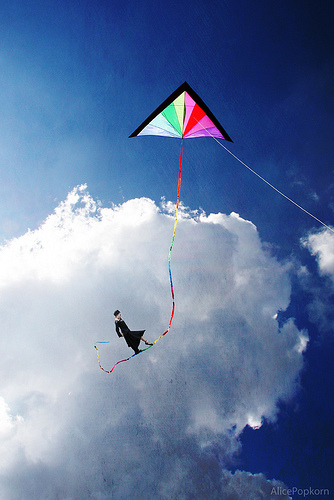
Even now, with the beautiful spring weather outside, flying a kite or walking the dog sounds like a lot more fun than sitting at my desk, typing on the keyboard…

I get it. I struggle, too.

And, I confess, that sometimes I opt to go to a movie or out for dinner with my husband instead of editing a chapter for my new book.

But, other times, we writers need to look toward the prize—the completion of a magazine article or a book—and let ourselves want that so badly that we

SIMPLY MUST

ABSOLUTELY MUST

UNEQUIVOCALLY MUST

SAY

“NO!”

So that we can live our dreams and not be caught, in the future,

simply dreaming.

A Writer’s Voice

33066885271_fe9bc5b1bd


Whah…whah…whah.” Do you recognize that voice? Sure, it’s the teacher in Charlie Brown.

Each time you hear it, your brain makes certain connections and you know who is speaking.

But what exactly is a writer’s voice and how does a reader recognize it?

Well, a writer’s voice is unique to them. Readers recognize certain authors by the way they put words together—the distinctive way they look at the world.

Readers like, and thus “follow,” writers that have a recognizable voice—one that is original, like no one else’s.

So, give yourself the freedom to say things in your own unique way. Don’t try to copy another writer’s style.

Your voice is YOU shining through.

Become recognizable by allowing yourself to write in a style that is uniquely your own.

Can Fiction Deliver A Powerful Message?


32838577662_02d6f6f35dLet’s talk about writing goals.

I’m not referring to how many words you’ll write in a day or how many months you’ll allow yourself for writing that next great literary masterpiece.

Let’s consider the question: “Why do you write?” in the first place.

Some say it frees inner anxieties and helps work out problems, in much the same way as journaling.

Others may see it as a future money maker. Hum…

Still others view writing as a way of sharing information or the story of their journey through difficult times in an effort to help others facing similar circumstances.

Let’s go with the idea of helping others.

The next decision would be whether that would be best accomplished through fiction or non-fiction.

If one can share from real life experience, that would be the most powerful.

If not, can the same message be conveyed via fiction?

I believe it can—and I believe, if well-written, it can be just as powerful.

That means doing a little research on the subject at hand, and perhaps reading a couple of non-fiction books on the subject. You can then use the facts to weave a meaningful story with realistic characters.

I am currently writing a fiction book about bullying. As a former counselor, I know some of the facts. I can even recall situations that were shared with me. But, I still found it necessary to do some further research on the internet and interview a few people so that I could create characters and circumstances that would be believable—and that readers will connect with.

Finally, each time I write, I need to get in what I call the “emotional zone” so that I can write from the perspective of the person being bullied.

My writing goal?

To use my character’s emotional journey to help others vicariously experience the pain bullying causes and then join the effort to erase it from our culture.

Whatever It Takes

33053280105_05b460e41a

I’ve heard that artists, in general, are a quirky bunch. They need certain things in their environment in order to get their creative juices flowing.

Writers might demand that the room needs to be at a specific temperature.

Actors may require that friends or family must be in the audience for them to perform well.

Singers often ask for specific things to drink or that the air be purified in their dressing rooms.

I know I find it difficult to write unless my desk is organized.

Whoever you are, we all perform optimally when certain conditions are met.

For most everyone, being well-rested, fed, and hydrated may apply.

So, let’s say you’re a writer. You’ve met your requirement of having a quiet place to write. You close the door and sit down at the computer.

But suddenly you’re distracted by a bird outside the window or a telephone ringing somewhere down the hall. Isn’t anyone going to get that?

Now, you’re off track.

Unable to focus.

You want to push your chair back and forget writing for today, but instead just rewind.

Maybe you need a walk around the block. Perhaps simply refreshening your water glass with a slice of lemon will do it. Maybe say a silent prayer.

Then, get back to the computer and try again.

Whatever it takes. For as long as it takes. As many times as it takes.

I’ve found that one page leads to another…and that page leads to the next…and before you know it, it’s

a book!