So You Want to Write a Romance Novel

Have you thought about writing a Christian Romance Novel? Here are some interesting ways to make the distinction between them and secular romance novels:

  1. Although both genres write about the pursuit of love relationships, Christian Romance does this while conveying lessons about faith, family, and relationships.
  2. Because they include these “lessons” the writers see their audience as being both Christians and non-Christian readers.
  3. Both Christian and secular Romance involves some degrees of sexual tension. However, whereas the non-Christian Romance is more overt, Christian Romance is not explicit.
  4. In Christian Romance, we find conversion experiences referring to emotional, religious, or sexual changes. Christian Romance often involves more inexperienced heroines, whereas secular Romance often features characters with more sexual experience. 

5).   Women are often the primary caregivers to children in Christian Romance.  

6)    Christian Romance stresses more traditional family values and conventional roles where the husband is the primary breadwinner. 

7)    Most often, Christian Romance gives injunctions against sex outside of marriage.

8)    Secular Romance is seen as increasing in sensuality, explicit sex acts, and sexually-laden language. 

9)    Christian readers and authors most usually agree that the purpose of Christian Romance books is to represent a ministry about and to women.

10)  Thus, these books are often read by Christian women to strengthen their faith. Religious beliefs are inherent in the plots.

11)  Many women readers—even if not professing Christianity—prefer good, clean, wholesome language, characters and plots.

That’s Entertainment

Moving and renovating have taken up months of our time, so we decided to take a break and go to the movies.

That’s where we experienced sticker shock. Two senior tickets cost us $22.50.

Then, there was $10 for a tub of popcorn, which my husband and I shared.

Last of all was a soda for each of us. Size small. $6.25 each. 

“No, thank you,” I said to the young man behind the counter when he asked if we wanted Nachos, ice cream, or red vines.

Grand total for two hours of “escape”?     $45.00

I’m telling you this to prove a point. An e-book will cost you anywhere from FREE to $5.99 and you can buy a big bag of popcorn at the supermarket for about five bucks. Soda? $1.00 each.

So from $7.00- $12.00 you can enjoy on average ten hours of reading fun.

I actually enjoy the more active process of reading to the more passive act of movie-going. And, especially with prices being so high nowadays, a movie will have to promise me a lot to get me out of my favorite reading chair and out the door.

The Four D’s

Have you been writing and writing and writing only to end up with a novella rather than a full-length novel?

Have you found yourself stuck in the middle of your book wondering if you should backtrack or forge ahead?

You can call it lengthening, padding, embellishing… whatever you’d like, but here are four suggestions for making your story the most it can be.

The Four D’s:

First of all, start back at the beginning and add description/details to enhance the plot or characters or setting.

Secondly, develop the story. Expand it. Add more scenes. Perhaps add more characters or develop each scene so characters come alive.

Thirdly, add more dialog. Remember, don’t tell the story. Submerge us in it. Let us be part of the story experience.

Finally, dig deep. That’s right. Deepen the story. You may have only scratched the surface. Re-read one of your favorite novels. You may find that the reason you like it so much is because it has real depth.

As our two year old grandson says at the end of a meal, “All Done.”

Getting on the Fast Track

One of my favorite subjects to talk about is critique groups. I think because they are (in my opinion) one of the most helpful things an author can do for himself/herself.

I recently moved and have been on the hunt for a writing group in my new area. I was beginning to think I was going to have to start one myself, but just when I began to plan this new venture, I found out about one practically in my own backyard!

This group operates differently than any I have ever been a part of, so I thought I’d share with you how they are set-up.

In this case, there is a large group of thirty-five authors—yep, that’s right. This large group is divided into five groups of roughly seven members each.

The smaller groups meet EACH WEEK—interesting, huh? That’s where the real work of critiquing/editing is done.

Then, the large group meets THAT SAME WEEK. Each author’s submission (reflecting changes due to the small group’s comments) is shown on a screen and read aloud by the author. The large group gives general comments on each submission.

I’ve attended one large group meeting and really enjoyed hearing from authors writing in a variety of genres.

I’d recommend this process for any writers who feel they can keep up with this fast-paced regimen. Submitting to two groups every week can be daunting, but it sure can put you on the fast-track to publishing!

Say “Cheese.”

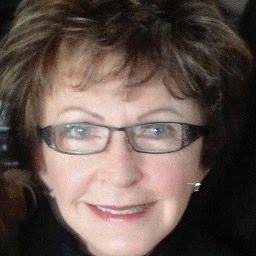
I read the newest book by a very prolific author. Each time I read one of her books, I turn it over to the back cover and see the same picture. She hasn’t updated her photo in at least the past 20 years.

I checked her Facebook page. Both her picture and bio haven’t been updated there, either.

I had to laugh though, when I realized I hadn’t changed my picture in the last 7 years.

Whether it is just pure laziness or if it’s because I like seeing a younger version of myself, I had to laugh at myself for doing the same thing.

Clearly, I have updated my information in About Myself on my website, www.brendapoulosauthor.com, but the picture remains the same one I’ve always used.

I’m told that when you make changes on your website or Facebook page, the little internet crawlers get more interested in visiting you. Then ever-so-slightly, your ranking is improved. The changes don’t have to be huge. A change as small as a new profile picture is all that’s necessary.

So, take a few selfies, upload, and wait to see if you’ve become more visible.

I Missed Out!

We recently moved to a new state—one without a local ACFW chapter. I want to do something about that, but that’s a topic for another day.

Yesterday, in Phoenix, Christian Writers of the West held their spring conference, with guest speaker Author and Editor, Kathy Ide.

This year, I missed out—and you did, too, if you weren’t there.

There are many writing conferences around the country each year, so you are able to do a little research and find just the one for you—the one that contains the subject matter you are most interested in, the one that is most affordable, the one that is easiest for you to travel to.

Why do I feel like we missed out? Because there is lots of good teaching, opportunities to network and visit with friends at conferences.

All is not lost, however. CWOW’s conference wasn’t the only one. Searching for writing conferences online will bring up a generous list of opportunities for you. (And, if not able to attend in person, you can join many of them online.)

Don’t Miss Out!

Having Trouble Sleeping?

I’ve had trouble sleeping lately and I think I have found the reason why.

I used to knock off my work day at about 4 p.m. But due to a recent move that changed the order of things, I have had to sit down at the computer for a couple of hours after dinner most evenings.

When I write something particularly emotional, scary, or suspenseful I end my day with frustrated or angry feelings.

I put my theory to the test this week. 

When I worked on one of my books about dementia (I’m sure I’ve mentioned some of them. For example, 

I Remember Holidays) my anxiety level wasn’t nearly as high as when I worked on my suspense novel.

So, I’ve learned an important lesson: end my day’s writing with something light and happy. 

And I’ll get a good night’s sleep.

THE END

All of his life, Kevin never finished anything he started. In school, he often turned in uncompleted assignments. Later, he lost a succession of jobs because his projects were either late or only partially done before he was on to something else.

Unfortunately, this carried over to his budding writing career. His efforts were promising, but his publisher had another author work with Kevin on the last quarter of his book, so that it could be finished on time.

Even though he’d had help, his book was the first thing Kevin could remember completing. It gave him a huge boost and today, under a pen name, he is a successful and multi-published author.

I hope this story about Kevin helps inspire those of you who are struggling to complete your book. Perhaps you might go through your files and find something that you’d enjoy working on again.

There’s nothing like the feeling of typing THE END on that last page.

You Can Do It, Too!

Have you ever had your head filled with so many thoughts that you couldn’t move forward with just one? Did you lay awake at night unable to make your brain stop moving at warp speed?

When that happens to me, I write each one down on a pad of paper on my night table. When I awake, I expand on them the next morning and place them in a “future writings” file.

Some authors have the opposite problem. I just finished reading two consecutive fiction books about authors suffering from writer’s block. The ideas just wouldn’t come. They couldn’t get motivated to sit down in front of the computer and tackle the business of writing. (This would be a good time to open that “future writings” file, wouldn’t it?)

I have been away from writing for almost a month, working with my husband on a complete home remodel. Even though we are not nearly done, I feel the need to carve out some time to begin writing again. So, the last couple of days, I have been spending a couple of hours reading my work in progress. Refreshing my memory as to what happened in chapters 1-15, will serve to energize me to dive in again and finish my book. 

If those ideas don’t work for you, may I suggest just one more?

A couple of writer-friends from my critique group published books this past year. I am so proud of their accomplishments and reading their work serves to motivate me to keep going.

So if you are having a hard time beginning to write, or trouble finishing something you are currently working on, maybe reading some of your own past work or a book written by someone you know will reignite your writing.

If they can do it, you can do it, too!

Twisted

When reading through some book descriptions on the internet, I came across an author who described her writing as Twisted Romance.

Hmmm.

Years ago, twisted was often used to describe someone who had weird ideas or actions. Kooky or even kinky might have been synonyms.

I was curious to know if the term twisted, nowadays, meant something different.

Here’s what I found.

The current term twisted romance tells the full spectrum of love stories. Dark, depraved and addictive. Frantic and often painful. They are gritty and seek to take you out of your comfort zone.

Sometimes referred to as adult fantasy, these books may be more than you bargain for and introduce both the reader–and the writer–to the world of pornography. In my opinion, these books are a dangerous inroad to evil and a dark world that I (for one) want no part of.

Much better to stick with cozy mysteries, mainstream romance, and Christian Fiction (of course).