Don’t Always Listen to Your Mother

47806949552_4181b6f326

I am one of the contest coordinators for the upcoming Rattler Writing Contest, sponsored by Christian Writers of the West. 

I have been encouraging beginning writers to enter when the contest opens on August 1.

They are often hesitant because they don’t feel they have a chance to win, when put up against more experienced authors.

However, winning shouldn’t be the primary reason to enter a contest. (Remember, there will be only one grand-prize and perhaps lesser “category prizes.”)

In my opinion, the major reason for entering a contest is the feedback from the judges.

Those few paragraphs are golden nuggets—suggestions to make your writing more exciting, your characters more interesting, your plot stronger.

Once you receive your feedback, reflect on what the judges have written. It is so easy to become angry and just throw their words in the trash, but remember why you entered—and their status in their field—and give careful consideration to what they have said. Writers must develop a thick skin, bearing in mind that the goal of critiques is to HELP you. 

You can always find a friend or relative to validate your writing and tell you how wonderful you are. 

But, if you want useful suggestions, then choose your contest wisely, SUBMIT your best work, and seriously consider the judges’ comments.

Try Writing Backwards

8612544773_2f5382e518


You are beginning to write Chapter Six.

Before you start to type, you ask yourself how the chapter fits into your overall plot. What do you want to include? How should the chapter begin?

You’re stuck.

But, if you do know how you want the chapter to end, try this:

Start at the end (the part you do know) and write backwards until you get to the beginning scene of the chapter.

Even if you’re not stuck, you may find this to be a great exercise. You will be forced to focus on exactly where you want to take the reader—from point A (beginning scene) to point B (the cliffhanger that makes them want to read more).

Sometimes simply getting a visual of where you want to end will inspire you to write a stellar beginning.

Auto-correct?

Murder She Wrote


For all of the plusses of a computer over the outdated typewriters—and we all know there are many—some of the drawbacks can be annoying. Writers, especially, must be vigilant in monitoring all of these “helps.”

For instance, don’t depend on the auto-correct function.

I entered the word yarn incorrectly, spelling it as yard. It was the wrong word, but since it was spelled correctly, the computer left it as I had typed it in. I found it later as I was rereading, but still…

Not long after that, I entered the word heart several times. Each time, I noticed the “t” disappear right before my eyes, leaving the word hear. I am not sure why this happened, but again, the word was spelled correctly, but definitely not the word I intended to use.

One last example: I wrote the name Jaxon. I am sure you’re not surprised to hear that it was auto-corrected to Jackson. No matter what I did, I could not get my computer to accept the altered spelling. 

I am sure there are ways around these difficulties—and many others—it just takes persistence in searching out the culprit and overriding the function. 

If you have run into other problems, or have the answer to the few I have described, please share your information.

Until then, type carefully. Reread often. Or, you want to get that old Remington out of the closet and create your manuscript the old-fashioned way!


Grab a Bucket of Balls

18007995364_f7377aeebc


Should writers strive to be prolific or perseverant?

Hmmm. Prolific, meaning to produce a high volume of work, would definitely make an author feel successful.

But, perseverant? Steadfastness in doing something despite difficulty or delay in achieving success. That would be a necessity, wouldn’t it?

Seems to me, it isn’t a matter of prolific vs. perseverant. 

Both are necessary.

If writers persevere, then being prolific must surely follow.

A daily regimen and good old-fashioned dedication will go a long way in helping authors to keep at it. Success doesn’t happen all of a sudden. 

A foundation based on a solid work ethic and perseverance toward a goal is the key.

As I sit at the computer, I look out my window at the 14th hole of a beautiful golf course. A few minutes ago, I saw a guy make a hole-in-one. WOW!!! 

He would probably say that it was a shot that was a long time in the making… that he didn’t just walk out today and start playing for the first time in his life. It probably began years ago with hitting bucket after bucket of balls on the golf range, taking lessons, watching pros play, and days spent out in the heat perfecting his game.

His perseverance should pay off in his shooting hole-in-ones more frequently. Just like writers or those who become excellent at any other profession, it takes commitment and practice.

The only difference? 

Our bucket of balls looks more like a keyboard and a monitor.


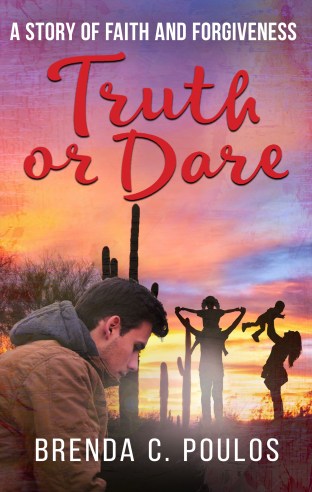
Truth or Dare


Truth or Dare_ebook cover_2019-04-23


A year ago YESTERDAY, I published Simon Says.

At that time, I promised myself I would publish the second book in the series within a year.

I began to write. I had a few set backs, but I persevered. 

It felt like I had been writing for a decade, but I never really looked at the calendar until yesterday, when Amazon informed me that Truth or Dare was live on their site.

I went into my Bookshelf on Amazon and looked for the publish date of Simon Says. To my surprise, it was May 18, 2018. 

Exactly one year!!!!!

Wow. I can hardly believe it. 

If I did it once, surely I can do it again. 

My goal is for Tug of War (book 3 in the Simon Says series) to be published by May 18, 2020—or sooner.

Stay tuned!


Reach for the Moon

27142976777_d98a0dc10b


From the dreaming to the writing to the publishing and marketing, there is far more to getting your book ready for the consumer than you probably ever imagined.

Think back to the day when the desire to write was born within you.

Now, remember the books you’ve read, the conferences you’ve attended, the podcasts you have watched, the associations you have joined.

Consider the people you have met along the way and their influence on you, the bookstores and libraries you have visited as your dream took shape.

The average reader probably has no idea how many hours you have spent writing, how many nights you stayed up late, how many early mornings you drug yourself out of bed to write while your family remained snug in their beds.

Someone once said that the harder you work for something, the sweeter the reward. 

That person must have been a writer.

The reward isn’t always monetary. Sometimes it is simply in a job well done… a knowing that you persevered… that you saw the task through to THE END.

Sometimes it’s a particularly meaningful review. Perhaps it’s a note of thanks from someone letting you know how your words impacted their life.

Don’t give up.

Keep on Truckin’.

Hang in There.

Because one day you’ll be doing that Happy Dance.

It will have all been worth it.

Does This Back Cover Copy Tempt You?

330665044_962243a57c


Back cover copy is important. People read it hoping it will give them clues  as to what the story is about, how the book ends and if it reading it will be worth their time spent.

From an author’s perspective, it is an opportunity to tempt the reader into reading their book by hooking them into the story and hinting at the outcome.

Here is the back cover copy for my latest book. Does it accomplish its purpose? Only time will tell…

Truth or Dare is a childhood game—or is it?

Simon Wilson is a bully. A Thief. An Accomplished liar.

But the biggest lie of all is not one he has told. It’s one he believes.

It’s the one that says he will never be good enough. He will never measure up. Never be worthy.

He is at a crossroads.

Will Simon continue to be deceived by the lie?

Or will he choose to believe the Truth?

Are You In Editing Mode?

39017956125_29104d6f1e


At it stands, now, I have gone through the editing process with six books. I learn more each time I get to this step in the publishing process. So, for what it’s worth, I recommend you use these people, in this order:

Do an ongoing edit of your manuscript, as you share your submissions with your critique group, chapter by chapter, from Prologue thru Epilogue.

When your book is finished, edit your manuscript yourself (at least a couple of times—more, if you are a perfectionist, like me).

Send it to your Beta Readers. They will catch a few things, too.

Send it to your Editor and make the suggested corrections.

Finally, let your Critique Group Read it in its entirety. Note: This is a new step. Here’s why I am suggesting taking the time to do this: my group accepts submissions from each other twice per month.

Often the chapters are out of order. And, because this process can take upward of one year, it is not like reading a book, chapter by chapter. They miss the flow and this especially affects the understanding of the timeline. (It isn’t their fault. These two factors make it almost impossible for them to give good feedback in this area).

If your critique group agrees to read each other’s work–all the way through, one last time–they will be able to experience your story from beginning to end and catch any glitches.

Yes, it is a bigger commitment and not for the faint of heart, but if you are truly committed to help each other be the best you can be, then the results can be of great value.

In talking with my group, they were positive about trying this approach—at least once.

I suspect it will be time well spent.

Stand-Alones, Series, or Both?

8271351214_7c6f31f870I know of a guy who wrote a Letter to the Editor. His writing was so good that he was offered a position with the newspaper writing his own column.

He started out writing a letter and found himself doing something much more than what he originally intended.

I relate to that guy. 

I started out to write “stand-alone” books.

However, readers liked my characters. They wanted to read more. I was soon hoodwinked into writing a second book—and now a third.

I’m not complaining, though. I’m glad people want to read more about Marcus, Simon, and the others.

An author has choices when writing a series. 

First choice: build successive books on the previous ones and simply continue the story. In this case, the reader would need to read from Book 1 through the entire series for the progressive story to be understandable.

Second choice: continue with the original characters in Book 1, but be careful to use epilogues and/or prologues—and effective beginning chapters—to make sure important information from previous book(s) is passed along throughout the series. Essentially, books like these can be read as stand-alones.    

Each book can be devoted to a different character, keeping them in the same setting (Ex. On the farm).

Or, each book in the series can focus on the same main character, but in different settings. (Think Gulliver’s Travels).

Or, change the characters, but keep the ongoing theme. (Stories about near-death experiences or angel sightings…)

The possibilities are probably endless. You just have to find that common thread and begin to weave it throughout your series.

In the series I am writing, currently, each book is based on a childhood game, thus the titles Simon Says, Truth or Dare, Tug of War, and so on.

The commonality isn’t just found in the games, but—more importantly—in  the way they make their life choices, the result of those choices, and how each one affects their future.

Surveys tell us that readers latch onto a series or a particular author and will follow them until they become tired or disappointed.

So, writing a series can be an effective way for an author to gain a following—and keep them following—if you give each book your very best effort.

Then—and only then—will they keep coming back for more.

That’s What it Sounds Like

6872071078_077e194f6f


I’m in editing mode this week. Specifically, I am unsure about the use of italics.

Yes, I understand that they are used to denote titles, and foreign words. They are also used for book titles, poems, plays, television shows, musical compositions, newspapers, radio podcasts, names of ships, and airplanes.

The list goes on and on (See the 7th edition of the MLA handbook for more of the above.)

However, here, I want to share about the three most common uses of italics by authors.

The first is to show emphasis for readers. For example, “She dated five men at the same time.” If you italicize the word “five,” it helps to emphasize the fact that you feel this is extraordinary and you don’t want your reader to miss it. Thus, the sentence would read, “She dated five men at the same time.”

The second is to set apart a character’s inner thoughts and/or  dreams. This avoids confusion for readers by signaling that those words were not spoken out loud. Longer italicized portions of text show the reader that the character is dreaming. This is important because otherwise they may think that those actions are taking place in the here and now.

Finally, I come to the rule that has been confusing me as I give my own manuscript a final pass. That is, should sounds be italicized? 

I did some research and I found the answer to be very simple:

The name of a sound does not get italicized, but the sound itself does. 

Here is an example:  The dog growled. (I named the sound, so no italics.) vs. “Grrr” (this is the actual sound, so it should be italicized).

Simple?

That’s what it sounds like to me.